

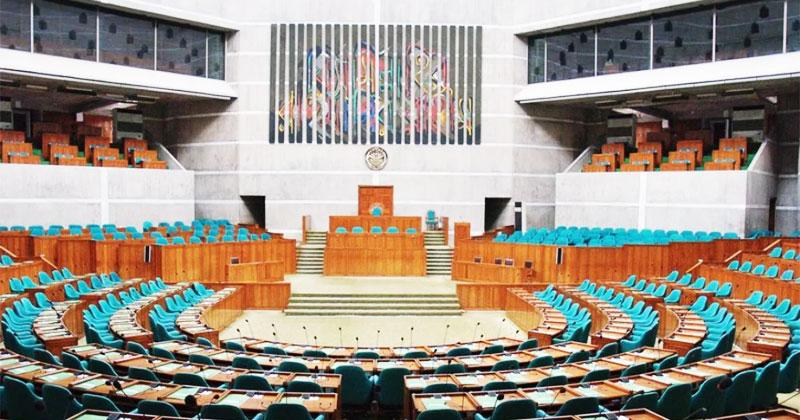
The Constitution of Bangladesh presents Members of Parliament (MPs) as representatives of the people, lawmakers, and overseers ensuring accountability of the executive branch. However, in reality, there is a vast gap between what the Constitution envisions and what political practice has become. Today, MPs in many cases are no longer constitutional representatives; they are part of power politics, and at times even brokers of political influence. Before forming a new government, it is essential to assess the qualifications of newly elected MPs. It is crucial to examine whether they possess adequate knowledge and understanding of each article of the Constitution.
The role of MPs has gradually shifted away from their constitutional duty of lawmaking and transformed into an informal center of local power and influence. Citizens, too, now expect them to interfere in policing, tender processes, and development projects—expectations that fall outside constitutional boundaries. This distorted practice has spread like a cancer deep within the state system. To build a new Bangladesh, this cancer must be eradicated immediately; otherwise, governance will never return to a healthy path.
The Constitution of Bangladesh assigns full legislative authority to the National Parliament. Parliament was meant to be the highest platform for national decision-making. Yet in reality, most laws are drafted outside Parliament—in ministerial offices—and are passed in Parliament with minimal questioning.
Historical experience shows that most laws are prepared within ministries and passed without meaningful debate. Parliamentary standing committees remain weak in practice. Party discipline and nomination-based politics discourage MPs from expressing independent opinions.
Opposition boycotts, excessive centralization of power, and lack of debate have repeatedly weakened Parliament. Without a strong Parliament, effective democracy is impossible.
In truth, the problem is not in the Constitution itself; rather, it lies in its implementation. To restore constitutional spirit, internal party democracy, strong committees, and an accountable political culture must be developed.
In a parliamentary system, the executive is supposed to remain accountable to Parliament. MPs have the constitutional responsibility to question the Prime Minister and the Cabinet. However, in reality, a culture of ministerial accountability is largely absent. Standing committees are effectively inactive. Serious parliamentary discussions on corruption, abuse of power, or policy failures are rare. Silence from ruling party MPs has almost become an unwritten rule.
More concerning is that MPs have shifted from lawmakers to intermediaries of local power. Many MPs today focus less on legislation and more on influencing roads, tenders, projects, police, and administration. Citizens also often expect them not for laws or policy, but for solving personal problems and exerting influence. As a result, MPs are becoming local power centers rather than national policymakers.
Opposition weakness has further worsened the situation. Parliamentary boycotts have weakened legislative oversight. Without a strong opposition, Parliament cannot maintain democratic balance. Dominance by a single party turns Parliament into a forum without debate or accountability.
Another major issue is centralization of power. Strict party control, fear of losing nominations, and dependence on the executive have reduced MPs’ independence. Many MPs prioritize loyalty to party leadership over constitutional duties.
The consequences are far-reaching. When Parliament fails to perform its constitutional role, democracy is reduced to an election-based mechanism. Power becomes concentrated in the executive branch, public trust in Parliament declines, and politics turns into a system of patronage rather than policymaking.
Bangladesh’s problem is not the Constitution. The real issue lies in political culture, lack of internal democracy within parties, and the deliberate weakening of Parliament. To restore Parliament as a true national decision-making institution, MPs must return to their constitutional roles. Otherwise, strong individuals may exist, but a strong Parliament will not.
According to Article 65 of the Constitution of Bangladesh, legislative power is vested exclusively in the National Parliament.
Theoretically, MPs are responsible for debating proposed laws (bills), amending, approving or rejecting them, ensuring reflection of public interest and constitutional values, and protecting citizens’ fundamental rights through legislation. In short, Parliament is meant to be the central platform of national decision-making.
Under Articles 55–58, the executive is accountable to Parliament. The Prime Minister and Cabinet are constitutionally required to answer to Parliament. MPs are responsible for questioning ministers, monitoring public expenditure, and holding the executive accountable. Parliamentary tools such as question time, standing committees, debates, and motions exist for this purpose.
However, in Bangladesh, this constitutional framework has largely remained on paper. In practice, questioning the Prime Minister or holding the executive accountable has often been treated as a political offense, sometimes resulting in intimidation, disappearance, or extrajudicial actions. As a result, Parliament has functioned not as an accountability institution, but as a body of political compliance.
According to Articles 81–92 of the Constitution, no tax can be imposed or public expenditure made without parliamentary approval. MPs are responsible for discussing the national budget, setting development priorities, and overseeing public spending.
Although public representation is not separately defined in a single article, it remains the core democratic responsibility of MPs. This includes raising local issues in Parliament, reflecting public opinion in national debates, and acting as a bridge between the state and citizens.
MPs also take an oath to uphold the Constitution, protect democracy, and maintain the rule of law and state sovereignty. They are expected to resist unconstitutional actions, even from their own party if necessary.
Despite clear constitutional provisions, the real role of MPs in Bangladesh has long deviated from these ideals.
Parliament has effectively become an approving body for the executive. Most laws are drafted in ministries, not by MPs. Bills are passed with minimal debate. The opposition has limited influence. Party discipline and loyalty to the Prime Minister restrict independent expression.
Oversight is weak or virtually absent. Ministers are rarely subjected to tough questioning, standing committees are ineffective, and parliamentary action on corruption is limited. MPs from the ruling party almost never oppose their own government.
Instead of lawmakers, MPs act as intermediaries of local power—managing development projects, influencing public services, and controlling patronage networks. Their focus remains on roads, tenders, contracts, police influence, and constituency control, rather than national policymaking.
Over time, MPs have become local power brokers rather than national legislators, while national policy formulation and institutional accountability remain neglected.
Opposition marginalization and parliamentary boycotts have further weakened the system. Historically, opposition parties have frequently boycotted Parliament, undermining debate and accountability.
Fear, patronage, and centralization of power further restrict MPs. Party leadership maintains strict control, dissent risks loss of nomination, and dependence on the executive is high. As a result, many MPs serve party leadership rather than the Constitution or voters.
Historical Evolution of Parliament in Bangladesh
1972–1975: Active Parliament and the emergence of one-party rule
After independence, a parliamentary system was introduced. The first elected Parliament formed in 1973 was relatively active. However, in 1975, the introduction of BAKSAL led to one-party rule, and parliamentary independence was severely restricted.
1975–1990: Military rule and weakening of Parliament
During military and quasi-military regimes, Parliament remained weak. MPs mainly approved executive decisions. Many laws were passed through ordinances, bypassing Parliament.
1991–2006: Restoration of democracy and emergence of boycotts
Parliamentary democracy was restored in 1991. However, opposition boycotts became common, limiting debate and weakening Parliament.
2009–present: Strong executive dominance
After 2008, the ruling party consolidated power. Parliament became more controlled by the executive, and MPs increasingly focused on local influence rather than legislation.
The abolition of the caretaker government system by the Awami League in 2011 through the 15th constitutional amendment had a profound impact on Bangladesh’s electoral and parliamentary system.
The caretaker government system, introduced in 1996, ensured neutral election administration. Its removal raised concerns over election credibility, reduced opposition trust, and increased perceptions of executive influence over elections.
As a result, electoral fairness was questioned, opposition participation weakened, and parliamentary accountability declined. Power became more centralized, political polarization deepened, and democratic institutions weakened.
In conclusion, while the move may have ensured short-term political control for the ruling party, it significantly weakened electoral transparency, parliamentary effectiveness, and overall democratic balance in Bangladesh.