

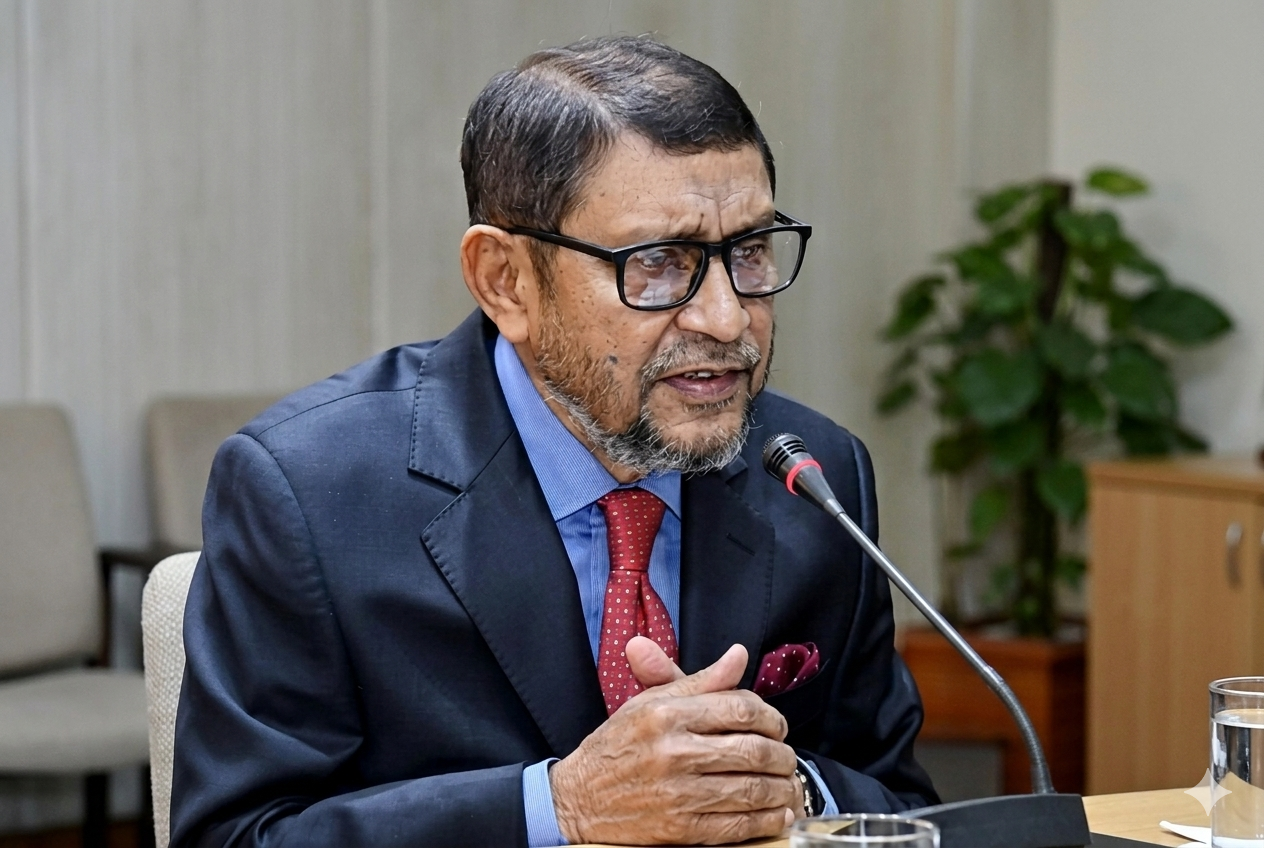
By Al Mamun, from USA, May 6, 2026:
In the face of an ever-evolving public health landscape, leadership is often defined by the courage to embrace the future. For years, Bangladesh has grappled with the shadow of dengue—a seasonal scourge that has claimed far too many lives and strained our healthcare infrastructure. Today, however, a new narrative is being written. Under the visionary guidance of Health and Family Welfare Minister Sarder Md Sakhawat Husain, Bangladesh is moving beyond traditional "reactive" medicine and stepping into the vanguard of global bio-innovation.
The Minister’s recent announcement regarding the Wolbachia pilot project marks a historic shift in how we protect our citizens. By prioritizing advanced Research and Development (R&D) and seeking out permanent biological solutions, Minister Husain is proving that the best way to save lives from "unexpected viruses" is to outsmart them at the source.
The proposed initiative was discussed at a high-level meeting held at the Ministry of Health and Family Welfare, as authorities prepare for the upcoming dengue season. The project would be implemented in collaboration with the World Mosquito Program (WMP), a global nonprofit headquartered at Monash University in Australia.
Officials said WMP had signed a Memorandum of Understanding (MoU) with the Bangladesh government in December 2025 to support the rollout of the evidence-based intervention. As of May 2026, the Bangladesh government is developing technical and financial plans to implement this initiative. The Wolbachia method involves introducing naturally occurring bacteria into mosquito populations to reduce their ability to transmit viruses such as dengue.
During the meeting, Dr. Claudia Surjadjaja presented a proposed implementation plan, with initial activities expected to begin in Dhaka North.
At the heart of this initiative is a partnership with the World Mosquito Program (WMP). The strategy is as elegant as it is effective: instead of relying solely on chemical fogging—which often provides only temporary relief—the government is introducing a naturally occurring bacterium called Wolbachia into the Aedes aegypti mosquito population.
This isn't science fiction; it is a proven, evidence-based intervention. When Wolbachia is present in a mosquito, it acts as a biological shield, preventing viruses like dengue, Zika, and chikungunya from replicating inside the insect. When these mosquitoes are released to mate with the local population, they pass the bacteria down, effectively "disarming" the next generation of mosquitoes.
"We cannot wait for the peak season to overwhelm us. We must fast-track innovation to ensure no more Bangladeshi families lose a loved one to a preventable bite." — Minister Sarder Md Sakhawat Husain
The Minister has been the driving force behind the implementation plan, specifically targeting high-risk urban hubs like Dhaka North.
By directing officials to finalize technical and financial frameworks with urgency, he is demonstrating a rare brand of "preventative leadership." His focus is clear: prevent the spread, protect the people, and modernize the system.
Now the question is, Why This Matters for Bangladesh? The transition to the Wolbachia method offers several transformative benefits for our nation like Sustainability: Unlike insecticides, which require constant reapplication and can lead to mosquito resistance, Wolbachia is a self-sustaining solution. Safety First: The method is 100% safe for humans and the environment. It involves no genetic modification—just the use of a bacterium that already exists in 60% of the world’s insect species. Global Success: We are joining the ranks of Australia, Indonesia, and Brazil, where this method has already led to a staggering drop in dengue cases.
Through this pilot project, Minister Sarder Md Sakhawat Husain is not just fighting a seasonal outbreak; he is building a Bio-Shield for Bangladesh. This is a testament to what can be achieved when a government prioritizes R&D and international collaboration over outdated methods.
The method has already been implemented in countries including Australia, Indonesia, Brazil, and Vietnam. Some studies have shown that dengue cases dropped significantly in areas where the method was introduced.
As we move toward the peak dengue season of 2026, the people of Bangladesh can take comfort in knowing that their Health Ministry is no longer just waiting for the virus to arrive. We are meeting it in the lab, in the field, and in the wings of the mosquitoes themselves. Under Minister Husain’s watch, the future of Bangladeshi public health is looking brighter, safer, and more resilient than ever before.