

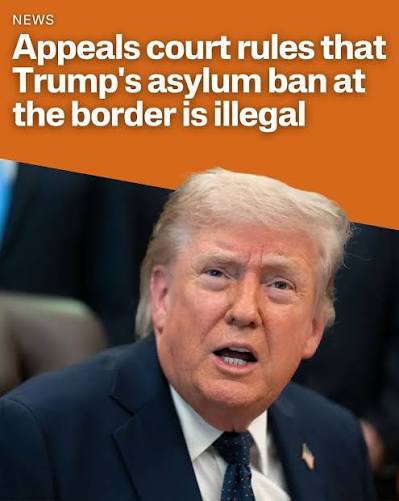
Washington, D.C., April 2026 — A federal appeals court has blocked a sweeping executive action by Donald Trump that sought to suspend asylum access at the U.S. southern border, ruling that the measure violates existing immigration law.
In a significant decision, the U.S. Court of Appeals for the D.C. Circuit upheld a lower court’s finding that the president does not have unilateral authority to override statutory protections granted under the Immigration and Nationality Act (INA). The court emphasized that individuals arriving at or within the United States retain the legal right to apply for asylum, regardless of executive policy directives.
The ruling effectively halts immediate enforcement of the proposed asylum restrictions, which had aimed to curb the number of migrants seeking protection at the southern border. Legal experts say the decision reinforces long-standing interpretations of U.S. asylum law, which guarantee access to the asylum process even amid broader immigration control efforts.
“This decision reaffirms that the executive branch cannot bypass Congress when it comes to fundamental immigration protections,” said immigration analysts following the case.
The Trump administration had argued that the measure was necessary to manage border security and address what it described as an overwhelming surge in asylum claims. However, the court rejected that justification as insufficient to override clear statutory language.
Advocacy groups welcomed the ruling, calling it a victory for due process and humanitarian protections. “The right to seek asylum is embedded in U.S. law and international commitments,” one advocacy organization noted.
Despite the setback, the administration is expected to continue its legal fight, with a potential appeal to the Supreme Court of the United States likely. Until then, the decision ensures that asylum seekers can continue to present their claims under existing legal procedures.
The case marks another pivotal moment in the ongoing legal and political battle over U.S. immigration policy, particularly as debates intensify over border enforcement and humanitarian obligations.