

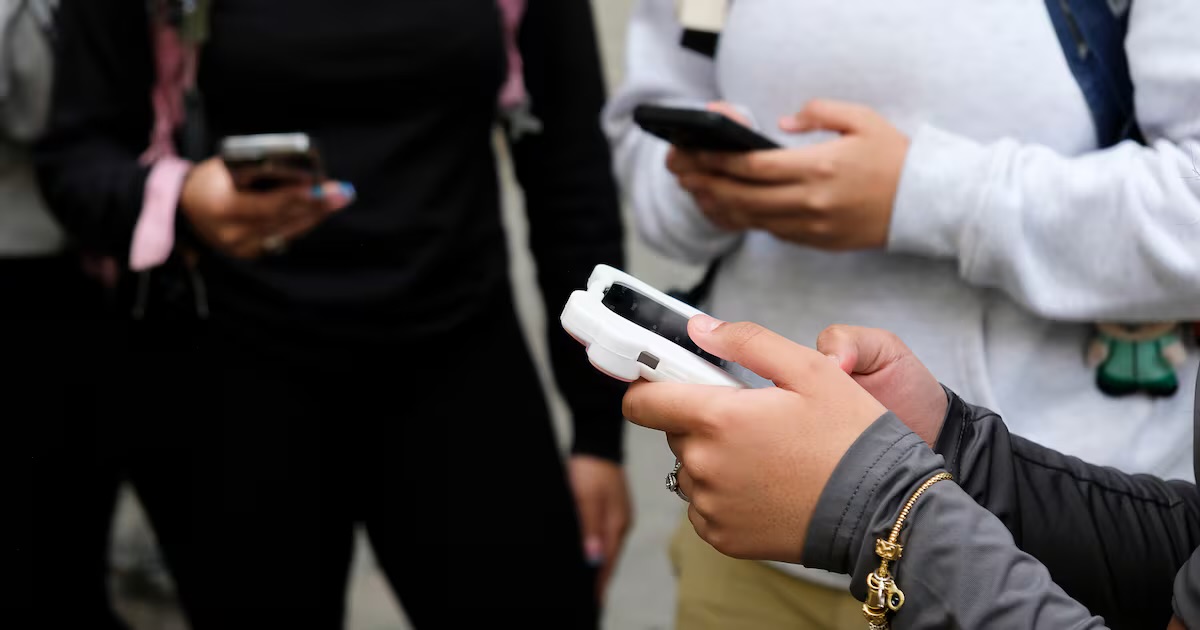
May 4, 2026: From urban school districts to rural campuses, a growing number of schools across the United States are enforcing strict cellphone bans in classrooms—and in some cases, throughout the entire school day. Lawmakers and educators argue that smartphones have become a major barrier to learning, contributing to distraction, cyberbullying, and declining student focus.
Over the past five years, these concerns have fueled a wave of policies aimed at limiting student phone use. Today, a majority of U.S. public schools have some form of restriction in place, making it one of the most widespread education policy shifts in recent years.
But a critical question remains: Are these bans actually improving student outcomes?
A comprehensive 2026 study analyzing tens of thousands of schools nationwide offers a sobering answer: not necessarily.
The research, based on data collected between 2018 and 2025, found that while cellphone bans significantly reduced device usage in classrooms, they had little to no measurable impact on test scores, attendance, or overall academic performance.
Even in schools with strict enforcement—such as requiring students to lock phones in pouches—academic gains were negligible.
Researchers concluded that the effect of cellphone bans on learning outcomes is “consistently close to zero.”
Experts say the findings highlight a deeper issue: cellphones may not be the root problem.
“Removing phones eliminates one distraction,” said one education analyst, “but it doesn’t automatically make lessons more engaging or address broader challenges like curriculum quality and student motivation.”
The study also points to short-term disruption when bans are first implemented. Some schools reported increased disciplinary incidents and student resistance in the early stages, though these effects typically declined over time.
Despite the lack of academic improvement, the investigation found that cellphone bans are far from ineffective.
Teachers and administrators consistently report:
Fewer classroom interruptions
Improved student attention
Reduced incidents of phone-related misconduct
In some districts, there is also evidence of declines in cyberbullying and improved overall school climate.
A separate case study from a large school district showed modest gains in test scores after two years, particularly among older students—suggesting that results may take time to materialize.
Students themselves remain divided on the issue. Surveys indicate that while many accept limited restrictions during class time, strong opposition persists against all-day bans. A majority of teenagers say such policies do not significantly improve their well-being, social lives, or stress levels.
Instead, many simply shift their phone use to before and after school hours—raising questions about whether bans address the broader role of technology in students’ lives.
The investigation also uncovered several unintended effects:
Safety Concerns: Some parents worry about losing immediate contact with their children during emergencies.
Equity Issues: For certain students, smartphones serve as essential tools for translation, research, and internet access.
Operational Burden: Schools often must handle increased communication responsibilities and enforcement challenges.
Inconsistent implementation remains a major obstacle. In districts where enforcement is uneven or parental support is limited, the effectiveness of bans drops significantly.
Despite mixed evidence, momentum behind cellphone restrictions continues to grow.
Public concern over screen addiction, social media influence, and student mental health has driven strong support among parents and educators. Many view bans as a necessary step to restore discipline and focus in classrooms—even if academic gains are not immediate.
The evidence suggests a nuanced reality:
Cellphone bans work well for reducing distractions and improving classroom management.
They do not, on their own, significantly boost academic performance.
Education experts emphasize that bans should be seen as one tool among many—not a standalone solution.
Without broader improvements in teaching quality, student engagement, and school resources, the impact of these policies is likely to remain limited.
As schools continue to navigate the role of technology in education, the debate over cellphone bans is far from settled. For now, the data makes one thing clear: Removing phones from classrooms is easy. Improving learning outcomes is not.