
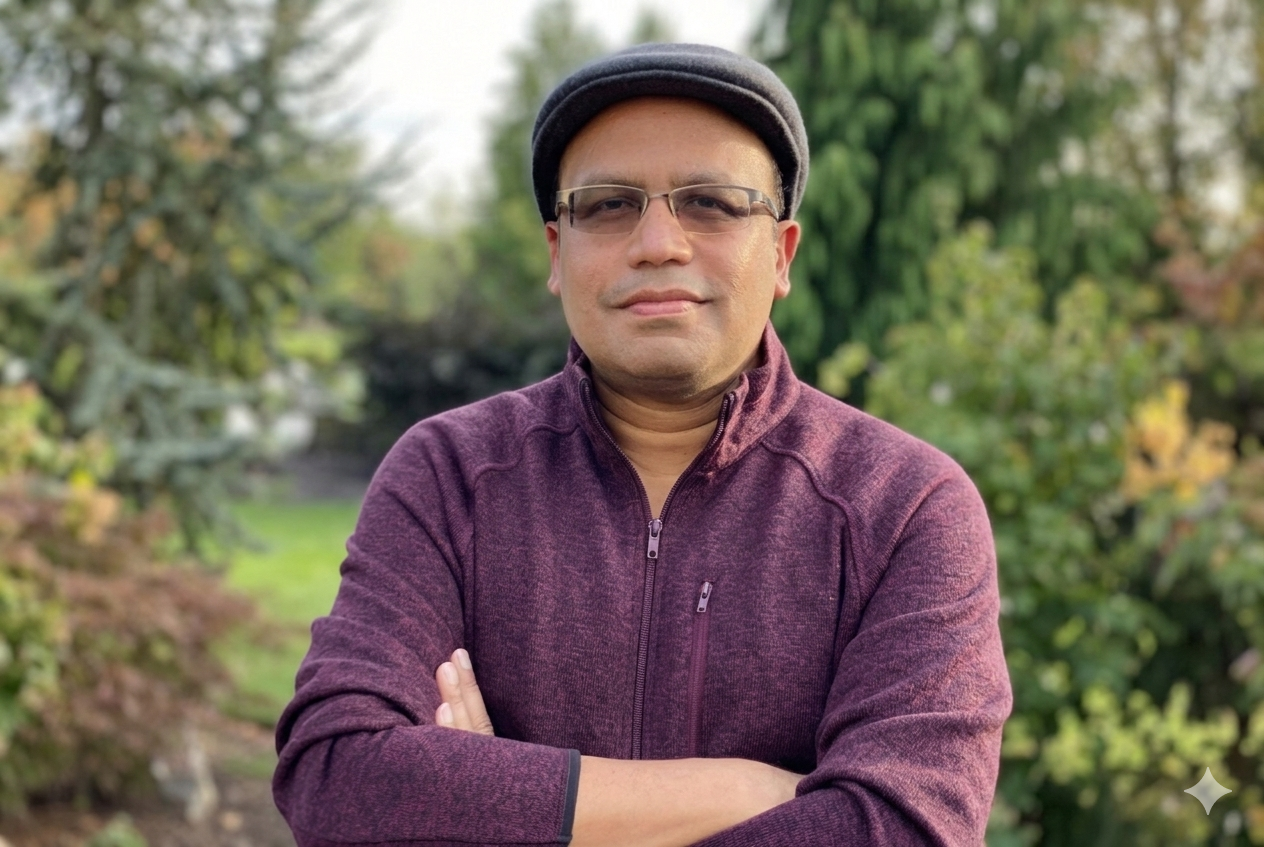
By Al Mamun, May 6, 2026, PRINCETON, NJ — In the history of science, certain names represent fundamental shifts in how we perceive reality. Today, the name Dr. M. Zahid Hasan is becoming synonymous with a new era of quantum discovery. From his roots in Dhaka, Bangladesh to the hallowed halls of Princeton University, Hasan is not just participating in global physics—he is leading it. As his groundbreaking discoveries continue to shake the foundations of the field, a singular question resonates across the scientific world: Is the world witnessing the journey of Bangladesh’s next Nobel Laureate?
Dr. Hasan, the Eugene Higgins Professor of Physics at Princeton, is widely known for his pioneering experimental research in topological quantum matter. He has achieved what most experimentalists only dream of: turning 85-year-old mathematical theories into physical reality.
In 2015, his team reached a historic milestone with the first experimental discovery of the Weyl fermion. Predicted in 1929 but never before seen, this massless particle could revolutionize the digital world. Unlike the electrons that power our current smartphones, Weyl fermions can move through matter without the "backscattering" that causes devices to heat up and lose efficiency. This breakthrough has placed Hasan at the center of the "Second Quantum Revolution," potentially paving the way for nearly heatless, ultra-fast electronics.
Hasan’s journey to the top of the scientific community was fueled by a meteoric rise through the world’s most prestigious institutions. After completing his early education in Bangladesh, he earned his Ph.D. in 2002 from Stanford University ( California) and joined the faculty at Princeton University.
Soon after, he joined the faculty at Princeton University, where his trajectory continued upward. By 2017, he was named the Eugene Higgins Professor of Physics and took the helm of Princeton’s Laboratory for Topological Quantum Matter and Advanced Spectroscopy. His influence extends across the Charles River as well, where he has served as a visiting professor at the Massachusetts Institute of Technology (MIT) since 2024.
With over 300 peer-reviewed publications and tens of thousands of scientific citations, Hasan’s contributions have earned him the world’s highest honors. These include the Ernest Orlando Lawrence Award from the U.S. Department of Energy, election to the American Academy of Arts and Sciences, and the prestigious Mustafa Prize for his innovations in quantum physics.
Despite his global stature, Dr. Hasan remains deeply tethered to the nation where his journey began. A former standout student at Dhanmondi Government Boys’ High School and Dhaka College, he now serves his homeland as a Fellow of the Bangladesh Academy of Sciences (BAS).
Through the Academy, he acts as a vital bridge between elite international research and local academia. By engaging in various academic activities, mentoring young scholars, and advocating for the advancement of science education, he ensures that Bangladesh remains a central voice in the global scientific dialogue. Those who know him describe a man of deep humility—a "physicist extraordinaire" who still remembers the passion for discovery that led him to write his first astrophysics primer as a teenager in Dhaka.
Bangladesh currently celebrates one Nobel Prize winner, Professor Muhammad Yunus (Peace). While the sub-continent has a storied history in physics—from Satyendra Nath Bose (namesake of the "Boson") to Abdus Salam—a Nobel Prize for Dr. Hasan would mark a historic first for a Bangladeshi-born scientist in the field of Physics.
Experts in the field often note that the discovery of Weyl fermions is a once-in-a-generation breakthrough—the kind of work that traditionally catches the eye of the Royal Swedish Academy of Sciences.
During his interview with US Bangla Tribune, Dr. Hasan mentioned that Many of the PhD students from his research group have gone on to secure faculty positions at leading institutions, including California Institute of Technology, Harvard University, New York University, the University of California, University of Florida, University of California, Los Angeles, National University of Singapore, and the University of Minnesota. Others have joined prestigious national laboratories such as Lawrence Berkeley National Laboratory, SLAC National Accelerator Laboratory, and Paul Scherrer Institute, among many other top institutions worldwide.
As Dr. Hasan continues to unlock the mysteries of topological insulators and quantum states, his journey serves as a beacon of hope. For millions of young students in Bangladesh, he is proof that a journey starting in a Dhaka classroom can lead to the very pinnacle of human achievement—and perhaps, one day soon, to a second Nobel Prize for the nation.
Journalist Al Mamun’s Note: Covering the work of a scientific giant like Dr. Zahid Hasan was a humbling challenge for me. Full disclosure: I am not a physicist, and I’ll admit that grasping the complexities of quantum matter was initially quite difficult. However, I felt it was vital to translate these "cosmic" ideas into plain English for our readers. Essentially, Dr. Hasan’s discovery of the Weyl fermion—a particle that had been a "ghost" in mathematical equations for 85 years—is the key to a future where our devices no longer get hot or waste energy. By proving these massless particles can zip around obstacles without crashing, he has opened the door to ultra-fast, heatless electronics. If you’ve ever wondered how we might move beyond the limits of current technology, this breakthrough is the answer, explained for the rest of us who don't live in a laboratory.