

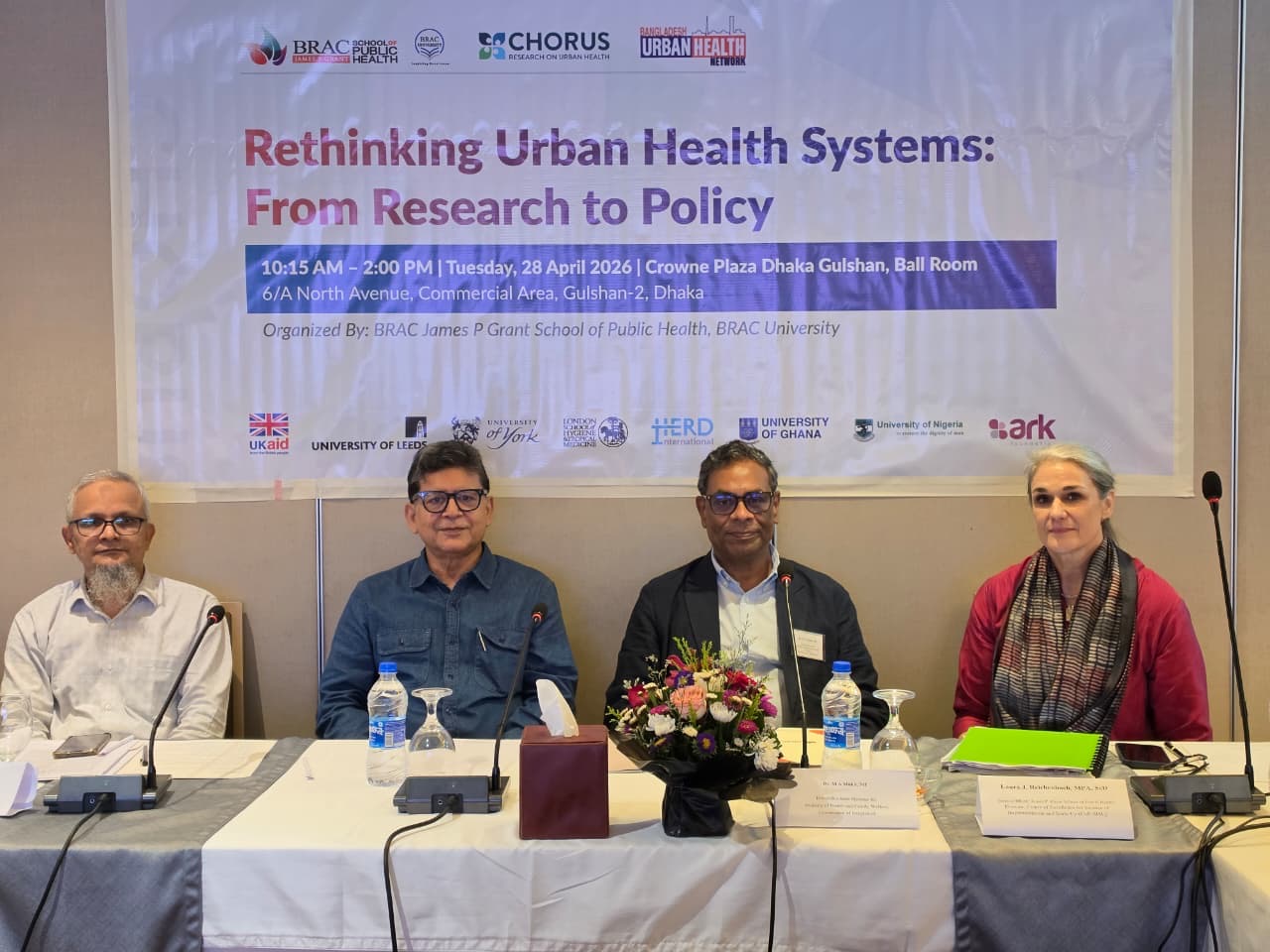
Bangladesh's healthcare system faces a deeper crisis from inefficient use of existing resources than from lack of funding or infrastructure, State Minister for Health and Family Welfare Dr. M A Muhit said Tuesday at a seminar in Gulshan.
Many healthcare facilities across the country operate below full capacity, limiting access to quality care, Dr. Muhit told the audience at "Rethinking Urban Health Systems: From Research to Policy," jointly organized by the BRAC James P Grant School of Public Health and the research initiative CHORUS.
Where efficiency gains could come from
Research presented at the seminar shows that with proper management, healthcare services at the upazila level could increase by nearly 42 percent without additional spending, according to Dr. Muhit. "We often talk about shortages in the health sector, but my belief is that the resources we already have are not being used efficiently," he said.
The finding matters to Bangladeshi readers concerned about healthcare access and to diaspora following home-country policy debates. It suggests that expanding service capacity does not require new government spending but rather better deployment of existing staff, equipment and facilities.
Dr. Muhit stressed that healthcare should not only focus on disease treatment but also on patient well-being and satisfaction, noting that a people-centered system must reflect the real needs of citizens.
Health disparities within Dhaka
Dr. Muhit highlighted significant health inequalities within different neighborhoods of Dhaka. "Although Dhaka is a single city, the diversity in poverty and healthcare access across wards is striking," he said. He called for local-level health data to improve service delivery and ensure greater health equity for ordinary people.
Public health experts, researchers, and representatives from international development organizations attended the seminar. Speakers emphasized strategic purchasing and stronger public-private partnerships to improve urban healthcare services in Bangladesh.
Linking research to policy
Dr. Muhit called for closer cooperation between universities, research institutions, and the government so that academic findings can play a stronger role in shaping national health policy. The seminar focused on urban health disparities, data-driven planning, and stronger coordination between public and private institutions.