

By US Bangla Tribune Staff
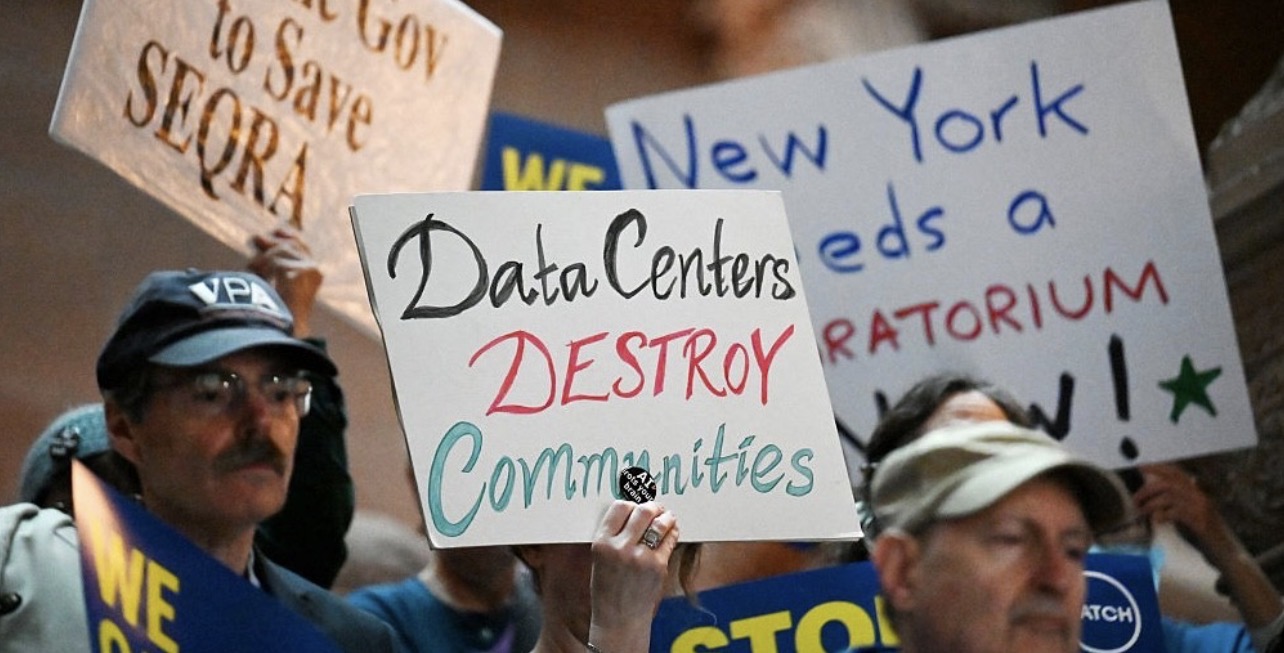
NEW YORK, July 14, 2026 — New York has hit pause on the data-center boom. On Tuesday it became the first U.S. state to temporarily block construction of new large-scale data centers — a decision driven by mounting concern over how much electricity these facilities consume, their environmental toll, and how little oversight currently governs them.
The one-year freeze covers any newly proposed data center that would draw 50 megawatts (MW) of electricity or more — the scale of the hyperscale cloud-computing sites run by the largest technology companies. State officials say the pause buys them time to build a proper regulatory framework for future projects while they take a hard look at the industry's environmental and economic footprint.
Growing Demand Driven by Artificial Intelligence
The surge in artificial intelligence, cloud computing, and digital services has pushed demand for data centers to unprecedented highs across the country. Packed with thousands of servers, these facilities are the engines behind AI models, everyday apps, streaming platforms, financial systems, and government services alike.
They are also power-hungry on a staggering scale — a single large campus can consume as much electricity as a small city. And with AI adoption still accelerating, utilities have warned that demand will climb sharply over the coming decade, straining grids that are already showing their age.
Why New York Is Taking Action
Regulators want consistent statewide standards in place before any more of these facilities are approved, officials said. Their review will weigh several key questions, among them:
Electricity grid reliability
Environmental and climate impacts
Water consumption for cooling systems
Local infrastructure demands
Community economic benefits
Long-term energy costs for residents and businesses
The state was careful to frame the moratorium as a pause, not a rejection of technology. The goal, officials said, is to make sure the next wave of development lines up with New York's clean-energy and climate commitments.
Concerns from Local Communities
Across the country, towns that host large data centers have grown louder in their unease about how fast the industry is expanding. The complaints tend to cluster around a familiar set of worries:
Higher electricity demand that could push up utility bills
Added pressure on local power grids
Heavy water use for cooling
Noise from cooling equipment and backup generators
Land-use and environmental impacts
Environmental advocates warn that, without careful planning, the rush to build could undercut states' efforts to cut greenhouse-gas emissions and shift to renewable energy.
Data Center Growth Across the United States
New York is home to roughly 130 data centers today — a meaningful presence, but a modest one next to the country's biggest hubs. By industry estimates:
Virginia hosts more than 500, the largest concentration of such facilities anywhere in the world.
Texas also tops 500, drawing developers with cheap land, light regulation, and low energy costs.
Both states keep pulling in billions of dollars from technology companies racing to expand their AI computing capacity.
Industry Reaction
Data-center developers and tech firms make the case that new sites create jobs, feed local economies, and lay down the digital infrastructure modern business depends on. They also note that newer facilities are built to run far more efficiently, leaning on renewable power, advanced cooling, and smarter energy management.
Even so, analysts say New York's move could nudge other states to rethink how they regulate large-scale construction as electricity demand keeps climbing.
A Potential National Trend
Many experts believe New York could become a template for states wrestling with the same tensions. As AI pours record investment into digital infrastructure, policymakers everywhere are being forced to balance economic growth against energy security, environmental sustainability, and the concerns of the communities next door.
How New York's year-long review plays out could shape data-center rules well beyond its borders — and set the tone for how states handle the next generation of AI-powered infrastructure.