

By Mir Abdul Alim
Bangladesh is often described as a country blessed with abundant natural resources. Its rivers, canals, wetlands, haors, forests, and fertile agricultural land are not only sources of natural beauty but also the foundation of life and livelihoods for millions of people. Yet nature itself is now suffering from the greatest neglect. Air pollution, river pollution, encroachment on wetlands, plastic waste, indiscriminate tree cutting, unplanned urbanization, industrial waste, and the impacts of climate change are pushing our environment toward a deep crisis. The question is no longer whether Bangladesh is facing an environmental crisis. The question is how much longer we will continue to avoid this crisis by treating it as someone else’s responsibility.
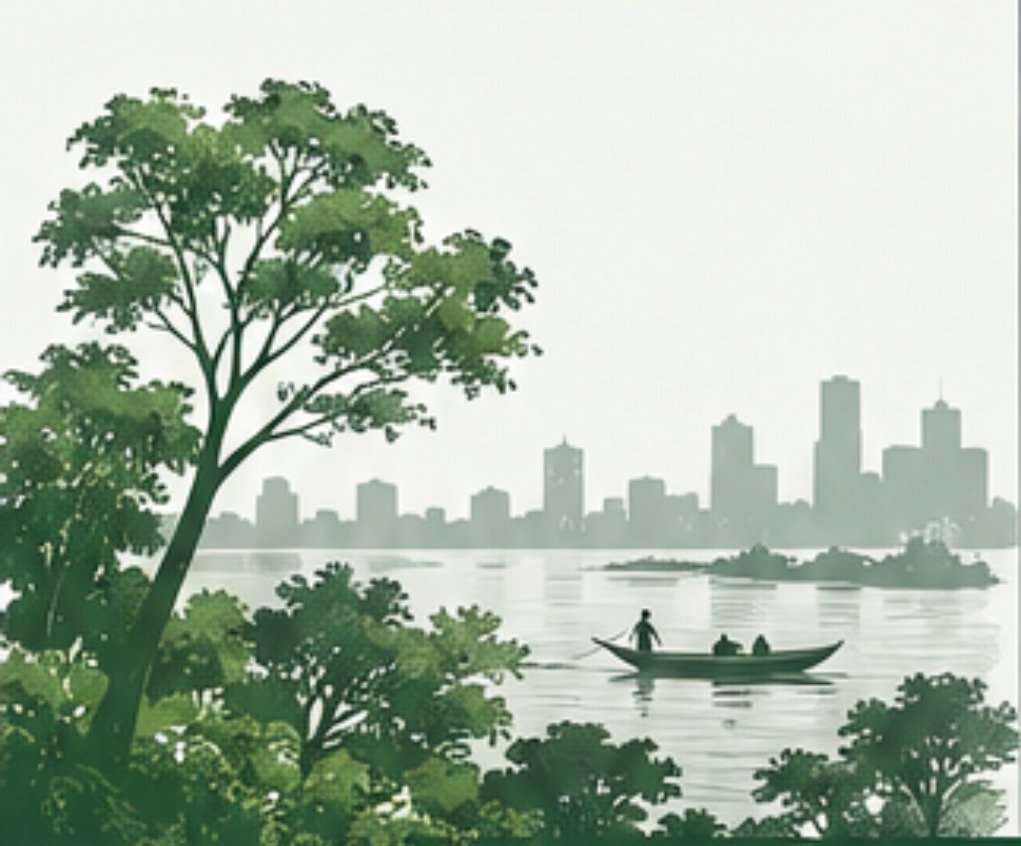
The situation in Dhaka presents the clearest picture of this crisis. The population is growing, buildings and roads are expanding, and development projects are increasing. Yet, at the same time, trees, open spaces, canals, and wetlands are disappearing. Vehicle emissions, construction dust, and industrial pollution are making the city’s air increasingly unhealthy. Meanwhile, the narrowing of natural drainage channels is causing waterlogging after even modest rainfall. The reduction of green spaces is also raising urban temperatures. We are creating a strange form of urban civilization in which we block natural drainage routes and cause waterlogging, cut down trees and increase heat, fill canals and raise the risk of flooding—and then spend enormous amounts of public money trying to solve those very problems. In other words, we are creating the causes of the problems ourselves and then spending state funds to address their consequences.
The fate of the rivers is even more painful. The Buriganga, Turag, Balu, and Shitalakshya rivers could have been Dhaka’s greatest natural assets. Yet large sections of these rivers are now endangered by untreated industrial waste, sewage, and solid garbage. Committees have been formed, projects undertaken, campaigns conducted, and court directives issued year after year. Still, pollution has not been completely stopped. The greatest tragedy is that we are not ignorant about river pollution. We know what is happening, and in many cases, we also know who is responsible. The real shortcoming lies in consistent and effective enforcement. No river can be saved through announcements alone. Protecting rivers requires regular monitoring, strong institutions, strict enforcement of the law, and decisions free from political influence.
Bangladesh’s main problem is not a lack of laws to protect the environment; rather, it is the failure to effectively implement existing laws. There are various laws and policies concerning environmental protection, air pollution, brick kilns, waste management, biodiversity, and wetland conservation. But laws are effective only when their enforcement can stop those who violate them. If a factory repeatedly discharges untreated waste into a river, a housing company fills wetlands, or heavily polluting vehicles continue to operate on the roads, the problem cannot be solved through small fines or occasional campaigns. Environmental protection is not a seasonal campaign; it must become part of everyday good governance.
Plastic pollution has also become a major threat. Shopping bags, food packaging, bottles, and various single-use products are generating enormous amounts of waste every day. Much of this waste ends up in drains, canals, rivers, and wetlands. Plastic does not easily decompose. It can gradually break down into tiny particles, become microplastics, and enter aquatic ecosystems and the food chain. Raising consumer awareness alone will not solve this problem. Producers must also take responsibility for managing the waste generated by the products they manufacture. At the same time, effective systems for waste collection, reuse, and recycling are essential. Good policies have little value if they remain only on paper; implementation is the real test.
Our approach to wetlands must also change. Haors, beels, canals, and flood-flow areas are not vacant land where structures can be built at will. They are important infrastructure created by nature. Wetlands store excess water, reduce the risks of flooding and waterlogging, help replenish groundwater, provide habitats for fish, and sustain agriculture. Someone may benefit in the short term by filling a wetland, but the long-term damage must be borne by society as a whole. Through waterlogging, flooding, biodiversity loss, and environmental imbalance, the cost eventually returns to us. Therefore, wetlands must not be viewed as obstacles to development. Rather, protecting them is an investment in the country’s future. Wetland conservation requires accurate maps, transparent land records, strict zoning, and enforcement of laws free from political influence. We must end the hypocrisy of designating wetlands as protected areas on paper while allowing buildings to rise on them in reality.
Alongside these problems, the growing pressure of climate change has added new challenges. In addition to cyclones, floods, and tidal surges, extreme heat, irregular rainfall, and prolonged waterlogging are creating new risks. Farmers, construction workers, rickshaw pullers, day laborers, children, and older people are particularly vulnerable to excessive heat. Rising temperatures are not merely a matter of discomfort; they directly affect public health, agriculture, labor productivity, and urban life. Therefore, climate change cannot be viewed solely as a disaster-management issue. It is also a matter of urban planning, public health, agriculture, water management, and the economy. Climate resilience must become an essential component of future development plans.
The government bears the greatest responsibility for protecting the environment. However, as citizens, we also have responsibilities. We are the ones who throw plastic into drains, dump waste into canals, and remain silent when trees are cut down. Yet we blame the authorities for waterlogging, heat, and pollution. We must move away from this double standard. However, public awareness can never replace the responsibility of the state. Local governments must be given the capacity to manage waste, industrial facilities must be required to ensure proper waste-treatment systems, environmental clearance procedures must be made transparent, and laws protecting rivers, canals, and wetlands must be enforced free from political influence.
Our perspective on development also needs to change. The construction of a road, bridge, building, or commercial project does not automatically make it development. If a project destroys canals, fills wetlands, cuts down trees, or increases pollution, its true social cost is far greater than its construction cost. Genuine development is development that ensures clean air, safe water, green spaces, effective drainage systems, and a healthy environment alongside economic progress. Development that destroys the natural foundations of human life is not progress; rather, it is purchasing tomorrow’s losses at the price of today’s gains.
Dhaka, in particular, needs an integrated, environmentally friendly urban plan. Rivers, canals, wetlands, trees, and open spaces must be considered essential components of urban infrastructure. Filled-in canals must be restored, indiscriminate tree cutting must be stopped, and the environmental impact of every development project must be considered from the very beginning. The rivers surrounding Dhaka must not be viewed merely as channels for carrying the city’s waste away. If properly restored, the Buriganga, Turag, Balu, and Shitalakshya rivers could become important centers for transportation, recreation, eco-tourism, and the local economy. These rivers, which have become symbols of pollution, could one day become major assets for Dhaka.
Environmental restoration can also be turned into an economic opportunity. Clean rivers and water bodies can expand opportunities in fisheries and tourism. Recyclable waste can create new economic activities. Solar power, energy-efficient buildings, improved public transportation, and climate-resilient infrastructure can create jobs while reducing pressure on the environment. In other words, Bangladesh does not have to choose between development and the environment. We must choose sustainable development—development that enriches people’s lives without destroying nature.
Neglect of the environment is no longer an invisible problem. Polluted air is entering our homes, contaminated water and food are entering our bodies, waterlogging is disrupting our movement, and excessive heat is making daily life more difficult. Yet there is still reason for hope. Bangladesh can still change course if it chooses to do so. But that requires more than new announcements. It requires visible enforcement of the law, genuine accountability, and development plans that respect nature. The Department of Environment and related institutions must be made more effective, and local administrations must be brought under accountability. At the same time, citizens must understand that protecting nature ultimately means protecting our own lives and future.
A river must be allowed to remain a river. A wetland must be allowed to remain a wetland. A tree must be seen not as an obstacle to development but as a companion for the future. Clean air and safe water are not luxuries; they are fundamental human rights. Bangladesh has achieved significant economic and social progress over the past several decades. But if the natural foundations of development continue to be destroyed, that progress will not be sustainable. Economic progress becomes meaningful only when it improves people’s quality of life while also preserving the balance of nature.
Ultimately, Bangladesh’s environmental crisis has placed us before a question: What kind of Bangladesh do we want to leave for future generations? If we continue to use and destroy nature faster than it can regenerate itself, the cost will not be borne by nature alone; our children will have to pay it as well. Therefore, the time has come to make decisions. We must save not just one river but the entire river system; protect not just a few trees but the country’s green spaces; and do more than ban plastic—we must bring discipline to the entire waste-management system.