

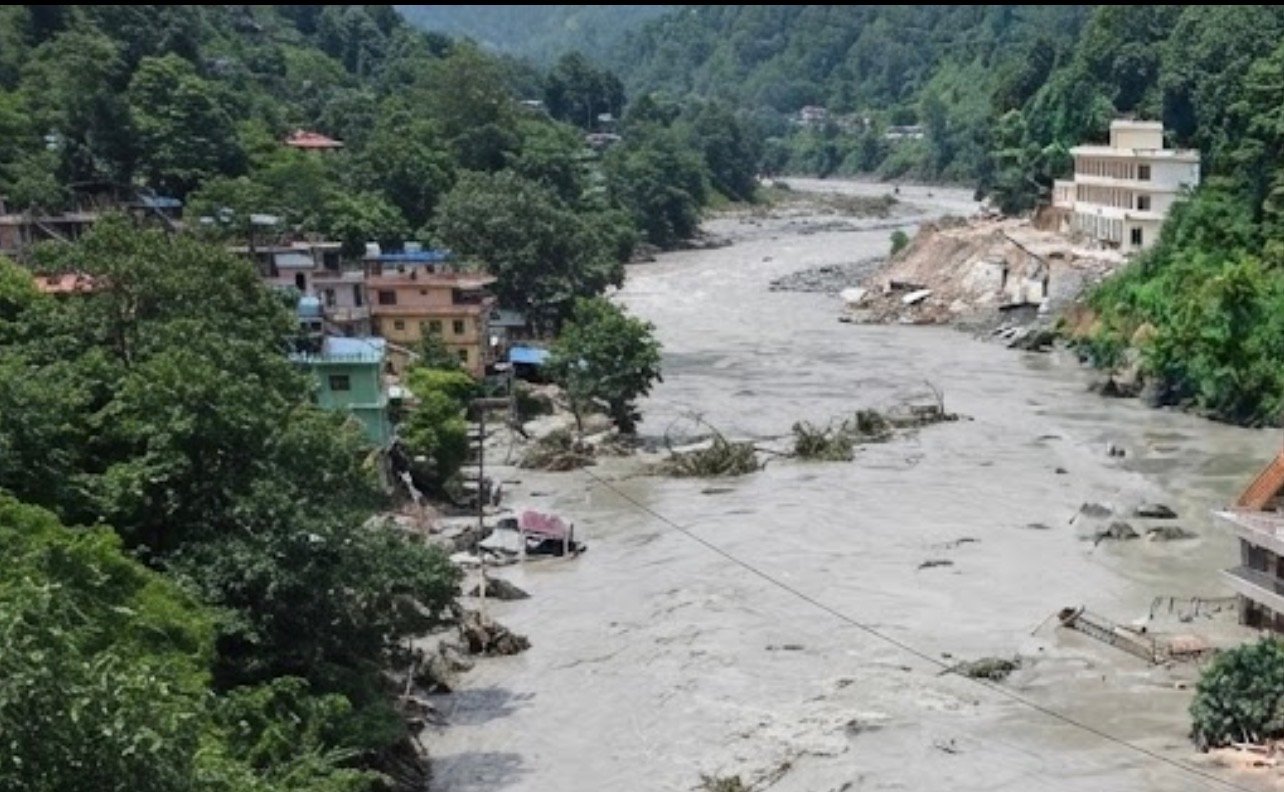
KATHMANDU, Nepal — August 26, 2026: A catastrophic flash-flood disaster has struck northern Nepal near the Tibet border, killing at least 95 people and leaving hundreds of others missing, including a large number of foreign tourists, after a massive landslide and rock-and-ice avalanche sent a destructive wall of water and debris through mountain communities.
The disaster unfolded Wednesday in Rasuwa district, north of Kathmandu, along the Bhote Koshi/Lhende river system. Homes, roads, bridges and power infrastructure were swept away as torrents of mud, rocks and water surged through narrow Himalayan valleys.
Nepal’s Tourism Board initially reported 384 travelers missing, including 291 foreign nationals and 93 Nepali citizens. The preliminary list included tourists and travelers from several countries, among them the United States, India, Britain, Malaysia, South Korea, South Africa, Australia and the Netherlands. At least three Americans were among those initially reported missing.
Authorities stressed that the missing-person figures remain preliminary and are being verified with tourism companies, travel agencies and local authorities as rescue teams reach affected areas.
India was particularly affected, with reports indicating that more than 100 Indian nationals were among those initially listed as missing. Many were traveling through the Himalayan region, including routes used by pilgrims and tourists.
Officials and scientists are investigating what triggered the sudden flood.
Initial assessments indicate that a 4.4-magnitude earthquake occurred shortly before the disaster and may have triggered an avalanche or massive rock-and-ice collapse. The debris is believed to have blocked the river temporarily before the accumulated water and debris broke through, producing a devastating flash flood downstream.
The exact sequence of events remains under investigation, and authorities have cautioned that the situation is still developing.
The force of the flood destroyed or severely damaged houses, bridges, roads and electricity infrastructure in Rasuwa and surrounding districts. The devastation also spread toward areas including Nuwakot and Dhading, while authorities issued warnings along rivers downstream from the disaster zone.
The disaster also affected infrastructure connected to hydropower and electricity generation. Reports indicate that approximately 430 megawatts of electricity production capacity, including hydropower and solar facilities, was damaged, disrupting electricity supplies.
Nepal’s army, police and disaster-response teams have been mobilized for search-and-rescue operations. Helicopters have been deployed, but the mountainous terrain, destroyed roads, high water levels and continuing weather conditions are making access extremely difficult.
In some of the hardest-hit locations, helicopters have reportedly been unable to land, forcing rescue teams to rely on difficult ground approaches and aerial reconnaissance.
Authorities have urged people living near rivers to move to safer, higher ground as concerns remain about additional flooding.
Experts are warning that the danger may not be over.
A possible blockage remains upstream in the river system, raising concerns that additional water could accumulate and potentially trigger another sudden flood. Authorities are therefore maintaining heightened vigilance in downstream communities.
The disaster has also affected the neighboring Chinese region of Tibet. A major mudslide struck the area around Gyirong, damaging roads and disrupting communications and power connections.
Chinese authorities have launched rescue operations and ordered intensified efforts to locate missing people and assist those affected.
The tragedy highlights the extreme vulnerability of Himalayan communities to floods, landslides, avalanches and other cascading natural hazards.
Scientists have increasingly warned that rising temperatures and accelerated glacier melt are contributing to growing risks across the Hindu Kush Himalayan region. At the same time, expanding roads, hydropower projects and settlements in steep mountain valleys can increase exposure to disasters.
Nepal’s government and security forces are continuing search-and-rescue operations, while authorities work to establish a clearer list of those killed, rescued and still missing.
The Nepal Tourism Board maintains tourist-police services in Rasuwa and other major tourist regions, with a 24-hour tourist assistance hotline at 1144 for travelers seeking help.
The casualty and missing-person figures are expected to change as rescue teams gain access to isolated areas and authorities reconcile reports from local communities, tourism companies and foreign governments.
This is a developing story. Figures may be revised as authorities continue search-and-rescue operations.