
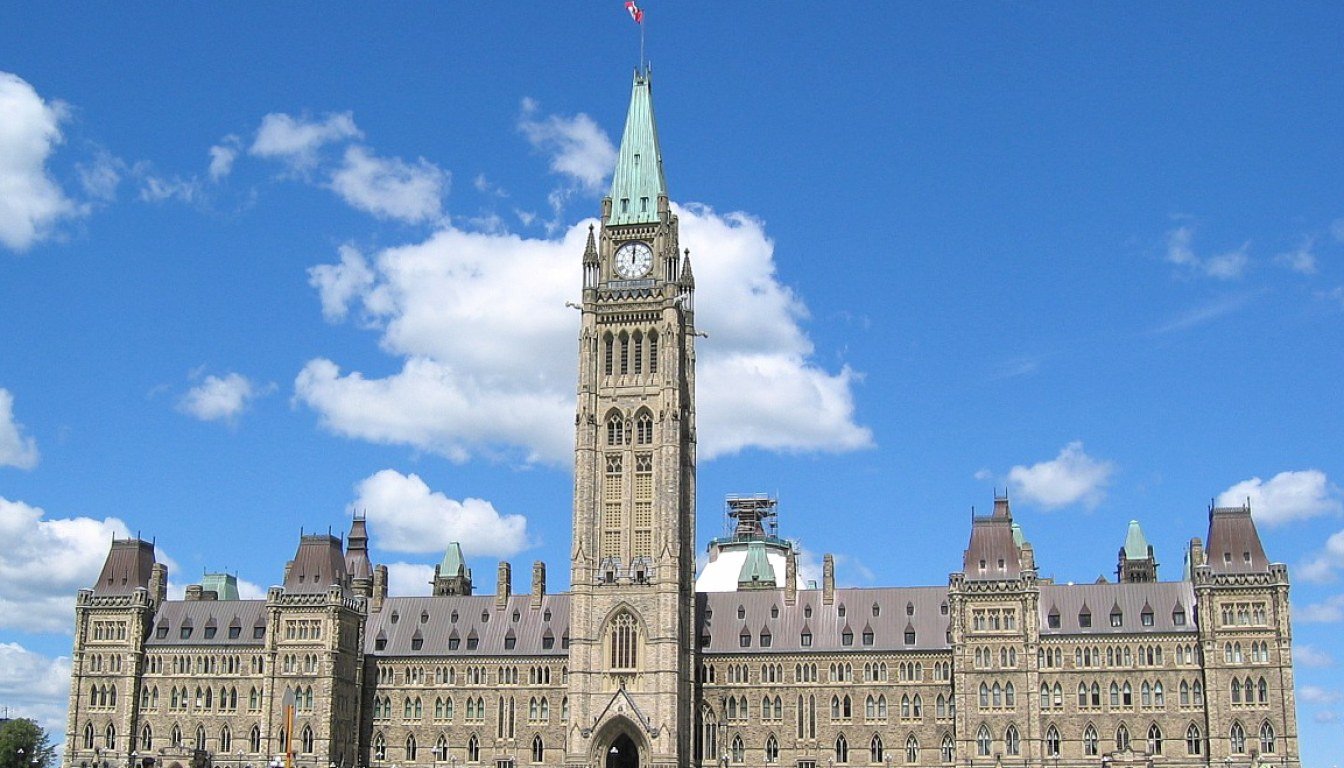
Canada's Supreme Court on Friday largely upheld Quebec's Bill 21, which bars public sector workers from wearing religious symbols, but struck down the law's ban on face coverings for elected officials.
The ruling lets the religious symbols ban stand. It also breaks new legal ground: the court endorsed, for the first time, the power of judges to declare that a law violates the Charter even when the notwithstanding clause is used. According to The Globe and Mail, the endorsement is narrow, but it will make it easier for citizens to challenge governments that rely on the clause.
Al Jazeera reported that the case tests how far governments can go in using the clause to shield laws from rights challenges. The BBC described the decision as one of the most closely watched in Canadian history.
How the court split on judicial declarations
The judges were divided. The Globe and Mail said six justices found that Quebec had validly used the notwithstanding clause when it passed the law in 2019. The court's package of judgments is fractured and runs to almost 140,000 words, the newspaper reported.
On whether courts may issue declarations, the court voted 4-3 in favour, according to The Globe and Mail. The same newspaper reported that the court voted 4-3 against issuing its own declaration on whether Bill 21 violates the Charter.
Justice Nicholas Kasirer, in dissent, declared that Bill 21 violates Section 2, which covers freedom of religion, and Section 15, which covers equality rights. Justices Andromache Karakatsanis and Michelle O'Bonsawin, also in dissent, wrote that "This court should not be silent when asked by claimants to acknowledge that [Bill 21] infringes their rights and freedoms."
Chief Justice Richard Wagner, writing for the majority against a declaration, said doing so would tread into hypothetical territory and "would substantially diminish the effect" of the notwithstanding clause. He also said Bill 21 is rooted in Quebec's legitimate and historical commitment to ensuring the secularism of the state in a free and democratic society.
What the Quebec religious symbols ban means for Muslim women
Bill 21 covers public school teachers, police officers and certain other public officials, Al Jazeera reported. The BBC said the law bars public sector workers from wearing religious symbols, including the hijab and the cross. Teachers are therefore among those covered by the hijab restriction.
Al Jazeera cited a 2022-2023 survey of 411 Muslim women conducted for the National Council of Canadian Muslims (NCCM) and a York University report. It found that 73 percent said Bill 21 had affected their job search, and 48 percent believed they did not get a job because of their religious identity. Eighty-eight percent said the law made Quebec a less welcoming place to live.
Stephen Brown, chief executive of the NCCM, told Al Jazeera that some women take off their hijabs at work and put them back on when they leave. He said being made to choose between "your livelihood or your most deeply held convictions" was "a dehumanising and cruel situation to inflict on people."
Navien Waly, a Quebec mother who began wearing the hijab four years ago, said she received an email telling her that parents who wear religious symbols could no longer volunteer at schools under the Bill 94 provision. Al Jazeera reported her response: "I'm the same person I was 10 years ago."
How Bill 21 and the notwithstanding clause reached the court
Al Jazeera reported that the debate over secularism in Quebec dates to the 1960s Quiet Revolution, when the province began taking control of schools and hospitals from the Catholic Church. Later, the Bouchard-Taylor commission recommended restricting religious symbols for judges, police and others who exercise coercive power. Quebec presented Bill 21 in 2019 as a moderate settlement of that debate.
Bill 94, a later law, expanded the restrictions first introduced under Bill 21, according to Al Jazeera. The Globe and Mail reported that the federal Liberal government and others had proposed new limits on the notwithstanding clause at the March hearing. The newspaper said the ruling is an obvious win for Quebec and other conservative-led provinces, which had argued against such limits.
Several questions remain open. The sources do not say whether the face-covering ruling changes how the law is enforced for elected officials, or how Quebec will respond. They also do not say whether anyone will ask a court to declare that Bill 21 or Bill 94 violates the Charter, or how the ruling affects Bill 94 directly.