

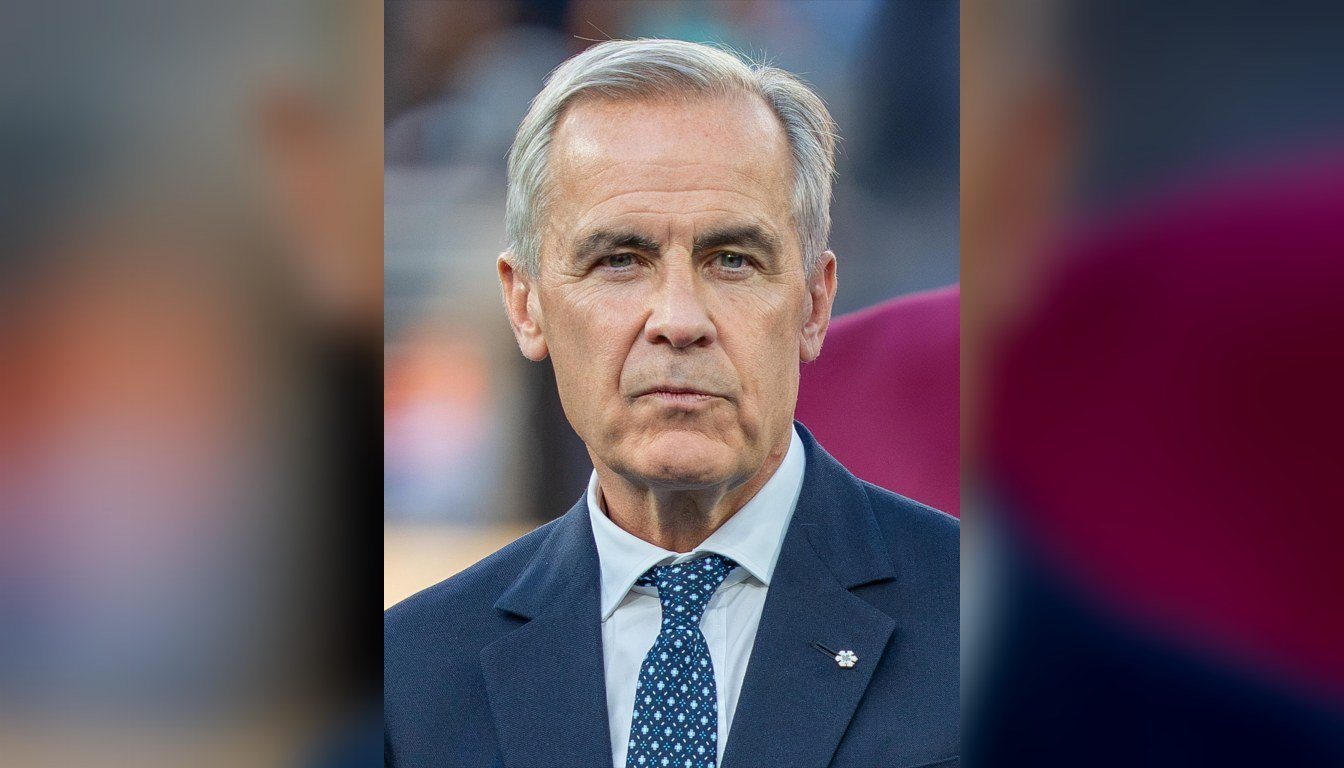
Prime Minister Mark Carney said in Phnom Penh, Cambodia, on Monday that Canada could turn to Chinese automakers if trade talks with U.S. President Donald Trump fail to protect an integrated North American auto industry.
The remarks put jobs and car prices in Canada at the centre of the talks with Washington. Yahoo! Finance Canada reported that Statistics Canada counted roughly 27,000 payroll jobs in automobile and light-duty vehicle manufacturing in 2024 that depended on U.S. demand, which accounted for 76.4% of them.
Motor vehicle exports to the United States fell 9.6% in 2025 because of tariffs between the two countries, Yahoo! Finance Canada reported.
Canada is trying to persuade Trump to scale back the 25 per cent tariffs on Canadian-made autos exported to the United States, according to The Globe and Mail. Carney told reporters that he will not agree to a deal that leaves the auto sector, including assembly and parts, without a viable long-term future.
Asked whether Chinese investment was a bargaining chip, Carney replied, as Yahoo! Finance Canada reported:
"It's not leverage. But action, reaction."
The Globe and Mail reported that Carney plans to raise Chinese investment in the auto sector with President Xi Jinping on Tuesday, at a short meeting in Shenzhen at the start of the Asia-Pacific Economic Cooperation Summit. Yahoo! Finance Canada described the meeting as days away.
What the Canada China EV deal allows now
The route to Chinese vehicles is narrow for now. In January, Canada removed tariffs to allow up to 49,000 Chinese-made electric vehicles a year at a 6.1% tariff, Yahoo! Finance Canada reported. Before that, the tariff on Chinese EV imports was 100%, imposed in 2024.
- Trade quota: less than 3% of Canada's annual new-vehicle market could come from China.
- Federal rebate: worth up to $5,000 on a battery-electric vehicle in 2026, but it applies only to vehicles built in Canada or in countries with which Canada has a trade agreement. Chinese-made EVs do not qualify.
- First arrival: the Lotus Eletre, with a starting sale price of $119,000.
Lower prices are possible but not imminent. The 10 lowest-priced EVs in Canada each sold for an average of $45,000 last year after manufacturer rebates. An industry analyst told The Globe and Mail that Chinese models could undercut those prices by 10% to 15% if lower-priced models arrive.
Yahoo! Finance Canada reported that no concrete timeline has been given for more affordable models.
Carney's conditions for Chinese investment
Ontario Premier Doug Ford criticized the plan, warning that Chinese EVs could threaten Canadian jobs and jeopardize access to the U.S. market, Yahoo! Finance Canada reported.
Carney said Canada opposes China shipping "kit cars," meaning parts delivered to be bolted together, The Globe and Mail reported. He wants Chinese EV manufacturing in Canada to use Canadian parts, Canadian labour and critical minerals sourced in the country.
"We aren't talking about mere 'kits,'" ... "We are talking about full-scale vehicle manufacturing - actual factories and genuine processes, with supply chains that expand within Canada over time."
Carney's government struck a "strategic partnership" with Beijing in January, ending years of chilly relations, The Globe and Mail reported. Guardrails remain that restrict Chinese investment in defence-related sectors, artificial intelligence and critical minerals.
What remains open in the talks
Parts makers are already feeling the strain. DesRosiers Automotive Consultants, an automotive research firm, reports that parts manufacturing employment fell 8.7% year over year in February, a loss of 6,200 jobs, according to Yahoo! Finance Canada.
Neither report gives the U.S. reasons for the tariffs. The sources describe them only as "trade actions" and "tariffs between the countries."
China has kept its own tariffs on some Canadian goods, including 25% on pork, shrimp and geoduck clams, The Globe and Mail reported. One source familiar with the talks said Beijing insists on dollar-for-dollar tariff cuts. A second source expects further tariff reduction announcements after the Carney-Xi meeting, but could not say whether they would come immediately or later.
Carney offered no insight into whether China would cut levies on agriculture or seafood. It is not yet known whether the U.S. and Canada will reach a deal that scales back the auto tariffs and keeps the sector integrated, or whether Carney and Xi will agree anything in Shenzhen.