

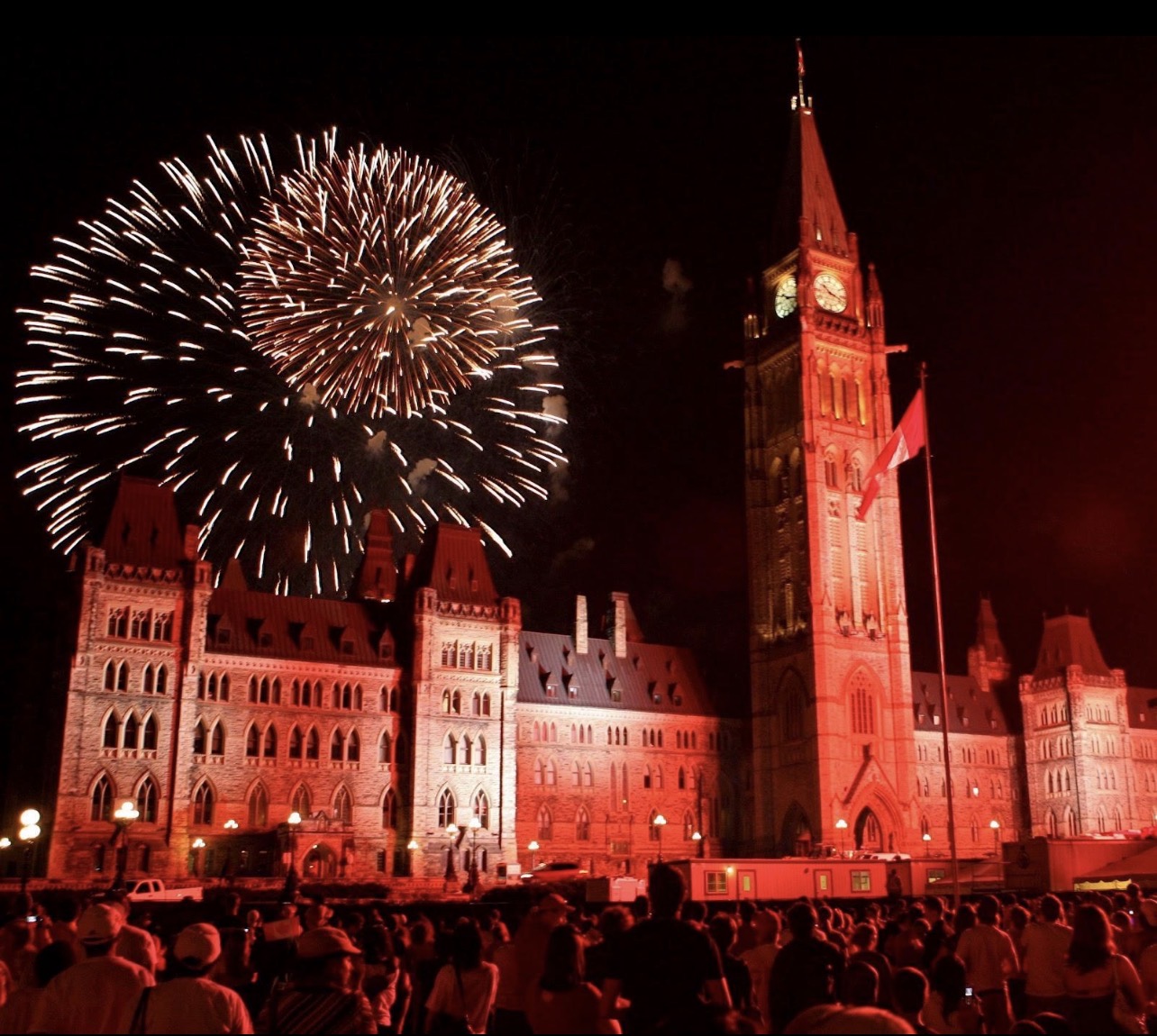
OTTAWA — Canada marked its 159th Canada Day on July 1, 2026, with nationwide celebrations, cultural events, and fireworks displays honoring the country’s confederation and multicultural identity.
Across cities and towns from coast to coast, millions of Canadians participated in public gatherings, concerts, parades, and citizenship ceremonies, reflecting both national pride and ongoing discussions about unity, reconciliation, and diversity.
A National Celebration Across the Country
In the capital city of Ottawa, large crowds gathered on Parliament Hill, where the main Canada Day ceremony featured live performances by Canadian artists, military honors, and a citizenship oath for newly naturalized Canadians.
Prime Minister addressed the nation in a televised message, highlighting Canada’s achievements in economic stability, healthcare, immigration integration, and international diplomacy, while also acknowledging the country’s ongoing efforts toward Indigenous reconciliation.
Fireworks and Cultural Festivals Nationwide
From Toronto’s waterfront to Vancouver’s harborfront and Montreal’s historic districts, Canada Day events featured fireworks shows, food festivals, and cultural performances representing the country’s diverse population.
Local organizers emphasized inclusivity this year, with Indigenous cultural exhibitions playing a more prominent role in several provinces. Traditional drumming, storytelling, and art installations were included in many public celebrations.
Citizenship Ceremonies Highlight Immigration Story
A defining feature of Canada Day 2026 was the large number of citizenship ceremonies held across the country. Thousands of new Canadians officially took the oath of citizenship, becoming part of what officials described as “Canada’s continuing national story.”
Immigration officials noted that Canada’s identity remains closely tied to immigration, with newcomers contributing significantly to labor markets, education, and innovation sectors.
Public Reflection: Pride and Debate
While Canada Day remains one of the country’s most widely celebrated holidays, public discussions this year also reflected ongoing debates around affordability, housing challenges, and Indigenous reconciliation progress.
Some advocacy groups used the occasion to call for stronger policy action, while others emphasized national unity and shared responsibility for Canada’s future.
A Symbol of National Identity
Canada Day, observed annually on July 1, commemorates the formation of the Canadian Confederation in 1867, when the original provinces united to form the Dominion of Canada. Over time, it has evolved into a broader celebration of national identity, multiculturalism, and civic belonging.
As fireworks lit up the night sky from coast to coast, Canada’s 2026 celebrations reflected both pride in the nation’s history and ongoing conversations about its future direction.