
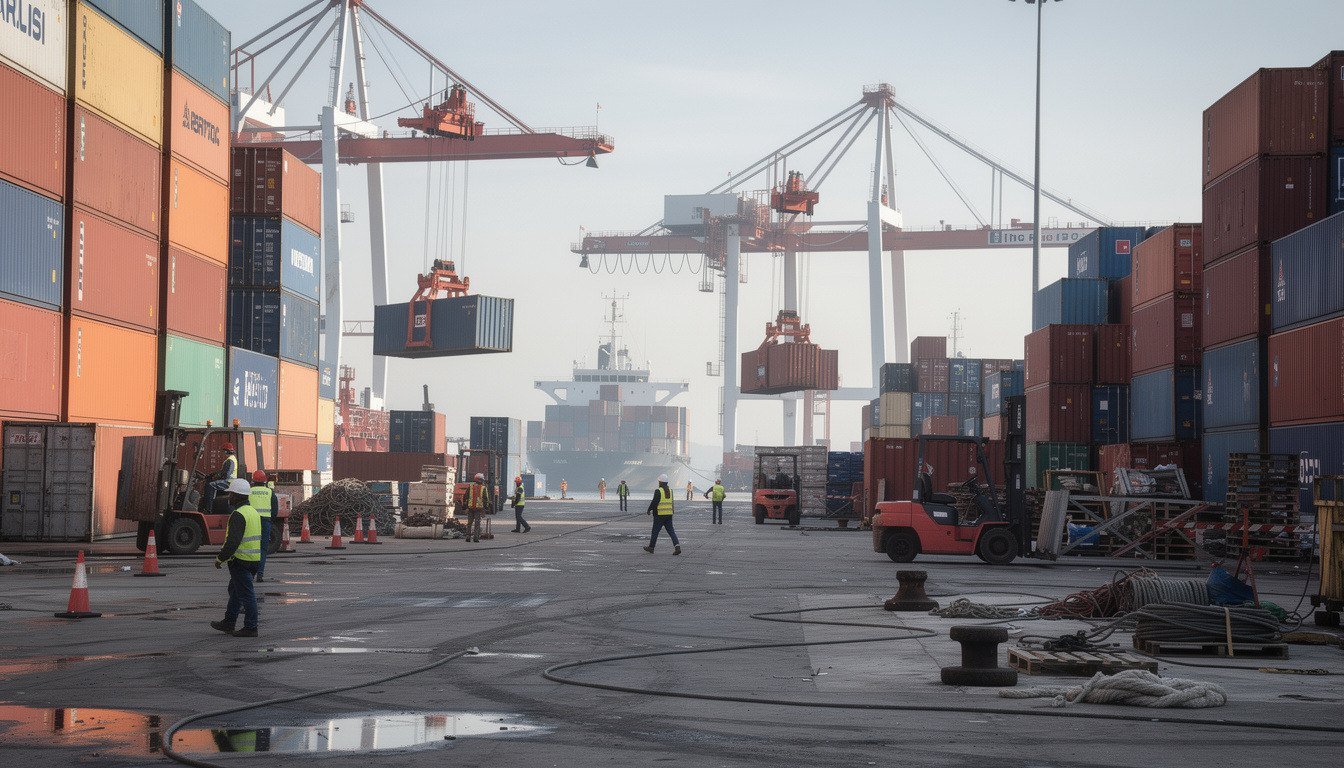
The Trump administration is preparing a broad new wave of tariffs on China, the European Union and dozens of other trading partners, according to reports cited by Investing.com on Yahoo Finance.
According to The Wall Street Journal, as cited by Yahoo Finance, U.S. Trade Representative Jamieson Greer could unveil the findings of a monthslong probe into foreign industrial subsidies as soon as this week. The findings would form the basis for the planned duties.
The administration aims to replicate the sweeping levies first set in 2025. The Supreme Court struck those tariffs down in February 2026, so a new round tied to a subsidies investigation would be a different approach, not a simple restoration.
The research does not say why the Supreme Court struck down the 2025 tariffs.
Why Jamieson Greer says the duties are needed
Greer argues that state supports in China, the EU and 14 other nations have created excess industrial capacity, Investing.com reported on Yahoo Finance. He contends that this allows foreign firms to flood global markets with underpriced goods at the expense of American producers.
The research does not identify the 14 nations beyond China and the EU.
Which countries and products would face the new tariffs
The duties would cover most products from dozens of countries, including China, Japan, South Korea and all 27 EU members. Steel, aluminum and autos are excluded because separate national security tariffs already cover them.
According to the report, the rates would vary by country:
- China: slated for the steepest rates because of the scale of its subsidies
- EU, Japan and South Korea: expected to see rates capped at 15% or lower under existing trade pacts with Washington
- Vietnam and India: could face higher duties based on their agreements
Final rates have not been disclosed, so the actual figures for each country remain unknown.
How the duties would interact with the July tariffs
The new levies would stack on top of a separate July action. That action imposed tariffs of 10% to 12.5% on 60 economies over forced-labor supply chains, and it is facing a court challenge, Yahoo Finance reported.
The policy may also include triggers to raise tariffs further if countries fail to curb overcapacity or make policy concessions. The research does not say which triggers would apply or how they would work.
For importers, the combination would add a second layer of duties on many of the same trading partners, while the court case over the July action is still pending. The research does not give a combined rate for any country.
Market and political reaction so far
Major U.S. stock averages came under fresh downward pressure on Tuesday, extending a pullback after paring large gains from the previous session, Investing.com reported on Yahoo Finance. It said the averages were already struggling to hold onto the previous session's rebound, and that the prospect of stacked tariffs left equity buyers cautious.
Investing.com also said the USTR report could help divert political attention from a bipartisan controversy involving Nvidia CEO Jensen Huang and what the administration knew about alleged smuggling of advanced AI chips to China. That link is reported by Investing.com alone and is not confirmed elsewhere in the research.
It is not yet clear whether the USTR report will be released this week, as The Wall Street Journal suggested. The research does not confirm an official announcement, and the outcome of the court challenge to the July action is also unknown.