

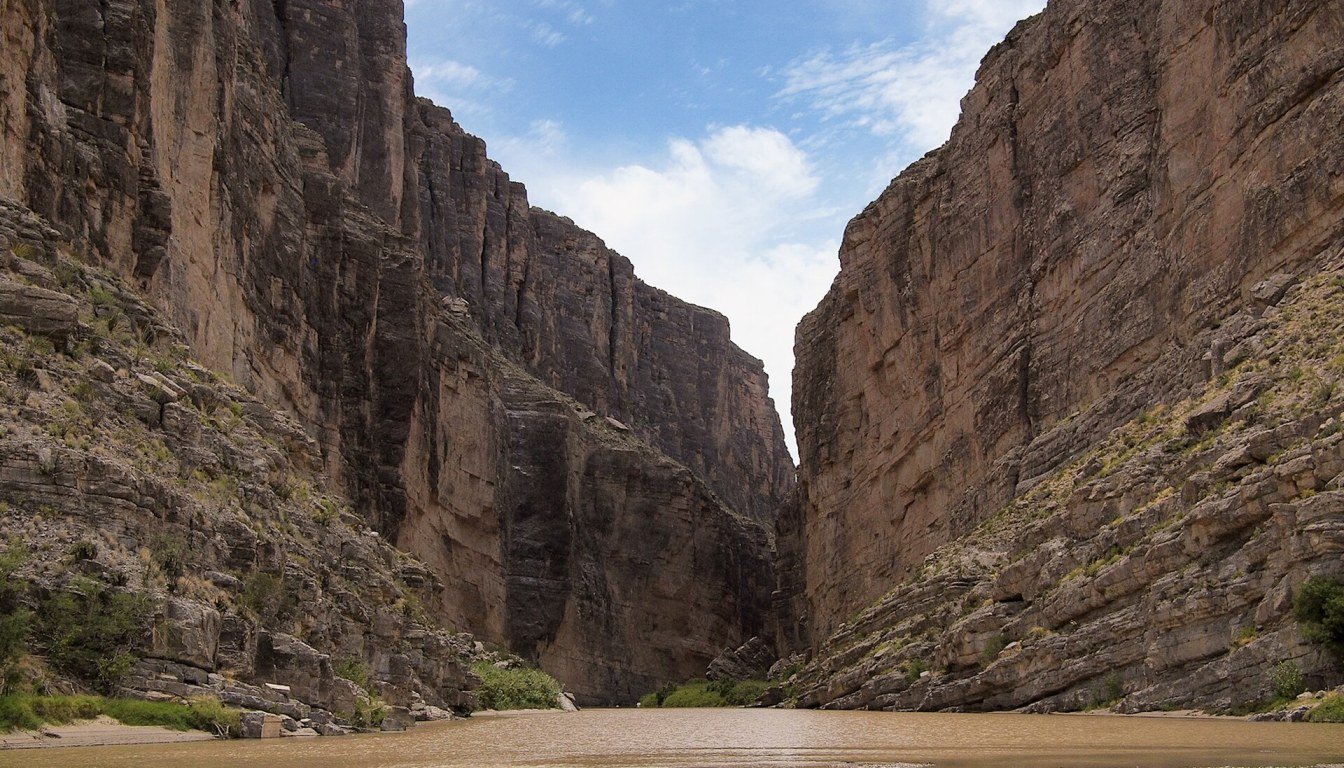
The U.S. Supreme Court on Monday cleared the Trump administration to resume border barrier construction in the Big Bend region of West Texas, including Big Bend National Park, KSAT reported.
The decision paused an order from U.S. District Judge Kathleen Cardone that had halted the work over her concern that the federal government exceeded its authority to waive environmental laws. The ruling was unsigned and came by an 8–1 vote. Justice Ketanji Brown Jackson dissented but did not give a reason.
The ruling is temporary. It remains in effect until the Supreme Court decides to hear the case or until the case is settled in the lower court in El Paso, KSAT reported. The report does not say when the justices will decide.
Does the border wall go through Big Bend National Park?
Officials have said 30-foot steel bollard walls are planned on private property and are not planned through Big Bend National Park or Big Bend Ranch State Park, according to Yahoo. The proposal does include about 17 miles of noncontiguous vehicle barriers inside the national park, Yahoo reported.
The Big Bend Sector covers roughly 500 miles of the U.S.-Mexico border. Yahoo reported that the government does not plan one uninterrupted wall along that entire stretch. Federal plans combine steel barriers, vehicle barriers, patrol roads and surveillance technology in selected areas.
The government says about three-quarters of a mile of border barrier had already been built at one project site before the injunction, Yahoo reported.
The legal fight over waivers and the Supreme Court filing
The dispute centers on waivers that let the Department of Homeland Security bypass environmental and other legal requirements. The administration relies on the Illegal Immigration Reform and Immigrant Responsibility Act of 1996, as amended by the REAL ID Act of 2005, Yahoo reported.
Cardone issued a preliminary injunction on Oct. 2 that blocked construction and related ground-disturbing work in the affected area unless the government complies with applicable laws, Yahoo reported. She said the challengers were likely to succeed on their claim under the major questions doctrine.
The administration filed an emergency application on Oct. 21 asking the Supreme Court to suspend the injunction. The case is listed on the court's docket as Mullin v Friends of the Ruidosa Church, application No. 26A560, Yahoo reported.
The government argues that leaving Big Bend without more infrastructure could redirect crossings and smuggling into the region. Opponents, including an environmental organization, a church-preservation group and a local river guide, argue the region has historically seen relatively few border crossings compared with other parts of the Southwest. They have suggested surveillance towers and drones could provide monitoring without the same construction costs and environmental disruption, Yahoo reported.
In its ruling, the court wrote: "The Government's interest therefore outweighs any aesthetic, recreational, and environmental harm alleged by respondents," KSAT reported.
Why the government paused part of the project in September
Emails shared with Marfa Public Radio show that U.S. Customs and Border Protection paused part of the Big Bend work on Sept. 24, a week before the judge's injunction, Houston Public Media reported.
In that directive, CBP told contractor Barnard Construction to "promptly execute an orderly demobilization" on part of the "Big Bend 3" project, which covers 56 miles of the Rio Grande from Hudspeth to Presidio counties. Barnard holds a $960.4 million contract for the project, Houston Public Media reported.
According to the directive, the pause was prompted by Barnard seeking more money because of delays caused by a "lack of real estate clearance and road access." CBP did not approve "the lump sum total" or the "proposed monthly standby rate" Barnard requested, Houston Public Media reported.
The delays involved Chispa Road. Jeff Davis County officials declined to vote on a road use agreement on Sept. 14, and Barnard sent CBP a "change proposal" requesting more money on Sept. 18, Houston Public Media reported.
The administration had referred to real estate problems in court filings, but it had not disclosed that it had issued its own construction pause over a lack of access to private land, Houston Public Media reported.
Presidio County Commissioner Deirdre Hisler, who shared the emails, told Marfa Public Radio that CBP is struggling to get enough landowner agreements across several stretches of the region. "It sounds to me that they're up against a big old brick wall called people saying 'no' to them," she said, according to Houston Public Media. She also asked: "Is this just truly a boondoggle, as everyone alludes to? Sure feels like it."
CBP did not immediately respond to a request for comment, Houston Public Media reported. Whether CBP and Barnard will reach agreement on the Chispa Road access and the contractor's additional payment has not been reported.