
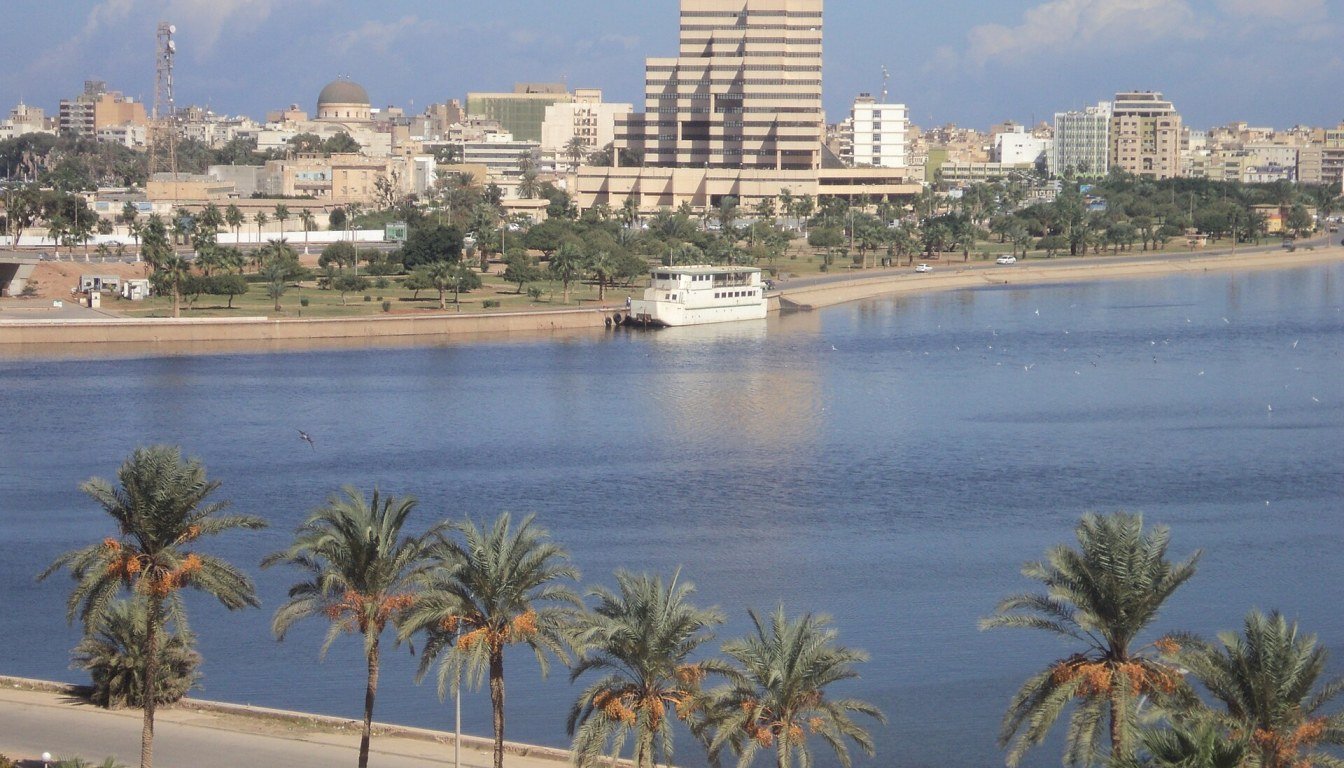
Ukraine says it sank the Russian corvette Merkury and damaged a sanctioned cargo ship in attacks at the Benghazi Naval Base in eastern Libya on Sunday. President Volodymyr Zelenskyy said in a social media post on Monday that Ukrainian forces carried out the strikes, but two Libyan officials told CBS News that the corvette was severely damaged rather than sunk.
The BBC argues the strike raises a wider question: whether the war in Ukraine is spreading well beyond the country's borders. The Merkury was berthed nearly 2,000 miles from Moscow, the BBC reports, and CBS puts the operation some 1,500 miles from the front line in Ukraine.
How the Benghazi naval base attack unfolded
Residents in Benghazi heard loud explosions and saw fire at the base early on Sunday, according to CBS, citing authorities in eastern Libya. Civil defence crews rushed to the site and extinguished the fire.
Zelenskyy said Ukrainian forces deployed seven domestically made naval drones in the operation. He described the Merkury as one of Russia's newest vessels, commissioned in 2023, and said a Ka-27 military helicopter was also destroyed.
Ukrainian forces also struck the Russian dry cargo ship MV Angara off Libya on Sunday. Zelenskyy said Moscow had used the vessel to transport weapons. The Angara has been under U.S. and international sanctions for illegally transporting weapons for Russia, CBS reports.
Zelenskyy called the operation "an exemplary Ukrainian operation in response to Russia's war," and said that "the targets we set were achieved."
Sunk or severely damaged? The conflicting accounts
The sources disagree on the outcome for the corvette. The available reporting does not include independent confirmation of the sinking.
- Ukraine: Zelenskyy says the Merkury was sunk, a Ka-27 helicopter was destroyed, and seven naval drones were used (CBS).
- Libya: two Libyan officials say the corvette was severely damaged at the Benghazi Naval Base (CBS).
- Russia: the Kremlin made no immediate comment on the strikes off Libya and said the Russian defence ministry would provide information later (CBS).
Why a Russian warship was in Libya
Libya has been divided since a NATO-backed uprising toppled longtime dictator Muammar Qaddafi, who was later killed, in 2011, CBS reports. A UN-supported government is based in Tripoli, and a rival administration is in the east. The oil-rich nation remains a focal point for a long-running rivalry between Russia and the West.
The Merkury and the accompanying cargo ship were berthed in the part of eastern Libya controlled by Khalifa Haftar, whom the BBC describes as a pro-Moscow warlord and self-styled "Field Marshal." Libyan officials say their country is not a party to the Russia-Ukraine war.
Libyan officials also told CBS that Ukrainian forces, most of them drone experts, have operated in western Libya under a covert deal endorsed by the West. They said those forces used Libyan territory to strike a Russian tanker in the Mediterranean in March. These claims come from Libyan officials and have not been independently verified in the research.
Moscow and the UN mission respond
The BBC reports that Russia has called the Benghazi attack a dangerous escalation. The Kremlin's public comment so far has focused on a separate incident. The Sparta II, a cargo ship operated by Russian defence logistics firm Oboronlogistika, was struck by drones on Saturday in international waters in the Gulf of Finland, causing a fire on board.
Kremlin spokesman Dmitry Peskov told reporters on Monday: "This is very dangerous. It is, of course, leading to an escalation of tensions in the region." Reuters reported, as cited by CBS, that all crew members were rescued and a Russian ship began towing the vessel away on Sunday.
Kyiv has neither confirmed nor denied a role in the Sparta II attack. Finland's military said it was likely a Ukrainian strike, CBS reports.
The UN Support Mission in Libya (UNSMIL) expressed "serious concern" and called for "an immediate, independent and transparent investigation," according to CBS. The BBC reports the mission expressed "deep concern." UNSMIL wrote on social media: "Libya cannot afford, and must not become a battleground for foreign conflicts."
It remains unclear whether the Russian defence ministry will publish its account of the Benghazi strikes, whether an independent investigation will be launched, and whether Libyan authorities will take a position.