
President Trump's team is moving toward a long-term economic pressure campaign against Iran instead of a new nuclear agreement or renewed military strikes, The New York Times reported on Friday. This Trump Iran war update marks a notable change in strategy for the administration.
The shift comes after Republicans lost their majority in Congress in the midterm elections, and Vice President JD Vance blamed the unpopular war with Iran for part of the defeat. Rather than pushing for a quick end through force or a deal, the administration now appears content to let sanctions and a naval blockade do the work.
Secretary of State Marco Rubio described the approach to reporters in Paris, where he was attending a meeting of Group of 7 foreign ministers. The New York Times characterized it as "strategic patience": waiting for sanctions to take their toll and ultimately crack the government in Tehran.
"At this point, the economic campaign and the pressure and the devastation that our economic campaign is having on the Iranian regime is working so well that the president really doesn't have any need to conduct major combat operations," Rubio said, according to The New York Times.
The Times reported that Trump appears, "at least for now," to have rejected a series of options involving intense but time-limited attacks on military installations, nuclear sites and some energy infrastructure. A plan to send commandos to seize roughly 970 pounds of uranium enriched to 60 percent purity has also been abandoned "for the moment."
What waiting looks like in practice
Trump wrote on Truth Social that "We don't need a deal with Iran. Those days have long since passed. We've got their money," NPR reported. He said the United States has billions of Iranian dollars frozen in overseas accounts.
After meeting Qatar's prime minister at the White House, Trump said Gulf Arab allies prefer "the status quo" of economic pressure on Iran, and that an attack "seems to be quite unlikely," NPR reported. Negotiations remain stuck, with Qatar working as mediator.
The US naval blockade has cut Iran off from at least $25 billion in revenue so far, according to the US military, NPR reported. The blockade bars Iranian ships from carrying oil to countries such as China.
The cost to the region is also significant. The International Monetary Fund says Gulf Arab states are in economic recession because of the war, and that the economies of Kuwait, Qatar and Iraq are contracting by approximately 16% this year, while Bahrain's is down 11%, NPR reported. The UAE announced over the summer that it was severing all economic and trade ties with Iran.
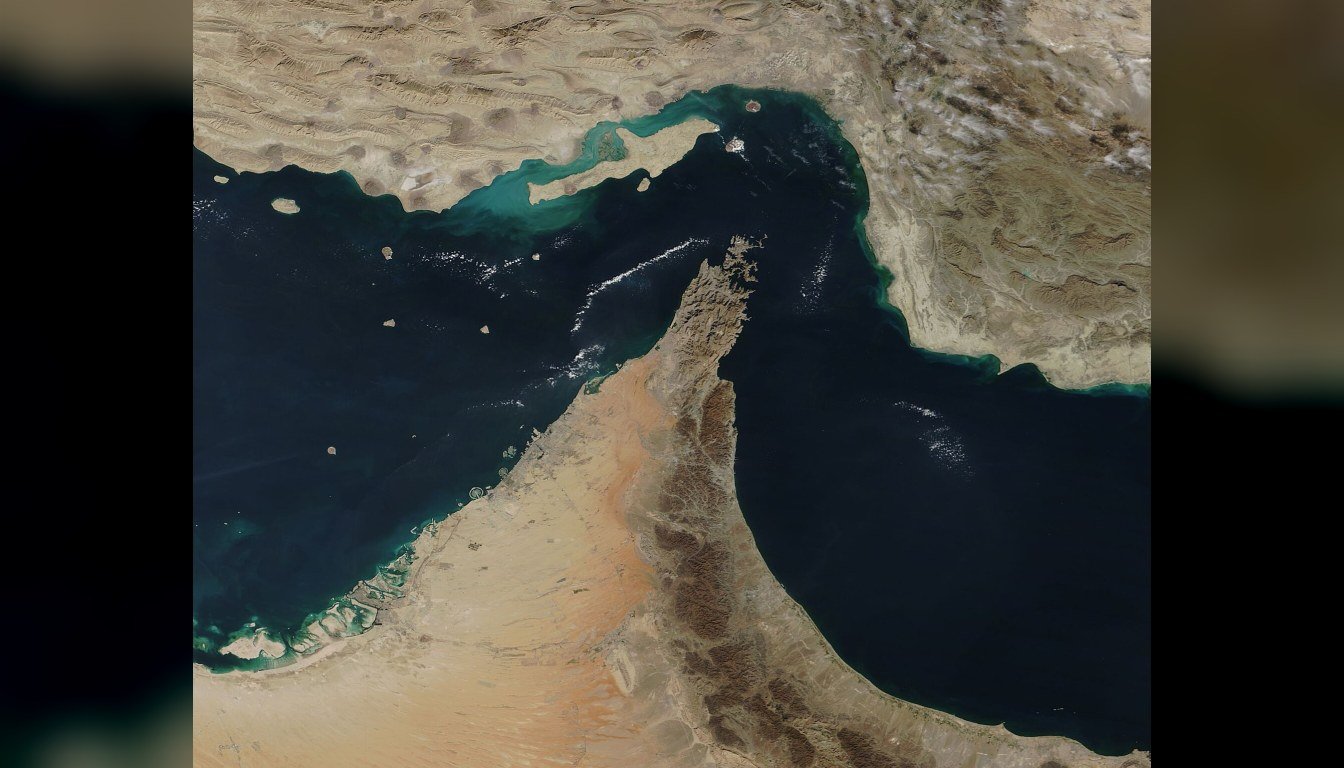
Fighting has not stopped entirely. Iranian media said the US struck one of Iran's islands in the Strait of Hormuz on a Friday, and Iran's Revolutionary Guard said it targeted an early warning US radar in Bahrain, NPR reported. Iran now requires ships to get permission to navigate the strait, which was open and free to ships before the war. The US is helping oil tankers through a route near Oman's coastline, NPR reported. Meanwhile, the US is sending a third aircraft carrier with thousands of troops to the region.
Why the strategy shifted after the midterms
Before the election, Trump had considered attacking Iran, as Israeli Prime Minister Benjamin Netanyahu urged, Axios reported. The report, carried by Iran International, said the military was completing preparations for a possible resumption of major combat operations.
Axios reported that Vance led a group in Trump's inner circle urging an agreement with Tehran. CIA Director John Ratcliffe and Treasury Secretary Scott Bessent favored keeping the blockade and economic pressure, according to the same report.
Democrats won control of both the House and the Senate in the midterms, and Democratic leaders vowed to push for an end to the war. Senate Democratic leader Chuck Schumer said the incoming majority could use its control over government spending to press for an end to military operations, Iran International reported.
"This war must end. It must end," Schumer told reporters, according to Iran International.
Asked when the conflict would end, Trump said: "Whenever I wanted to. But it's got to be done right, because they can't have a nuclear weapon," Iran International reported.
Is the Iran war over?
No. The war is ongoing, and the administration has not said it is finished. The New York Times says the war began 10 months ago, while NPR puts it at nine months.
The reporting also differs on direction. The Times and NPR describe a shift toward waiting, while the Axios report carried by Iran International, dated 5 November, said US forces were preparing to resume major combat.
A Qatari-mediated draft agreement could prevent renewed fighting and possibly restart direct talks, Axios reported. It is not clear whether the draft will win support from both Washington and Tehran. Iran's response to the blockade and the Strait of Hormuz attacks is also unsettled.
The Times reported that US intelligence believes, but is not certain, that Pickaxe Mountain houses advanced centrifuges that could purify uranium into bomb fuel. That question remains unverified.