

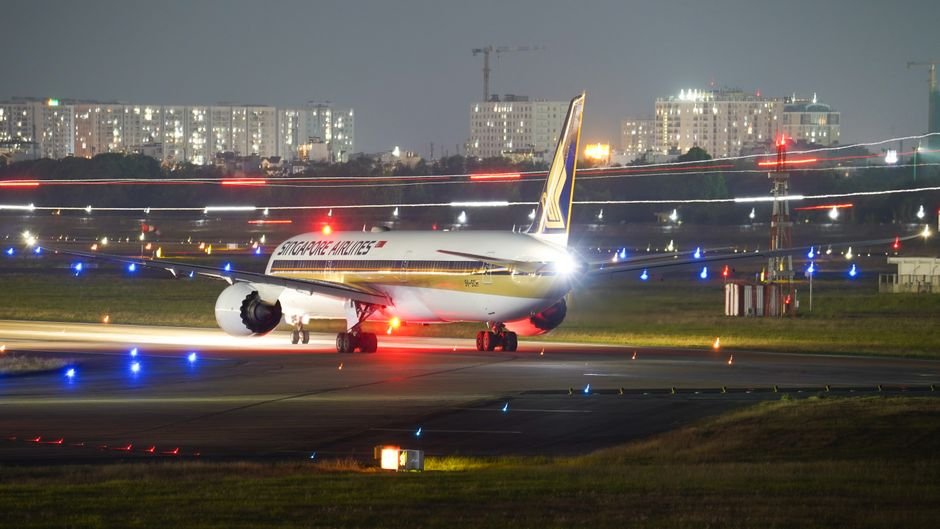
An attack on King Khalid International Airport in Riyadh late Thursday killed three people, including a pilot for the national carrier Saudia, according to foxnews.com. The Iran-backed Houthi movement from Yemen claimed responsibility for the strike, which also damaged a Saudia aircraft parked on the tarmac; no passengers were aboard at the time.
Attack on King Khalid International Airport
The fatalities included Captain Hamud Ali Al-Kalthami, a long-serving Saudi national who died in the incident on October 8, 2026. Saudia confirmed the loss in a statement posted Friday on X, formerly Twitter, honoring his memory and extending condolences to his family and colleagues. The airline described him as a dedicated professional who left a lasting mark on the carrier. The airport serves as the primary domestic and international gateway for the Saudi capital, a critical hub for the millions of expatriates — including a large Bangladeshi community — who live and work in the kingdom.
Houthi Claim and International Condemnation
The Houthis announced Thursday they had targeted the airport. In response, European Commission President Ursula von der Leyen wrote on X that the group had "once again attacked Riyadh airport, taking the lives of three innocent people." She expressed solidarity with Saudi Arabia and its Gulf partners, stating that attacks on civilian infrastructure are unacceptable and demanding that Iran's proxies cease their violent actions. The language underscores growing Western concern over the expansion of Houthi capabilities beyond Yemen's borders.
Yemeni Government Offensive Intensifies
The airport strike coincides with a major escalation by Yemen's internationally recognized government. On Wednesday, the military launched an operation dubbed "Dawn of Yemen," reporting 2,103 targeted operations that "neutralized" 1,860 Houthi fighters and destroyed hundreds of military positions and equipment. Coalition spokesman Major General Turki Al-Maliki said separately that 82 targets were hit across Saada, Hodeidah, Al-Jawf, and Marib, including 11 ballistic missile storage facilities in mountainous areas. Saudi Ambassador to Yemen Mohammed Al-Jaber declared Friday that the Bab al-Mandab Strait — a vital chokepoint at the southern entrance to the Red Sea — had been cleared of remaining Houthi terrorist elements.
Maritime Threats Rise in Strait of Hormuz
Simultaneously, commercial shipping faces heightened danger in the Strait of Hormuz, the narrow passage through which a fifth of global oil supply flows. The UK Maritime Trade Operations (UKMTO) center reported Friday that an unknown projectile struck a vessel 13 nautical miles west of Al Jazirah Al Hamra in the United Arab Emirates, sparking a fire that was later contained. UKMTO's weekly advisory noted at least 10 ships targeted in the strait this week alone. Since July 6, 59 incidents involving commercial vessels have been recorded, 41 of them off Oman's coast. The threat level is now rated "severe" in the Strait of Hormuz and "moderate" in the Arabian Gulf and Gulf of Oman.
Implications for Bangladeshi Diaspora and Global Economy
These developments carry direct consequences for Bangladesh. Hundreds of thousands of Bangladeshi workers reside in Saudi Arabia, sending home substantial remittances that underpin the national economy. Disruption at Riyadh's main airport could affect visa processing, flight schedules, and the movement of workers and families. Meanwhile, sustained attacks on shipping in the Hormuz chokepoint threaten global oil supplies, potentially driving up import costs and consumer prices in Bangladesh, a net energy importer. The flare-up also coincides with shifting diplomacy: Russian President Vladimir Putin met Iranian President Masoud Pezeshkian in Turkmenistan this week, offering mediation, while indirect talks between Tehran and Washington continue in Oman. The convergence of military escalation and diplomatic maneuvering suggests a volatile period ahead for Gulf security.