
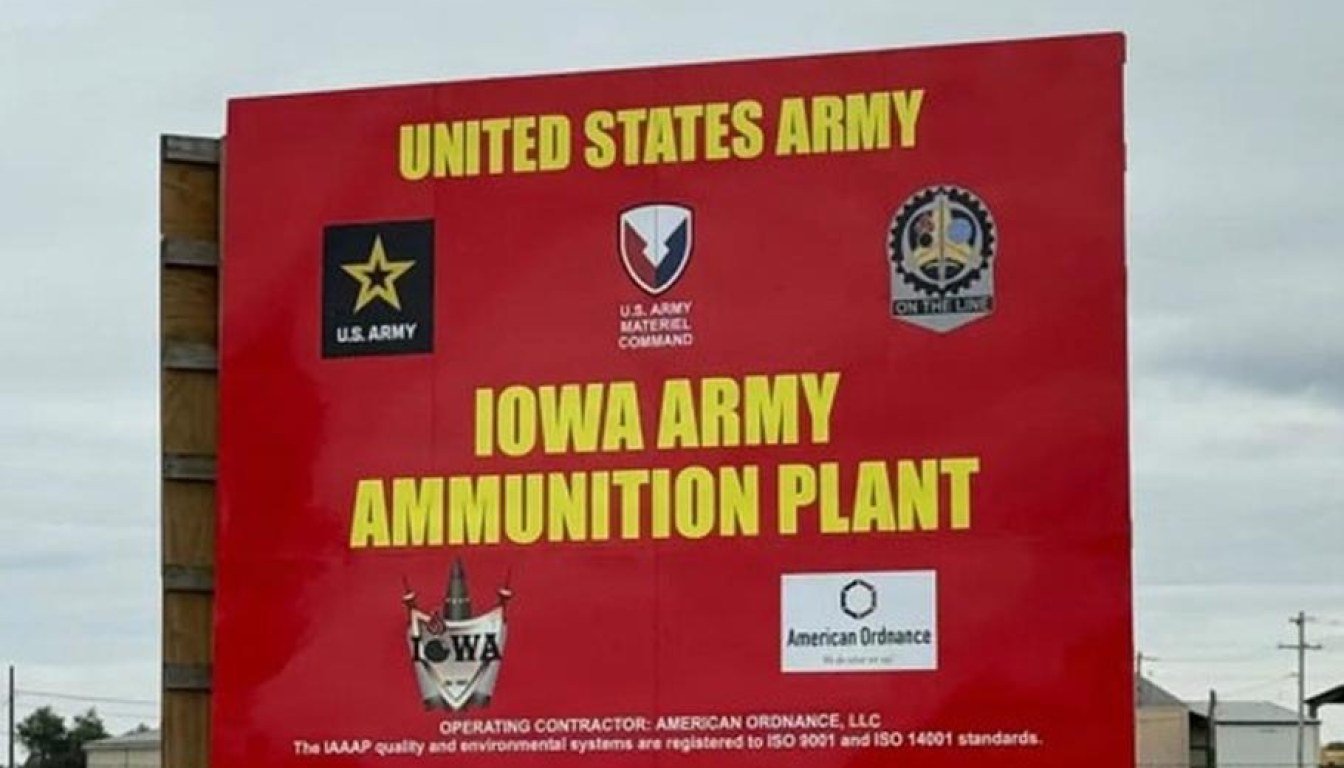
The US Army carried out the Iowa lead azide detonation on Wednesday, destroying 68 barrels of degraded lead azide at the Iowa Army Ammunition Plant near Middletown.
The blast, at about 9 am CT on 25 November, sent gray-white clouds over southeastern Iowa, according to Ars Technica. It went ahead only after a federal appeals court ruled this week that the Army could proceed, given no better option. Questions remain about when the Army knew the material was hazardous and what else may have been permitted for treatment.
The Army had planned to detonate the barrels on Friday, 20 November. After public alarm and an emergency court filing from environmental groups, the date slipped to Monday, then Tuesday, and finally Wednesday. On Monday, Trump said he had ordered the military to halt the operation until the court lifted a stay and Governor-elect Rob Sand, a Democrat, signed off.
The Army described the stockpile as degraded and crystallized, and therefore highly unstable. Ars Technica reported that the Army surrounded the two earth-covered containers with sand-and-lime fill, set up water cannons and misters to keep dust down, and covered the container tops with fire-suppressant foam. The containers were detonated simultaneously, and the local outlet KWQC broadcast the plume.
What residents near Middletown were told to do
Residents within a 5-mile area of the facility were advised to evacuate. People farther out were told to shelter in place, close windows and doors tightly, turn off fans and set indoor air systems to recirculate, Ars Technica reported.
Middletown is a town of fewer than 400 people.
Is the lead from the Iowa detonation dangerous to children?
Lead is a neurotoxin that does not break down in the environment, according to Ars Technica. It poses significant health risks, particularly to young children and pregnant people.
Army maps released before the blast modeled airborne lead traveling around 100 miles to the southwest of the facility. Dust deposition could cover around 200 square miles in that direction, Ars Technica reported.
Iowa detonation EPA air monitoring so far
The US Environmental Protection Agency said its real-time air monitors had not detected any airborne lead more than an hour after the detonation. Officials announced the blasts were successful, Snopes reported.
Researchers and government workers have collected air and soil samples from the area. These will serve as baseline readings for lead levels after the detonation, Ars Technica reported. The research does not include results from those samples beyond the first-hour monitoring.
What the redacted EPA permit and the Army's timeline leave open
Snopes confirmed that an EPA emergency permit dated 13 November 2026 is authentic. It allowed the Army to treat the lead azide as hazardous waste "upon the EPA's finding of an imminent and substantial endangerment to human health and the environment."
A rumor spread online that the Army planned to detonate materials other than lead azide. Snopes said the permit contains redacted text and that it is unclear what the redacted portions cover. On 23 November, the EPA said that "the permit and permit application materials contain redacted elements for critical infrastructure security purposes at the request of Department of Army." Snopes has left the claim unrated and said it had contacted the Army and the EPA.
Snopes reported that the permit lists the following codes:
- Hazardous waste codes: D003 (reactivity) and D008 (toxicity characteristic for lead)
- DOT shipping classification: Hazard Class 1.1A, UN0130
The quantity is also reported differently. Ars Technica gives 9,700 pounds (4.4 tons). Snopes cited an Associated Press headline that said "All 5 Tons of Lead Azide Were Successfully Destroyed in Iowa Detonation, US Army Says."
The Army has said it has known about the hazardous state of the lead azide since March. Ars Technica reported that The Washington Post had viewed emails suggesting the Army knew since at least September 2025. It is not yet known whether those emails will lead to further review, or whether environmental groups will continue their court challenges after the detonation.