

By Syed Faruk Hossain। Dhaka। May 11, 2026:
For more than one and a half months, the measles situation in Bangladesh has taken a complex turn. Almost every day, hospitals across the country—including those in the capital Dhaka—are receiving a significantly higher number of patients with measles or related symptoms compared to usual times. Alongside this, children are dying daily from measles or its complications.
While annual infection figures are regularly recorded, the number of deaths is not consistently monitored. Previously, the measles death rate in the country was around 1 per million population. It has now increased to 16.8 per million. According to the World Health Organization (WHO), 2,410 people were infected with measles in 2020 in Bangladesh. In the following years, the number of cases remained below 400.
Public health experts say that when the WHO classifies a situation as “high risk,” it is essentially equivalent to an epidemic. Over the past month and more, hospitals have seen a sharp rise in infected children. In some hospitals, separate units have even been established to treat measles patients.
So far, the number of reported infections stands at 1,435. According to government data, 352 deaths have occurred in the last 56 days.
Experts emphasize that regular national vaccination campaigns for preventing diseases like measles and rubella are essential. However, no national campaign has been conducted in the country since 2020. Meanwhile, measles outbreaks are being observed worldwide, but the mortality rate has not increased as sharply as in Bangladesh.
They warn that the outbreak may continue for another one to two months. The concern is that once the situation improves, attention to measles prevention will again fade, highlighting the need for long-term planning.
One of the major causes of death among infected children is pneumonia. If symptoms such as difficulty breathing, seizures, high fever, inability to eat, or severe diarrhea appear, immediate hospital admission is necessary.
Vaccination is highly effective in preventing measles. Outbreaks typically begin to decline within two to three weeks of launching a vaccination campaign. Proper implementation of immunization programs can prevent outbreaks altogether.
Measles is a highly contagious viral disease that usually resolves on its own within 7 to 10 days. However, complications can occur. If symptoms such as breathing difficulty, chest retraction, seizures, lethargy, repeated vomiting, or severe dehydration appear, urgent medical care is required.
Experts stress that continuity in vaccination programs is critical for controlling infectious diseases. Any disruption can quickly lead to resurgence and spread, as is currently being observed.
Measles, also known as rubeola, is a highly infectious viral disease that primarily affects the respiratory system. It spreads through droplets released when an infected person coughs or sneezes, and the virus can remain active in the air or on surfaces for several hours. Infection can also occur through shared utensils, drinks, or close indoor contact with an infected person.
A person with measles is contagious from about four days before the rash appears until four to five days afterward. The disease is especially dangerous for unvaccinated children and remains a leading cause of preventable deaths in many parts of the world.
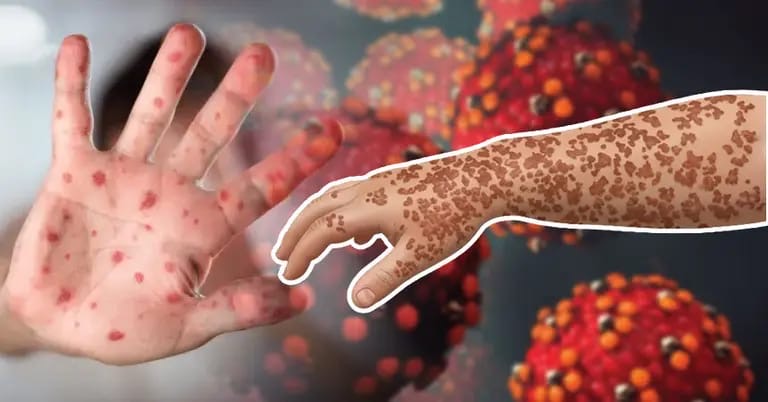
The virus initially infects the mucous membranes of the nose and throat, with symptoms appearing 10 to 14 days after exposure. Early symptoms include fever, runny nose, and cough, followed by a rash that spreads across the body.
Although vaccination has significantly reduced global cases, outbreaks still occur in areas with low immunization coverage. Measles remains one of the most contagious viral infections known.
Recently, measles cases among children in Bangladesh have risen alarmingly. Once nearly eliminated two decades ago, the disease has re-emerged as a serious public health threat. The outbreak has spread beyond Dhaka to districts such as Rajshahi and Mymensingh.
Doctors report that even vaccinated children are being infected, raising concerns. Because the virus is highly contagious, it can severely endanger a child’s life.
Several factors are responsible for the resurgence. The measles virus can infect up to 18 people from a single case. Apart from vaccination gaps, malnutrition, lack of breastfeeding, absence of deworming, and weakened immunity in children have been identified as contributing factors.
The most significant issue, however, is the decline in vaccination coverage over the past two years. According to EPI data, measles vaccination coverage dropped to 59% in 2025, which is a key reason behind the outbreak. Many children are not receiving vaccines on time, especially due to disruptions in healthcare services during the COVID-19 period.
Misinformation, misconceptions about vaccines, and lack of awareness have also contributed. High population density has further accelerated transmission.
A single infected person can transmit the virus to up to 90% of unvaccinated individuals. If vaccination rates remain low and awareness is insufficient, the outbreak could escalate into an epidemic. However, timely action can still prevent this.
Symptoms typically appear 10–14 days after infection, starting with spots in the mouth and gradually spreading across the body. The most important preventive measure is timely vaccination. Children should receive nutritious food, maintain hygiene, and seek medical care promptly when ill.
Health experts emphasize that measles is preventable. Timely vaccination ensures protection for children. Patients require rest and adequate fluid intake such as water, coconut water, fruit juice, and other liquids to prevent dehydration.
Bangladesh once hoped to eliminate measles by 2020. Although the deadline was later extended to 2026, the current situation shows a worsening trend rather than progress.
The sudden resurgence of measles is not just a health issue but reflects weaknesses in the national healthcare system, policy inconsistency, and administrative shortcomings.
Measles can lead to life-threatening complications, especially in young children. The most effective protection remains timely vaccination, particularly the two doses of the MMR vaccine. Adults who were never vaccinated or exposed should also consult doctors regarding immunization.
Preventing measles is essential not only for individual health but also for protecting public health and stopping outbreaks before they begin.
The outbreak has multiple causes, but the most significant are child malnutrition and gaps in routine immunization. According to Expanded Programme on Immunization (EPI) data, vaccination coverage in 2025 fell significantly, with 85% for the first dose and 82% for the second dose. However, 90–95% coverage is required to effectively prevent transmission. As a result, hundreds of thousands of children remain unprotected and vulnerable.
Interruptions in vaccination programs can accelerate transmission. Once infection spreads, controlling it becomes difficult, and child mortality increases.
Maintaining routine immunization coverage is essential to control such infectious diseases. In addition to vaccination, improvements in hospital capacity, logistics, medical supplies, and trained healthcare workers are necessary.
Only through coordinated efforts can the outbreak be controlled and future occurrences prevented. Measles remains a serious health risk for children. Rapid vaccination, quality treatment, and public awareness are key to controlling the outbreak.
Families and local authorities must remain alert and responsible to reduce transmission and protect children’s lives.
Author: Columnist and former Registrar, JABI PRABI