
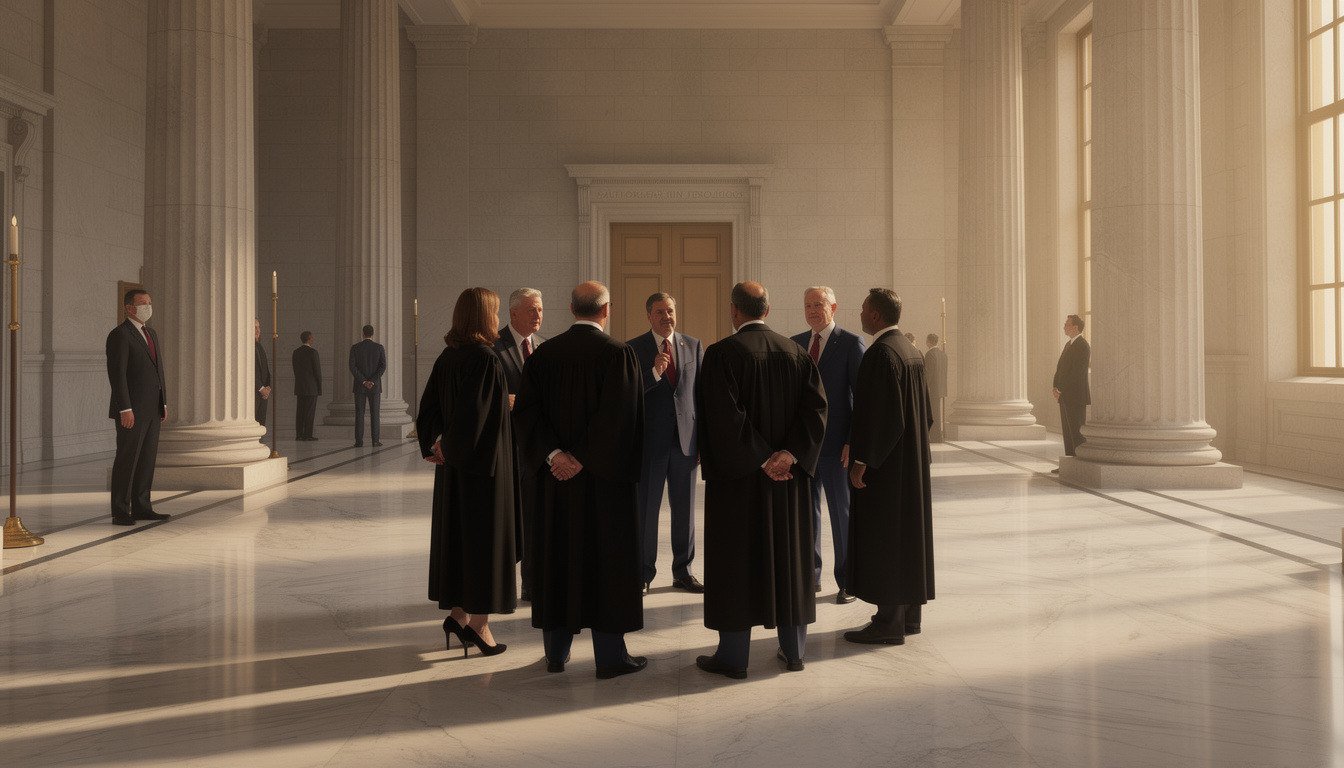
Questions are growing over whether Supreme Court Justices Clarence Thomas and Samuel Alito will retire during Donald Trump's presidency, after Democrats' midterm landslide gave them control of Congress from January.
The speculation around a possible Supreme Court Thomas Alito retirement comes from the Senate majority, not from any announced health problem or retirement plan. Reuters reported on November 4 that the result is renewing focus on the continued service of the court's two eldest justices, Thomas, 78, and Alito, 76.
The stakes are about who fills a vacancy. The US Constitution gives the Senate the power to confirm a president's judicial nominations. With a Senate majority, Democrats can block any nominations Trump would make to fill potential vacancies, Reuters reported, just as Republicans blocked Democratic President Barack Obama from filling one in 2016.
Why the Senate shift changes the stakes for a vacancy
According to SCOTUSblog, Democrats flipped at least 40 House seats and at least seven Senate seats in Tuesday's midterm elections. SCOTUSblog wrote that the Democratic Party will have enough votes to reject a Trump Supreme Court nomination, "if it even allows confirmation hearings to proceed."
SCOTUSblog said the power shift will complicate, or effectively eliminate, Trump's ability to appoint another justice if a vacancy arises after the new Congress is seated. Its managing editor, Kelsey Dallas, is the author of the piece.
Until Democrats formally take over Congress on January 3, the current Republican majority keeps control during the lame-duck session. Reuters reported that the tight timeline and other legislative priorities could make a quick replacement difficult, even if a justice wanted to leave now.
Thomas and Alito in a 6-3 conservative court
The court has a 6-3 conservative majority, including three justices Trump appointed during his first term. Thomas and Alito are its two most conservative justices and have reliably backed Trump policies in major rulings during his second term, Reuters reported.
The conservative majority has steered US law on abortion, gun rights and presidential powers, Reuters said. That is the reason a change in the court's membership carries weight beyond the justices themselves.
Thomas has given no public indication of wanting to step down. Alito said last month that he would remain for the duration of the current nine-month term, which began in October, even if Democrats retook the Senate. His comment followed speculation that he might retire quickly so Trump could get a successor confirmed while Republicans still controlled the chamber.
Clarence Thomas age and health: what is publicly known
Reuters reported that Thomas and Alito have no serious health concerns that are publicly known, though each was briefly hospitalized in recent years. Alito was treated for dehydration in March after feeling ill during an event in Philadelphia. Thomas missed arguments in cases in 2022 when he was hospitalized with flu-like symptoms.
Thomas would be 84 and Alito 82 in 2033, when a new Congress is sworn in, Reuters noted. That would place both above the average retirement age of around 80 for Supreme Court justices since 2000. Three justices have died in office this century, including Chief Justice William Rehnquist in 2005 at age 80 and Justice Antonin Scalia in 2016 at 79.
Legal analysts quoted by Reuters disagreed on how far off a vacancy might be. Cornell Law School professor Michael Dorf said justices mulling retirement often weigh the politics of the president and party control of the Senate, but "they do not like to broadcast that they do so." Reuters reported that some analysts saw an imminent departure as far-fetched.
Florida Governor Ron DeSantis, who mounted an unsuccessful presidential campaign in 2024, wrote on social media: "Chance of confirming a worthy successor to Justice Thomas and/or Alito during President Trump's term: Zero." Reuters quoted him.
What remains unknown about 2028 and beyond
Ed Whelan, a legal analyst at the Ethics and Public Policy Center, told Reuters that "If a Republican is elected president in 2028, that president will not be able to appoint any justices or judges until Republicans regain the Senate." He added, "Given the deep hole, that might not happen until 2033."
Analysts differ on how long the Democratic majority will last, and whether Republicans can regain the Senate in 2028 is uncertain, according to Reuters. Neither Thomas nor Alito has said whether or when he will step down, and neither responded to Reuters' questions about whether they are considering retiring.