

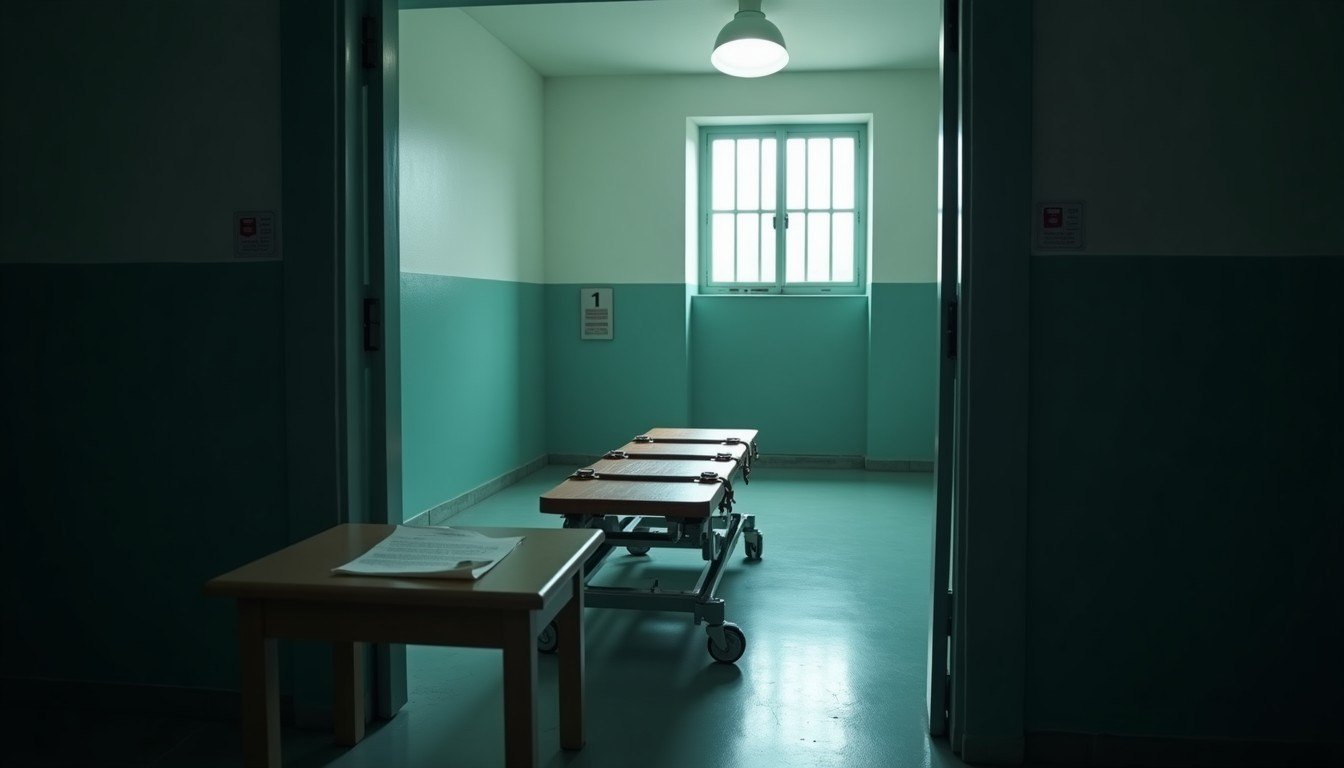
Florida Gov. Ron DeSantis withdrew the death warrant for 74-year-old inmate William Lee Thompson on Thursday, halting a lethal injection scheduled for Tuesday at Florida State Prison, FOX 13 Tampa Bay reported.
The decision came less than a week before the execution and after a neuropsychologist concluded that Thompson, who suffers from severe dementia and heart failure, lacks the mental capacity to understand why he is being put to death.
The case tests a constitutional boundary: the U.S. Supreme Court has held that executing a person who cannot rationally understand the reason for their punishment violates the Eighth Amendment. It also exposes the strain of a capital case that has run nearly 50 years, through three governors' death warrants.
Why DeSantis withdrew the execution order
DeSantis sent a letter Thursday afternoon to Warden Randall Polk rescinding the warrant he had signed on September 11, according to FOX 13. Defense attorneys had quickly raised concerns about Thompson's physical and mental deterioration.
A September 15 evaluation by a neuropsychologist found Thompson lacked the mental capacity to understand his execution. He believed "Bush" was president and did not recognize he was on death row, FOX 13 reported.
DeSantis responded by creating a three-member psychiatric panel under Executive Order 26-192 to assess whether Thompson was legally insane. The panel examined Thompson on October 1 and was directed to submit findings the following day.
Hours before the withdrawal, the Florida Supreme Court denied Thompson's request for a stay of execution. State officials have not released the panel's findings or explained the specific reason for rescinding the warrant.
A death sentence handed down in 1976
Thompson and co-defendant Rocco Surace were convicted over the March 30, 1976 killing of Sally Ivester in a Dade County motel room. According to court records cited by FOX 13, the men instructed Ivester and another woman, Barbara Savage, to call their families for money.
When Ivester could obtain only $25, she was taken to a bedroom and subjected to a prolonged assault involving a chain-link belt, a nightstick, a chair leg, and burns from cigarettes and lighters. She died of internal bleeding and multiple injuries. Savage testified she feared for her life if she tried to leave.
Thompson was arrested April 1, 1976. He pleaded guilty to first-degree murder, kidnapping and sexual battery and was sentenced to death in June 1976. What followed was a half-century of reversals:
- 1977: The Florida Supreme Court reversed the judgment, allowing Thompson to withdraw his plea.
- September 1978: He pleaded guilty again and received a second death sentence.
- 1982: A federal court stayed a death warrant signed by Gov. Bob Graham.
- 1987: The Florida Supreme Court stayed a warrant signed by Gov. Bob Martinez and vacated the sentence.
- 1989: A resentencing jury recommended death by a 7-5 vote, and the trial judge reinstated the penalty.
Surace, whose sentence was reduced to second-degree murder after Thompson claimed responsibility, died in prison on November 14, 1993.
Dementia on death row and the Tennessee warning
Advocates had warned that Florida risked a failed execution given Thompson's compromised veins and terminal health conditions, according to Grace Hanna, executive director of Floridians for Alternatives to the Death Penalty.
Hanna pointed to Tennessee, where Gov. Bill Lee halted all executions and ordered an independent investigation after officials failed to carry out the execution of Christa Pike on September 30.
Thompson's defense team has also filed a federal lawsuit seeking adequate medical treatment for his cognitive and physical conditions. That case remains pending.
James Robertson execution still set for Tuesday
The withdrawal does not affect a second execution scheduled for the same week. James Robertson, 63, convicted of the 2008 murder of his cellmate, Frank Hart, at Charlotte Correctional Institution, remains set to die Tuesday at Florida State Prison, FOX 13 reported.
For Thompson, the path forward is unresolved. Prosecutors have not said whether they will seek a new execution date or address his medical needs through civil court proceedings. The contents of the psychiatric panel's findings remain undisclosed, and the governor's office has given no reason for the withdrawal beyond the sequence of events set out in the court record.