

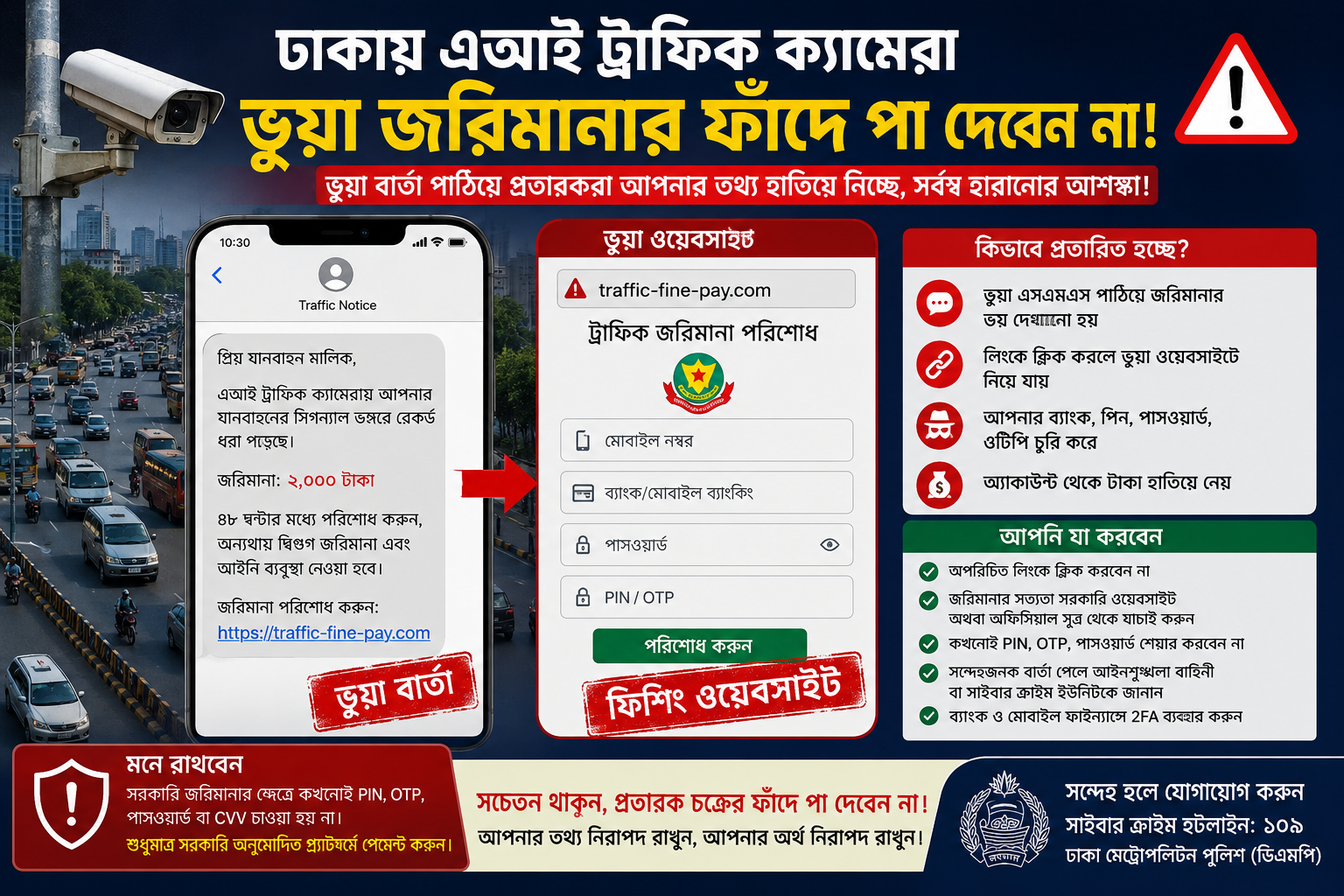
As Bangladesh moves toward a technology-driven traffic management system, cybercriminals have found a new way to exploit public fear and confusion. A growing number of motorists in Dhaka are reportedly receiving fraudulent SMS messages claiming that AI-powered traffic cameras detected violations and demanding immediate payment of fines through suspicious links.
The scam emerged shortly after authorities in Dhaka began expanding the use of artificial intelligence-based traffic surveillance systems across major intersections and roads. The new system automatically identifies violations such as signal breaking, illegal lane changes, speeding, and improper parking before issuing digital notices to vehicle owners.
However, taking advantage of the public’s unfamiliarity with the new enforcement process, organized cybercrime groups are now sending fake messages that closely resemble official traffic notifications. The messages often warn recipients that their vehicle has violated traffic laws and that fines must be paid within a limited period to avoid increased penalties, license suspension, or legal action.
According to reports, the fraudulent messages include malicious links leading victims to phishing websites designed to steal sensitive financial information. Once users enter mobile banking credentials, card details, PINs, passwords, or one-time passwords (OTPs), scammers immediately gain access to their accounts and withdraw money.
One victim reportedly lost nearly Tk 15,000 after attempting to pay what he believed was a legitimate traffic fine through a fake payment portal linked in an SMS message.
Cybersecurity experts say the scam relies heavily on psychological pressure. Fraudsters create urgency by threatening double fines within 24 to 48 hours or claiming that legal action will be taken if payment is delayed. Experts warn that fear-based digital scams are becoming increasingly sophisticated in Bangladesh as more public services move online.
Authorities have repeatedly clarified that legitimate traffic fine notifications never request PIN numbers, OTPs, CVV codes, or banking passwords. Officials also emphasized that all official payments are processed only through approved government channels.
The Dhaka Metropolitan Police has urged citizens to avoid clicking unknown links and to verify any traffic-related notice through official sources before making payments. Police also advised victims to immediately contact banks or mobile financial service providers if they suspect fraud.
The AI traffic monitoring system itself is part of a broader modernization effort intended to reduce traffic chaos and improve law enforcement in the overcrowded capital city. The technology connects road surveillance cameras with software capable of automatically detecting traffic offenses and issuing penalties digitally. Officials say the system has already recorded hundreds of violations within days of operation.
While many residents welcomed the new technology as a step toward smarter urban management, the rapid emergence of scams has also exposed the growing cybersecurity risks associated with digital governance.
Online discussions among drivers in Bangladesh reveal widespread confusion and anxiety over how genuine AI traffic fines are issued and when official SMS notifications are supposed to arrive.
Cybersecurity analysts warn that Bangladesh is increasingly becoming a target for phishing operations, fake payment portals, social engineering attacks, and AI-assisted fraud schemes. Researchers studying Bangla misinformation and cyber deception have also highlighted the rising sophistication of online scams in the country’s digital ecosystem.
Experts recommend the following precautions for the public:
Never click links from unknown SMS messages.
Verify traffic fines only through official government platforms.
Never share OTPs, PIN numbers, passwords, or CVV codes.
Check website addresses carefully before entering payment information.
Report suspicious messages to law enforcement and cybercrime units immediately.
Use two-factor authentication for banking and mobile financial services.
As Bangladesh continues integrating artificial intelligence into public administration and transportation systems, experts say public awareness and digital literacy will be critical to preventing cybercriminals from exploiting emerging technologies for fraud.