
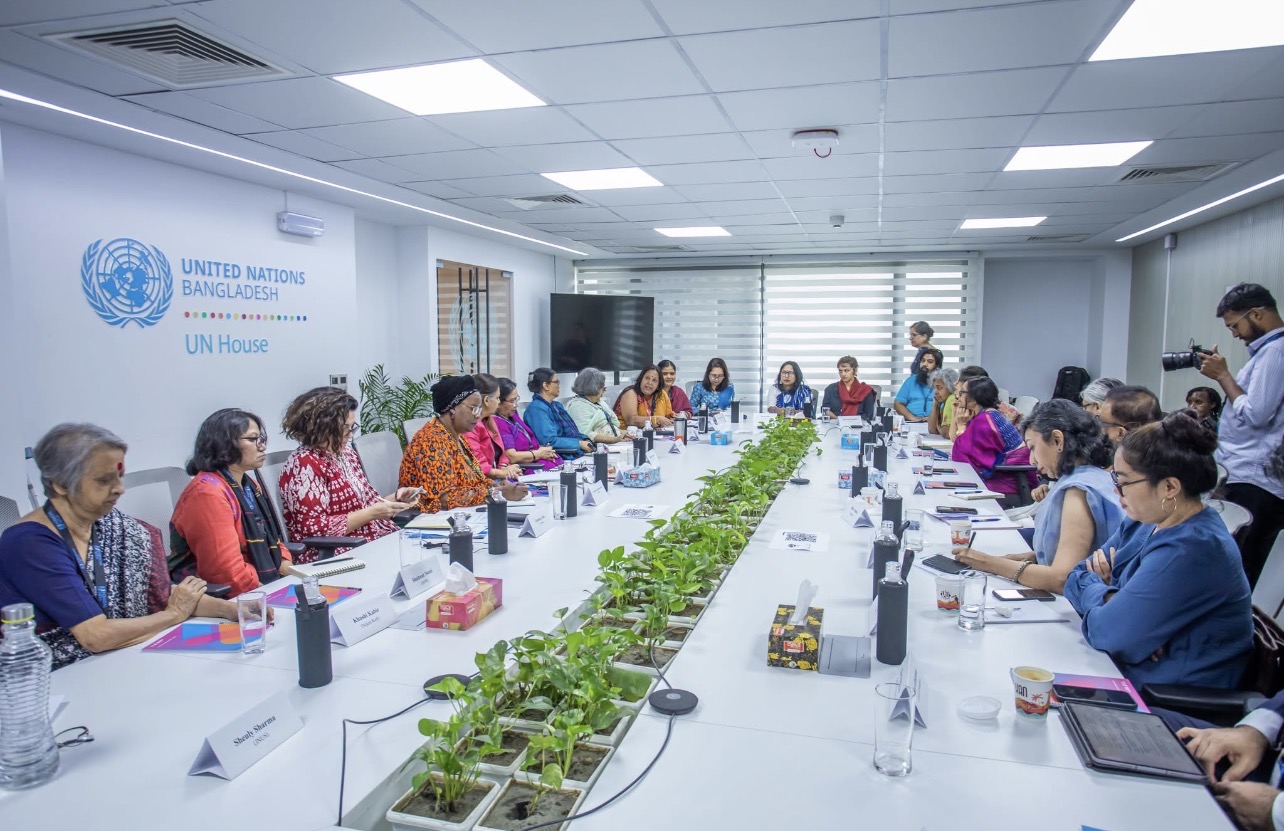
Dhaka, Bangladesh, May 19, 2026— Senior United Nations officials and civil society leaders gathered in Dhaka to discuss the growing global backlash against gender equality and the shrinking space for women’s rights advocacy, while stressing the urgent need for inclusive, intersectional, and better-funded movements that ensure no one is left behind.
The high-level meeting was attended by UN Assistant Secretary-General and UN Women Deputy Executive Director Nyaradzayi Gumbonzvanda, alongside Christine Arab and the UN WomenBangladesh team. They met with members of the UN Women Civil Society Group and partner organizations to review current challenges facing women’s rights globally and in the region.
Participants highlighted an alarming trend of increasing risks faced by women’s rights defenders, alongside a reduction in civic space in many countries. The discussion underscored how these pressures are weakening advocacy efforts and threatening progress on gender equality.
Civil society representatives emphasized the need to rethink strategies for movement-building, particularly through stronger intergenerational and intersectional solidarity to sustain long-term advocacy efforts.
Call for inclusion of women with disabilities and marginalized groups
A key focus of the dialogue was the exclusion of marginalized communities from decision-making spaces. Speakers stressed the importance of including women with disabilities, gender-diverse individuals, returnee women migrant workers, and indigenous communities in all sectors of development and governance.
Highlighting structural barriers, Salma Mahbub, General Secretary of B-Scan, stated, “Without funding, women with disabilities cannot be effectively mobilized. Barriers like transportation, security, and limited leadership opportunities restrict their participation. They must be included in all sectors.”
Her remarks reflected broader concerns that without targeted investment and accessibility reforms, women with disabilities will remain excluded from leadership and policy spaces.
The meeting emphasized several priority areas for advancing gender equality for strengthening intergenerational and intersectional solidarity within women’s movements, Expanding engagement with men and boys as partners in gender equality, Increasing youth participation and leadership opportunities, Ensuring recognition of intersectional identities, property rights, and access to decent work, Addressing digital violence and expanding behavioural change initiatives, and Closing gaps in access to justice and reforming discriminatory laws.
UN Women reaffirms commitment for reaffirming its role as a strategic partner, UN Womenemphasized continued collaboration with civil society organizations to strengthen coordinated advocacy efforts and promote sustainable progress on gender equality.
The meeting concluded with a shared commitment to advance #genderequality and ensure that women and girls from all backgrounds are included in development, leadership, and policy processes—reinforcing the principle of leaving no one behind.