

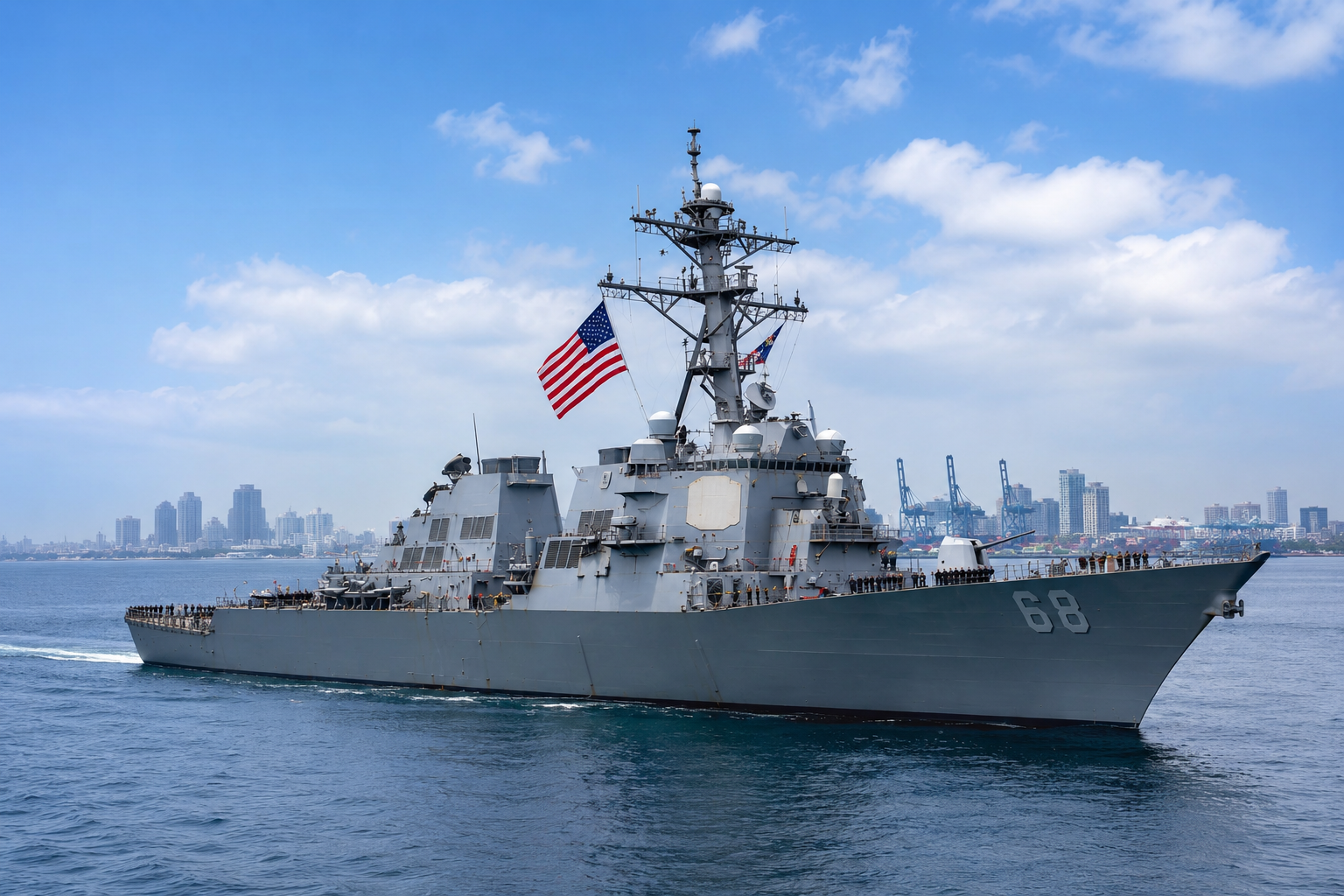
India's long-standing, unilateral strategic dominance over the Bay of Bengal is on the verge of coming to an end. Washington and Dhaka are now in the final stages of implementing the Acquisition and Cross-Servicing Agreement (ACSA) and the General Security of Military Information Agreement (GSOMIA). As a result, New Delhi is set to face a highly complex and multidimensional security challenge along its eastern maritime border.
The Donald Trump administration has exerted economic pressure to fast-track the finalization of these two agreements by offering a 19% tariff concession on Bangladesh's ready-made garments (RMG) sector and by sending a personal letter to Prime Minister Tariq Rahman. Simply put, Dhaka is granting the US military access to its ports in exchange for economic protection.
Consequently, the geopolitics of this region—which had remained peaceful and secure for India over the past few decades—is shifting entirely. The Bay of Bengal is poised to become a core battlefield for dominance among global superpowers. This agreement will directly impact India's national security, intelligence operations, and regional hegemony. Furthermore, India’s nuclear submarines will now come under direct surveillance.
The biggest cause of concern for the Indian defense establishment is the GSOMIA agreement. Through this, direct military intelligence sharing will take place between Bangladesh and the United States, and Washington's surveillance network will expand extensively across the entire Bay of Bengal.
India possesses highly sensitive military infrastructure along its eastern coast. Most notable among these are 'INS Varsha'—the secretive nuclear submarine base located near Visakhapatnam—and the 'A.P.J. Abdul Kalam' missile testing island off the coast of Odisha.
When US warships and advanced surveillance aircraft utilize Bangladesh's Chittagong and Matarbari ports for refueling and maintenance, the movements of Indian nuclear submarines and missile test data could easily fall under the electronic and acoustic surveillance of a third party. Despite being a partner of the United States in the 'Quad' alliance, New Delhi will never welcome the military surveillance of another foreign power so close to its strategic assets.
Historically, India only had to monitor the incursions of Chinese research vessels and submarines into the Indian Ocean. Now, however, India is getting caught in a bizarre geopolitical vice.
Additionally, there is counter-pressure from China. Bangladesh imports nearly 70% of its military equipment from China and relies heavily on Beijing for port infrastructure development. China will never silently accept the Pentagon using Chittagong as a military logistics hub or "lily-pad."
To counter this American presence, Beijing will manifold increase its own warship deployments, drills, and intelligence operations in the Bay of Bengal. The unilateral influence India enjoyed in this region due to the limited capabilities of the Bangladesh Navy will no longer exist. Instead, a volatile environment of US-China conflict will be created right in India's backyard, requiring India to remain on constant high alert to manage it.
Before being ousted from power, former Prime Minister Sheikh Hasina had repeatedly alleged that the United States was seeking control of St. Martin's Island to establish its dominance in the Bay of Bengal. She warned that such a move would pose a major threat to India's security as well. Although the United States rejected these claims at the time, the current finalization of the ACSA and GSOMIA agreements proves that Washington had long-term plans to establish a military presence in this region.
For the past 15 years, New Delhi viewed Sheikh Hasina as a key "security buffer" who ensured that Bangladeshi soil would never be used for activities detrimental to Indian interests. However, by tying a trade deal to military pacts, the Trump administration has pulled Dhaka significantly out of New Delhi’s sphere of influence. As a result, India's 'Neighborhood First' policy has suffered a major setback.
This new development leaves Indian foreign policy facing a severe dilemma. At the global level, India works alongside the United States through the 'Quad' alliance to counter China. But at the regional level, India remains entirely opposed to American military power gaining such direct access right next door in South Asia.
The Bay of Bengal is no longer India’s exclusive domain of dominance. New Delhi must now prepare to maintain an exceptionally difficult balancing act—confronting the challenge of aggressive counter-moves from China on one side, while facing the pressure of permanent and sophisticated US military surveillance right in its backyard on the other.