

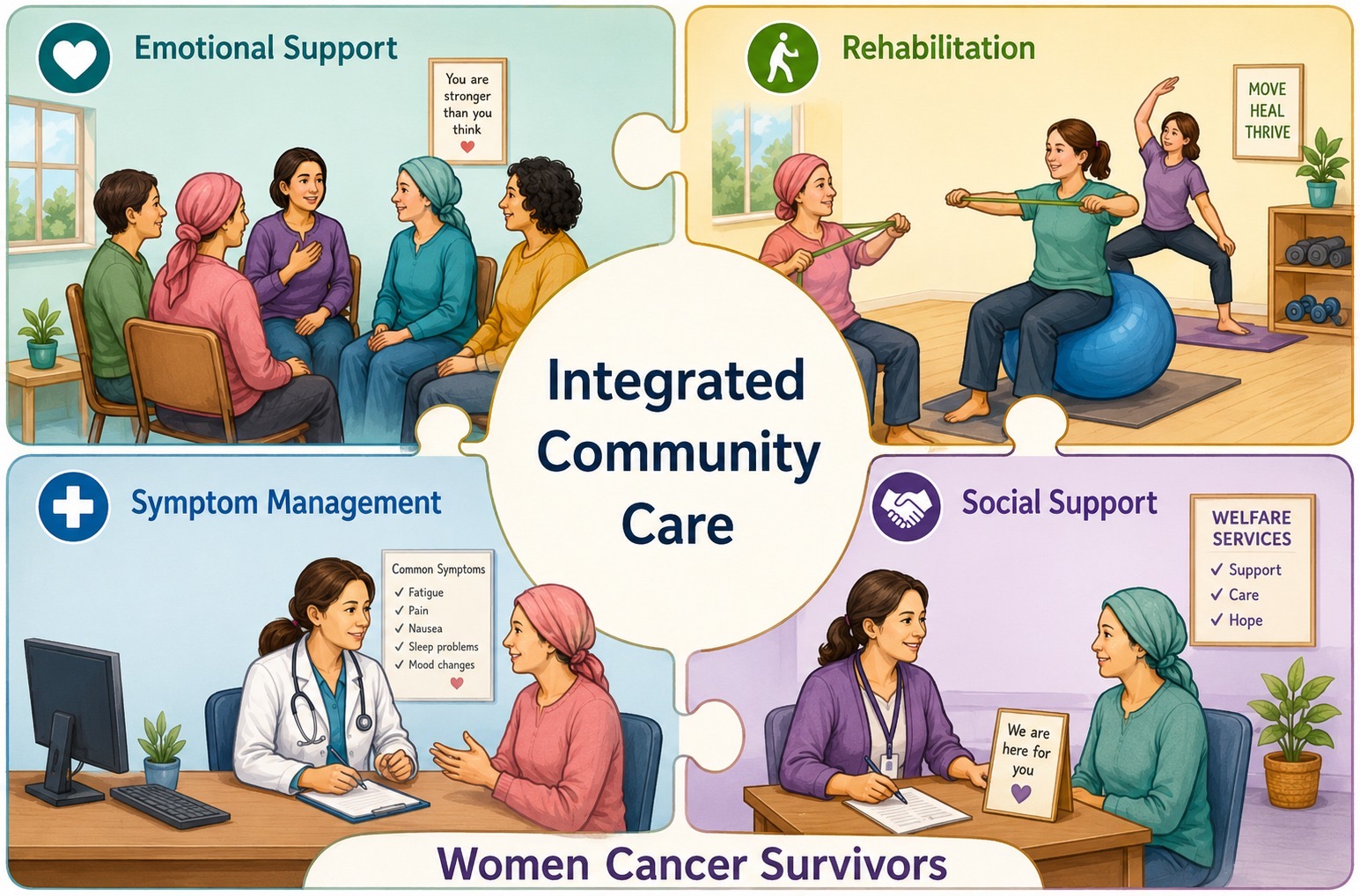
For many women, hearing the words ‘You have cancer’ marks the beginning of one of the most difficult journeys of their lives. Yet increasingly, thanks to advances in screening, diagnosis, treatment, and supportive care, cancer is no longer always a death sentence. Millions of women today are surviving cancer and living many years beyond treatment. This is undoubtedly a remarkable public health success story.
But survival alone is not enough. The more important question now is: What happens after treatment ends?
For many women, finishing chemotherapy, surgery, or radiation does not mean the end of suffering. Instead, it often marks the beginning of another complex chapter — the journey of survivorship. Women cancer survivors frequently face long-term physical complications, emotional distress, financial hardship, family pressures, and uncertainty about the future. Unfortunately, healthcare systems in many countries remain heavily focused on acute treatment, leaving significant gaps in long-term survivorship support.
The time has come to rethink cancer care — moving beyond treatment to integrated community-based survivorship care.
A Growing Global Public Health Challenge
Cancer is increasingly becoming a chronic condition rather than only an acute illness. According to the World Health Organization, approximately 20 million new cancer cases were diagnosed globally in 2022, and this number is projected to rise to more than 35 million by 2050 — a staggering 77% increase. At the same time, over 53 million people worldwide are currently living within five years of a cancer diagnosis.
Among women, breast cancer remains the most common cancer globally, accounting for nearly one in four female cancer cases. In many countries, mortality rates have declined significantly due to earlier detection and improved treatment options. Yet this positive development has created a new reality: an expanding population of women living with the long-term consequences of cancer and its treatment. Breast cancer cases alone are projected to rise from approximately 2.3 million in 2022 to nearly 6 million by 2050.
This means healthcare systems worldwide — including in Bangladesh and many low- and middle-income countries — must urgently prepare not only to treat cancer, but also to support women after treatment.
Survivorship: More Than Being Cancer-Free
The concept of survivorship is often misunderstood. According to the US National Cancer Institute, a cancer survivor is anyone living with cancer from diagnosis through the rest of life. Survivorship, therefore, begins at diagnosis and continues indefinitely.
For many women, the survivorship journey is far from easy. Even after successful treatment, women may experience lingering physical complications, including fatigue, chronic pain, lymphedema, osteoporosis, hormonal changes, neuropathy, and cardiovascular problems. Emotional and psychological burdens are equally significant. Anxiety, fear of recurrence, depression, sleep problems, changes in body image, and strain on intimate relationships are common experiences.
Survivorship also affects families. Caregiving responsibilities, emotional stress, and financial instability can reshape household dynamics. Many women experience employment disruption, reduced income, or mounting healthcare expenses. In some societies, women cancer survivors may also face stigma, social isolation, or barriers to returning to normal life.
In short, survivorship is not merely a medical issue — it is a whole-person, family-centered, and community issue.
The Hidden Gap in Cancer Care
Modern cancer treatment has advanced tremendously. Yet one major challenge remains largely invisible: life after treatment.
Traditional oncology-centered care models often prioritize physical disease management while giving insufficient attention to emotional, social, and practical needs. Once treatment ends, many women feel abandoned, uncertain about whom to contact, or unsupported in managing lingering health concerns.
Several factors contribute to this gap:
i. Limited integration between oncology, primary care, and community services
ii. Weak referral systems for rehabilitation and psychosocial support
iii. Short clinical appointments that focus mainly on disease monitoring
iv. Limited training among providers in supportive survivorship care
v. Inadequate mental health and community-based services
The result is fragmented care, unmet needs, poorer symptom management, and reduced quality of life for survivors. Completing treatment should never mean completing care.
What Does Effective Survivorship Care Look Like?
The future of survivorship care requires an integrated model that addresses medical, emotional, social, and practical dimensions of recovery. According to the US Institute of Medicine, survivorship care should include four essential components:
1. Surveillance: Monitoring for cancer recurrence, secondary cancers, and long-term treatment effects.
2. Prevention: Encouraging healthy lifestyles, preventive care, and reducing future health risks.
3. Intervention: Addressing physical complications, mental health concerns, rehabilitation, and chronic disease management.
4. Coordination: Ensuring effective collaboration among oncologists, primary care providers, rehabilitation specialists, mental health professionals, and community organizations.
This integrated approach recognizes that women survivors need far more than medical follow-up appointments.
Why Community-Based Care Matters
Hospitals alone cannot meet all survivorship needs. This is where community-based integrated care becomes essential. Several countries, including Canada, Australia, and parts of the Asia-Pacific region, are increasingly investing in survivorship clinics and community support systems designed to help women transition from treatment to daily life.
Examples of community-based survivorship support include:
1) Community cancer navigation services to help women access resources and care pathways
2) Peer support groups that reduce isolation and provide emotional encouragement
3) Mental health and counselling services for anxiety, trauma, and depression
4) Physical rehabilitation programs to improve mobility and strength
5) Nutrition and lifestyle counselling for healthy living and recovery
6) Vocational reintegration programs to support return to work
7) Financial counselling and caregiver support services, and
8) Community-based organizations that provide social and spiritual care.
Importantly, technology is also transforming survivorship care. Telehealth consultations, mobile health applications, remote symptom monitoring, and artificial intelligence (AI)-assisted risk prediction are improving continuity of care, especially for women living in rural or underserved settings. Community partnerships can bridge the divide between hospital care and everyday life.
Lessons for Low- and Middle-Income Countries (LMICs)
Countries such as Indonesia, Bangladesh, and many other low- and middle-income countries (LMICs) have made remarkable progress in maternal and child health, infectious disease control, universal health coverage, and the strengthening of primary healthcare. However, cancer survivorship care — particularly for women — remains an underdeveloped and often overlooked component of healthcare systems.
As populations age, cancer incidence rises, and treatment outcomes continue to improve, an increasing number of women are surviving breast, cervical, ovarian, and other cancers. While this progress represents a major public health achievement, it also presents a new challenge: how to support women not only during treatment, but long after treatment ends.
Across many LMICs, women cancer survivors often face fragmented healthcare systems, limited rehabilitation services, inadequate psychosocial support, financial hardship, transportation barriers, and poor continuity of care following hospital discharge. Women living in rural, remote, and underserved communities are especially vulnerable, frequently experiencing delayed follow-up, limited access to specialists, and social stigma surrounding cancer and survivorship.
At the same time, countries across Asia and the Global South have a unique opportunity to strengthen survivorship systems before the burden grows substantially larger. By investing early in integrated and community-based approaches, LMICs can build more resilient, equitable, and patient-centered cancer care systems.
A stronger survivorship framework in LMICs could include:
I. Integrating survivorship care into primary healthcare systems to ensure long-term follow-up closer to where women live and work
II. Expanding community-based support services for women cancer survivors, including peer support, rehabilitation, caregiver assistance, and psychosocial counselling
III. Training healthcare professionals in supportive and survivorship care, moving beyond a sole focus on acute treatment
IV. Leveraging digital health, telemedicine, and mobile technologies for remote counselling, symptom monitoring, and continuity of care — especially in rural, remote, and island settings
V. Strengthening partnerships among hospitals, universities, NGOs, faith-based organizations, and community groups to create locally responsive and culturally appropriate survivorship services
VI. Enhancing public awareness and health literacy to reduce stigma, promote early care-seeking, and strengthen family and social support systems for survivors
From Survival to Thriving
The future of cancer care must extend far beyond hospitals and chemotherapy rooms. For women cancer survivors, completing treatment should mark the beginning of a new phase of healing — one supported by dignity, continuity of care, emotional well-being, and opportunities to rebuild meaningful lives.
Integrated community-based survivorship care offers a pathway toward that future. By strengthening connections between hospitals, primary healthcare, rehabilitation, mental health services, community organizations, and digital support systems, we can create more compassionate and responsive models of care for women after cancer.
As healthcare systems continue to evolve, we must embrace a simple but powerful truth: success in cancer care should not be measured only by survival rates, but by how well survivors are supported to live healthy, fulfilling, and dignified lives. The true goal is not merely helping women survive cancer — it is helping them thrive after it.