

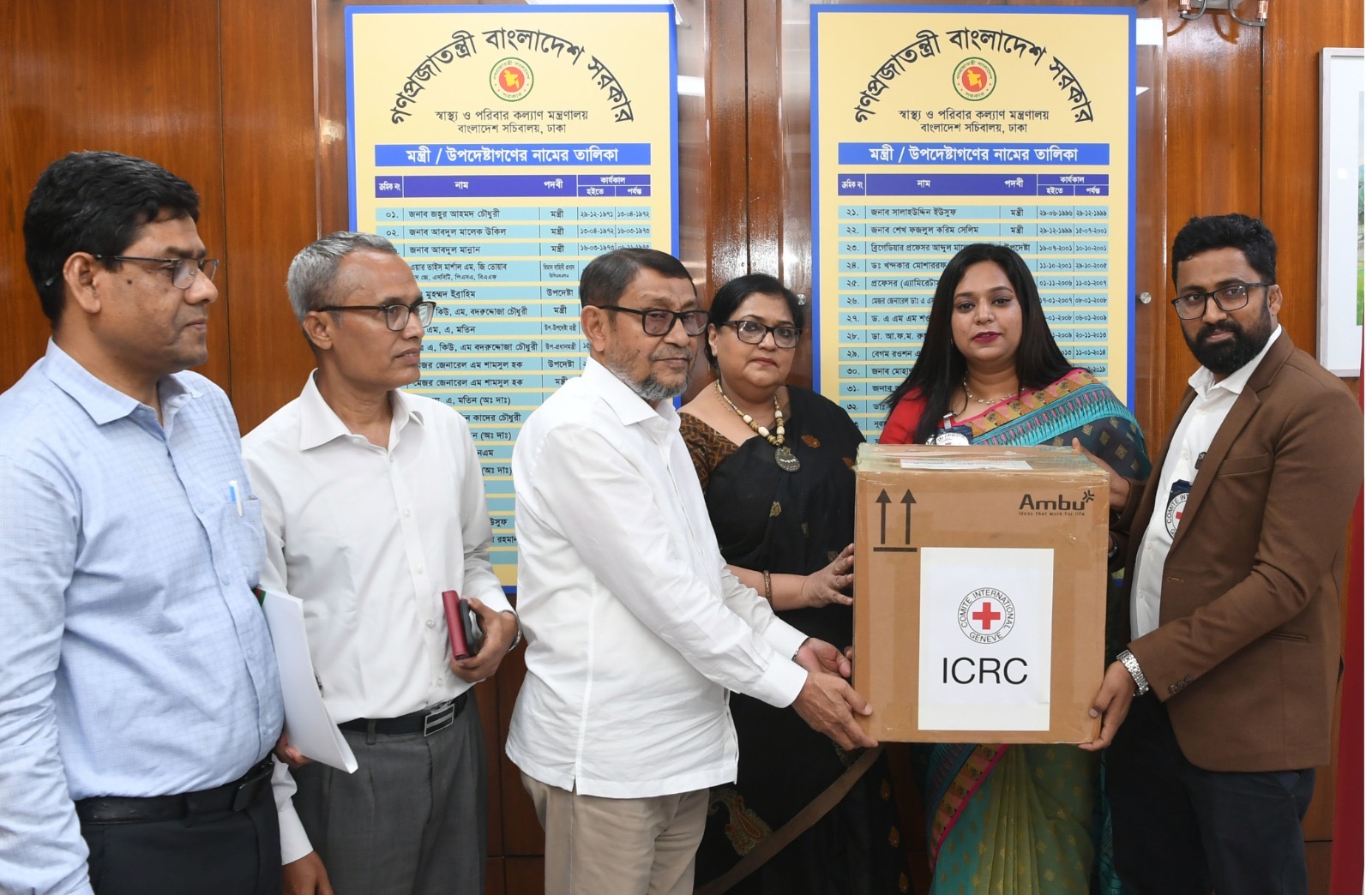
Dhaka, May 31, 2026: The International Committee of the Red Cross (ICRC) has provided an emergency consignment of medical supplies to Bangladesh to support ongoing response efforts against a rising measles (Measles) situation in the country.
According to a press release from the Ministry of Health and Family Welfare, the donation was formally handed over to the ministry on May 24 at its office in the Bangladesh Secretariat, Dhaka. The assistance aims to strengthen emergency preparedness and enhance the capacity of healthcare facilities to manage respiratory complications and other critical cases linked to the outbreak.
The supplied medical equipment includes 14 oxygen concentrators, 570 airway management devices, 12 sets of bag-valve-mask (BVM) resuscitators, and manual suction devices. Health officials said these items will play a crucial role in supporting emergency and critical care services across hospitals and treatment centers.
The handover ceremony was attended by Health and Family Welfare Minister Sardar Md. Sakhawat Hossain, along with senior officials from the Ministry of Health and Family Welfare, representatives from the Directorate General of Health Services (DGHS), and delegates from the International Committee of the Red Cross Bangladesh mission.
During the event, the ICRC Dhaka delegation’s Health Program Manager, Dr. Jolisa Khanom, formally handed over the medical supplies on behalf of the organization.
Officials emphasized that the support will significantly enhance Bangladesh’s capacity to respond to public health emergencies, particularly in managing patients with severe respiratory distress and other complications associated with infectious diseases.
The ICRC reaffirmed its commitment to continuing collaboration with national authorities in strengthening emergency preparedness, healthcare resilience, and humanitarian response systems in Bangladesh.
Ministry officials expressed appreciation for the timely assistance, noting that such partnerships are vital for improving healthcare delivery during public health crises.