

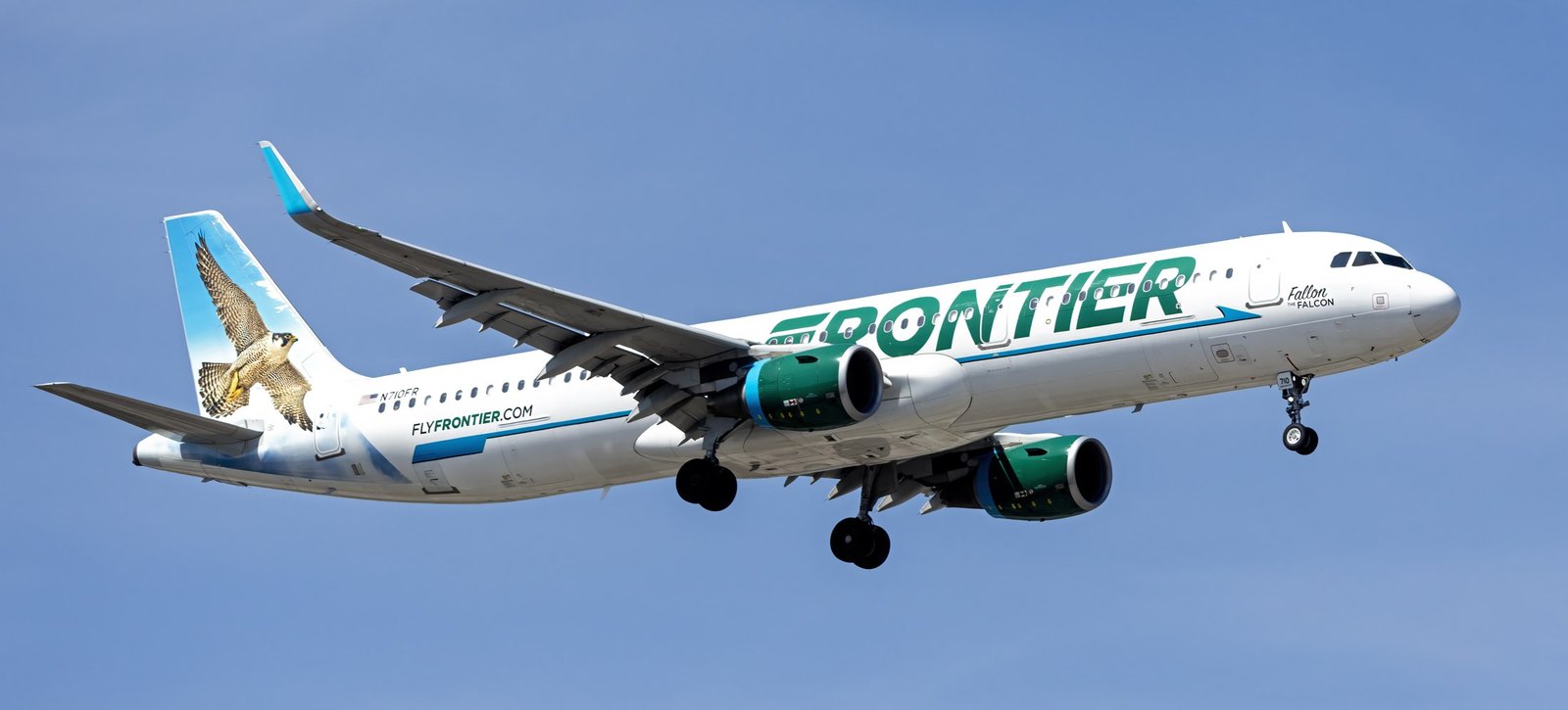
A Frontier Airlines flight from Cleveland to Fort Lauderdale declared a medical emergency on Thursday morning after four of the five flight attendants on board fell ill mid-flight, according to PYOK. The pilots radioed air traffic control to request medical responders meet the aircraft at the gate.
Frontier flight F9-1046 departed Cleveland at approximately 7:53 a.m. on August 13, carrying as many as 230 passengers. The two-hour flight was operated by a 10-year-old Airbus A321 powered by two CFM-56 turbofan engines.
As the crew communicated with Miami approach air traffic control, which also handles Fort Lauderdale arrivals, one pilot reported a developing medical situation in the cabin. "If you could call the tower and have them meet at our gate for a developing medical," the pilot said over the radio.
When controllers asked for details, the pilot explained: "All my flight attendants have headaches, and now three, now four, are nauseous."
Safe Landing and Disrupted Schedule
The aircraft landed without incident at Fort Lauderdale-Hollywood International Airport and taxied to gate A4, where emergency responders were already waiting. No passenger illnesses were reported.
The disruption rippled through Frontier's schedule. The aircraft was due to return to Cleveland at 11:30 a.m., but that service was cancelled. A second afternoon flight from Cleveland to Fort Lauderdale was also cancelled. Frontier Airlines did not immediately respond to a request for comment, PYOK reported.
What Is a Fume Event?
The cause of the flight attendants' illness has not been officially confirmed. However, such incidents in commercial aviation are frequently linked to what the industry calls "odor events" — sometimes described more bluntly as "fume events" or "toxic fume events."
The issue stems from how most commercial aircraft supply air to the cabin. Cabin air is drawn through the engines in a process known as "bleed air." When engine oil or other chemicals are vaporized, those compounds can enter the air conditioning system and circulate throughout the cabin. These events are most likely to occur after engine maintenance, when residual chemicals are present.
Symptoms typically include headaches, nausea, and dizziness. In most cases, the effects are minor and temporary. However, some crew members have reported long-term health consequences.
Legal Pressure on Airbus Over Cabin Air
The Frontier incident comes amid broader scrutiny of cabin air quality. Airbus has faced multiple lawsuits in recent years over allegations of toxic cabin air linked to vaporized compounds in the bleed air system.
One notable complaint was filed by a veteran United Airlines flight attendant who described the issue as the manufacturer's "dirty little secret." Crew members in various lawsuits claim they have suffered chronic and debilitating medical conditions after exposure. Airbus continues to fight the litigation.
Why This Matters for Travelers and Crew
The incident underscores a persistent but often invisible risk in commercial aviation. While fume events are relatively rare, they can affect both crew and passengers — and the implications range from mild discomfort to serious, long-term illness.
For the global Bangladeshi diaspora and South Asian travelers who frequently fly long-haul routes on Airbus aircraft, the incident is a reminder that cabin air quality remains an unresolved concern in the industry. Many international carriers operate Airbus A321 and similar models on popular routes connecting Dhaka, the Middle East, and North America.
Frontier has not disclosed whether the affected flight attendants were evaluated by medical professionals after the landing, nor has the airline commented on whether the aircraft was inspected for possible contamination before being returned to service.