
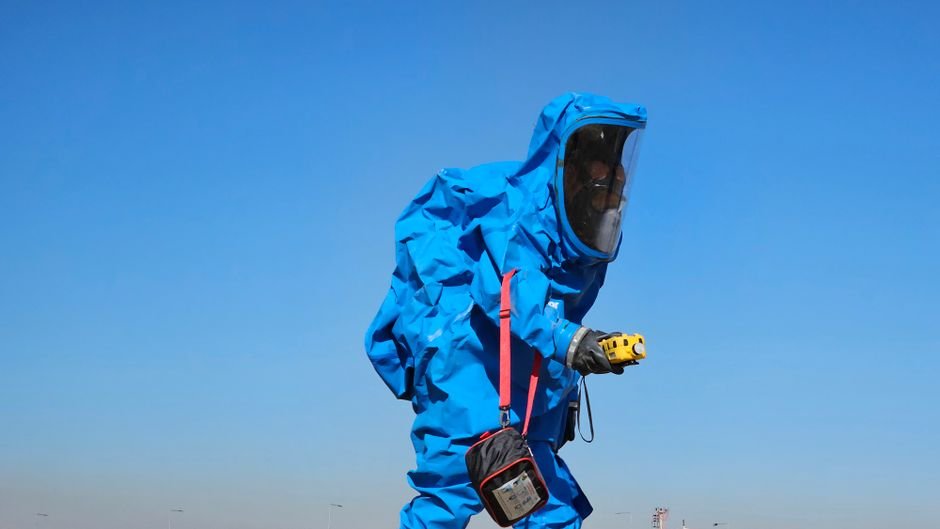
The 2026 Ebola outbreak centred in the Democratic Republic of the Congo has passed 10,000 cases, with almost 5,000 deaths, The Guardian reported on Wednesday.
Dr Jean Kaseya, director general of the Africa Centres for Disease Control and Prevention (Africa CDC), told the newspaper that the outbreak could reach the United Kingdom and other countries outside Africa. "We want all countries to know that they are not safe if they don't take appropriate measures," he said.
The warning comes as the virus has crossed into east and west Africa. "It is the first time three African regions have been affected [by Ebola]. The geographic extension of this outbreak is unprecedented," Kaseya said.
Ebola outbreak 2026 update: where the virus has spread
DR Congo's health ministry declared an outbreak in Ituri province on 15 May, according to The Guardian, but genetic sequencing shows it had begun in February.
The outbreak has since spread to Kenya and Uganda in east Africa. Last week, Nigeria confirmed a case in its capital, Abuja, after a woman who had arrived from Uganda tested positive, The Guardian reported.
The newspaper gave the following figures:
- Total cases: 10,091
- DR Congo: 10,060 cases and 4,887 deaths
- Uganda: two deaths
- Kenya: two deaths
The figures come from a single news report. The research for this story did not include separate updates from the World Health Organization or Africa CDC.
Has the Ebola outbreak reached the USA or the UK?
No case has been reported in either country. According to The Guardian, France is the only country outside Africa to have confirmed a case so far. The patient was a doctor who had returned from DR Congo, and the case was confirmed in June.
Kaseya compared the situation to the early weeks of the Covid pandemic. Covid took hold in China before spreading worldwide, killing millions of people and damaging health systems and economies.
"We shouldn't forget that at the beginning of Covid, many countries said there was zero risk of being affected, but a few months later, they became the hotspot," he said. He added that he did not want the UK and other countries to become hotspots.
He said every country, on every continent, needed to raise its level of preparedness and its capacity to treat patients.
How Ebola spreads, and why the Bundibugyo virus in Congo has no approved treatment
Ebola is a highly contagious, severe and often fatal illness. It spreads through direct contact with body fluids, such as the blood or vomit of infected people. It also spreads through contact with dead bodies, including during funeral preparations.
The current outbreak is DR Congo's 17th since Ebola was identified. It was caused by the Bundibugyo virus and has become the largest and deadliest in the country's history, The Guardian reported.
No treatment has been approved for the Bundibugyo virus. Vaccine trials are under way, and Kaseya said results should be available in three to six months.
More than $2bn in pledges still outstanding
Several problems have held back the response. Protective equipment has been inadequate, and health workers have gone unpaid, which has led to strikes, according to The Guardian. Conflict in DR Congo, mistrust of officials in affected areas, misinformation and global aid cuts have made the work harder.
Kaseya said governments had pledged $3bn (£2.3bn), but more than $2bn of that was still outstanding. African countries had committed $120m, he said. The rest is meant to come from international donors, including the United States, the United Kingdom and the European Union.
"We need this money now," Kaseya said. He warned that if the outbreak reaches more countries, stopping it would cost far more than funding the response now.
Kaseya said he would convene a meeting of African health ministers on Wednesday to press for closer cross-border cooperation. He wants governments to screen and test people coming from affected regions at points of entry and exit.
Insecurity has also blocked access to patients. Kaseya said health workers in Ituri wanted to support local people but could not reach them because of the fighting.
At a meeting with African heads of state in November, he will call for a "corridor of peace" in conflict areas. He said the outbreak affects rebels, the official army and civilians alike, and that leaders needed to agree on how to protect one another.
The Guardian's report did not say whether ministers had agreed to the proposed screening measures. It also did not say when the outstanding pledges from the US, the UK and the EU would be paid.