

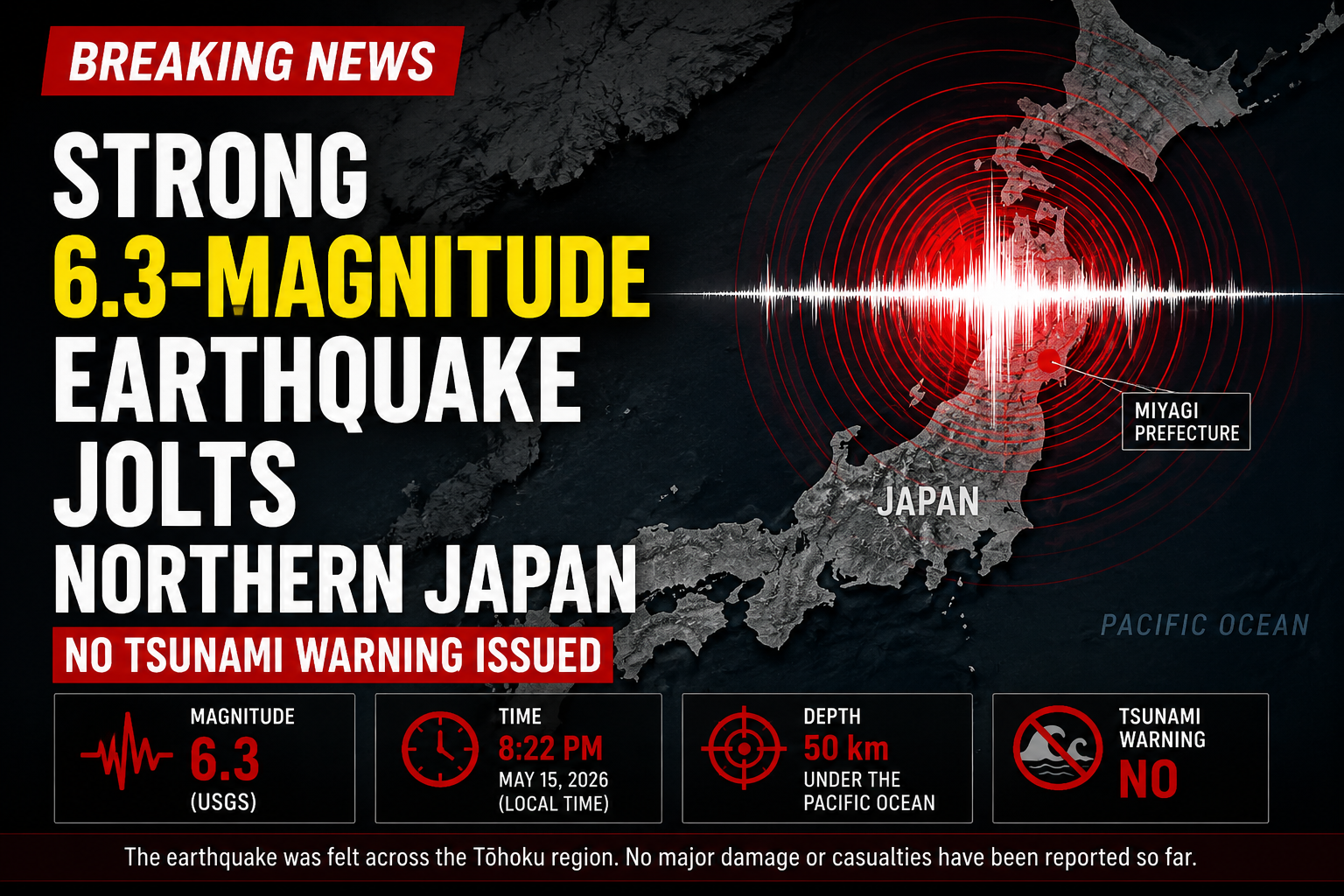
A strong earthquake measuring 6.3 magnitude struck northern areas of Japan on Friday evening, causing widespread shaking across the Tōhoku region and temporarily disrupting transportation services. Authorities confirmed that no tsunami warning was issued and there were no immediate reports of major casualties or severe damage.
According to the Japan Meteorological Agency, the earthquake occurred at approximately 8:22 p.m. local time off the coast of Miyagi Prefecture at a depth of around 50 kilometers beneath the Pacific Ocean. The quake registered a “lower 5” on Japan’s seismic intensity scale in several cities including Ishinomaki, Tome, and Osaki.
The tremor was felt across large parts of northeastern Japan, including areas near Sendai and even parts of Tokyo, where residents reported noticeable shaking inside buildings. Social media users and residents described receiving emergency earthquake alerts seconds before the ground began moving.
Following the earthquake, East Japan Railway temporarily suspended services on the Tōhoku Shinkansen bullet train line between Tokyo and Shin-Aomori as a safety precaution. Some power interruptions were also reported shortly after the quake, although services gradually resumed later in the evening.
Officials said there were no abnormalities detected at nuclear facilities in Miyagi and Fukushima prefectures, including the Fukushima Daiichi nuclear disaster site, which remains highly sensitive following the devastating 2011 earthquake and tsunami disaster.
Japan remains one of the world’s most earthquake-prone countries because it sits along the Pacific “Ring of Fire,” where several tectonic plates meet. The latest earthquake comes months after stronger earthquakes struck northeastern Japan in late 2025 and earlier this year, prompting experts to continue monitoring seismic activity in the region closely.
Authorities urged residents to remain cautious as aftershocks may continue over the next several days. Emergency response teams are monitoring infrastructure, transportation systems, and coastal areas for any delayed impact.