

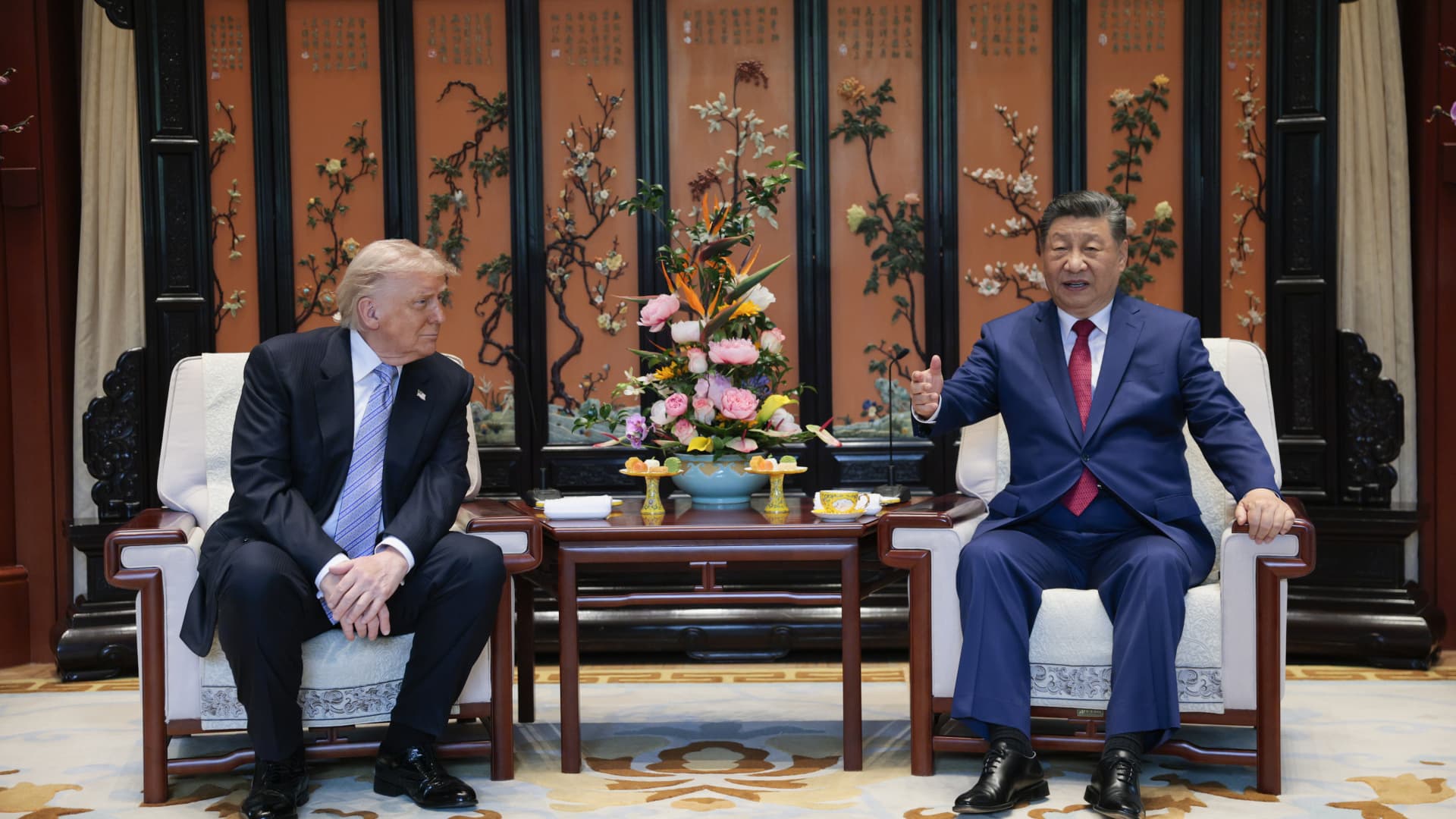
USA-BEIJING । May 16, 2026 — President Donald Trump concluded a high-stakes, two-day summit in Beijing with Chinese President Xi Jinping on Saturday, wrapping up a critical diplomatic pivot aimed at easing economic friction and establishing guardrails between the world’s two largest economies.
While the summit yielded no major breakthroughs on deeply entrenched geopolitical flashpoints—most notably the status of Taiwan and maritime disputes in the South China Sea—the White House is claiming significant victories on the economic front.
According to administration officials, the two days of intense, closed-door negotiations resulted in several major commercial commitments from Beijing. Chief among them is a massive, multi-billion-dollar framework for Chinese purchases of U.S. agricultural goods, a move heavily targeted at reviving American farming exports. Furthermore, the administration announced a tentative, high-profile agreement for China to purchase 200 Boeing commercial jets, a potentially massive boon for the American aerospace and manufacturing sectors.
In an effort to institutionalize future economic cooperation and prevent sudden escalations, both nations agreed to establish a permanent, joint "Board of Trade." The newly formed bilateral body will be tasked with systematically reviewing and lowering certain tariffs that have bogged down global supply chains over the last several years.
A Measured Success Amid Deep Divisions
Addressing reporters before departing Beijing, President Trump struck an optimistic yet pragmatic tone regarding the meetings.
"We had two days of very productive, very frank conversations with President Xi," Trump said. "We are protecting American workers, opening up massive new markets for our farmers, and getting Boeing back in the skies in a big way. On the tough security issues, we made our positions crystal clear. This is about establishing a fair, reciprocal relationship."
Despite the upbeat economic announcements, state media in Beijing offered a more tempered characterization of the summit. Chinese officials emphasized that any long-term trade relief or aircraft purchases would depend on the U.S. rolling back existing tech restrictions and respecting China’s "core sovereign interests"—a clear nod to Taiwan.
Geopolitical Deadlock
Independent foreign policy analysts note that while the economic announcements are substantial, the total lack of movement on security issues highlights the limits of current U.S.-China diplomacy. The summit comes at a time of heightened regional anxiety, with both nations maintaining robust military postures in the Pacific.
The agreement to form a Board of Trade is seen by markets as a stabilizing mechanism, signaling that both Washington and Beijing prefer managed economic competition over an outright decoupling. However, skeptics warn that tentative aircraft orders and agricultural pledges have historically faced delays or political friction during implementation.
For now, the summit provides both leaders with a temporary domestic win: President Trump returns to Washington with tangible economic promises ahead of a crucial domestic political season, while President Xi secures a measure of predictability for a Chinese economy currently navigating a complex global trade landscape.