

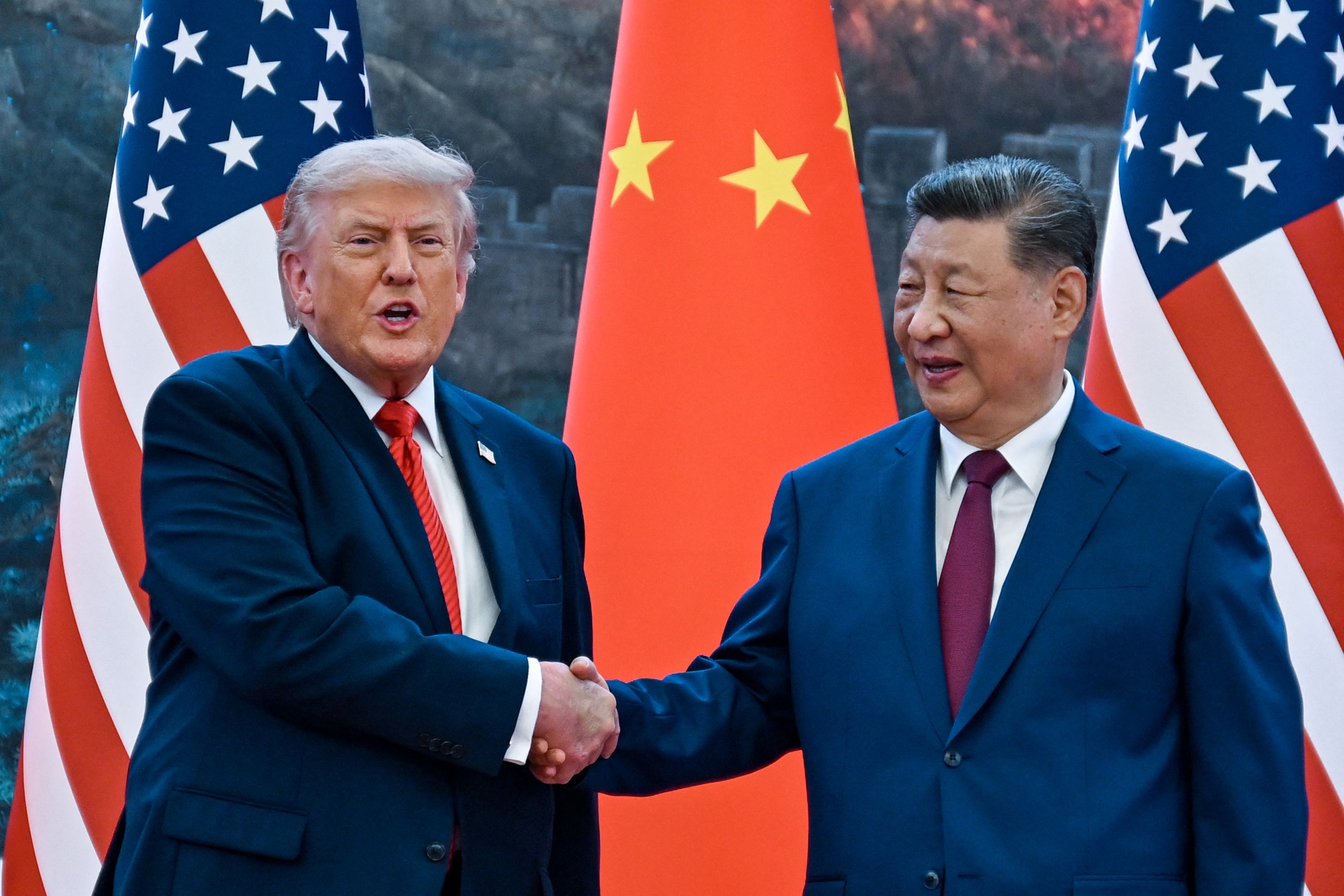
U.S. President Donald Trump arrived in China this week for a major state visit aimed at easing tensions and strengthening economic cooperation between the world’s two largest economies. The visit, hosted by Chinese President Xi Jinping in Beijing, marks the first visit by a sitting U.S. president to China in nearly nine years and Trump’s second official visit to the country since 2017.
Trump’s trip comes at a critical moment in global politics, with ongoing concerns surrounding trade disputes, technology restrictions, Taiwan, the Iran conflict, and slowing global economic growth. Chinese officials described the summit as an opportunity for “in-depth exchanges” on bilateral relations and international stability.
The American president received a ceremonial welcome upon landing at Beijing Capital International Airport, where he was greeted by Chinese Vice President Han Zheng and senior officials. Chinese honor guards, schoolchildren waving American and Chinese flags, and elaborate state ceremonies highlighted the importance Beijing attached to the visit.
Trump traveled with a high-profile delegation that included senior U.S. officials and leading American business executives. Among those accompanying him were Tesla CEO Elon Musk, Nvidia CEO Jensen Huang, and Apple CEO Tim Cook, reflecting the administration’s strong focus on trade, investment, and technology cooperation.
Before arriving in Beijing, Trump stated that he would urge China to “open up” its markets further to American companies and increase purchases of U.S. goods. U.S. Treasury Secretary Scott Bessent indicated that China could announce significant purchases of Boeing aircraft and additional American agricultural and energy products during the summit.
During their meetings, both Trump and Xi emphasized the importance of maintaining stable ties despite ongoing disagreements. Xi reportedly warned that the Taiwan issue remains the most sensitive topic in U.S.-China relations, while also saying the two nations should be “partners, not rivals.” Trump, meanwhile, praised Xi’s leadership and stressed the need for balanced trade and expanded economic cooperation.
Analysts say the summit could shape global diplomacy and trade policy for years to come. The visit follows months of strained relations over tariffs, semiconductor restrictions, military tensions in the Indo-Pacific region, and disagreements over global security issues. However, the current talks suggest both governments are seeking to prevent further escalation and stabilize economic ties.
Chinese state media portrayed the visit as a major diplomatic event, while public reaction inside China appeared mixed. Some citizens welcomed renewed engagement between Washington and Beijing, while others expressed skepticism about whether lasting improvements could be achieved.
The two leaders are expected to continue meetings through May 15, with discussions covering trade, artificial intelligence, technology exports, investment, climate cooperation, and regional security. Observers worldwide are closely watching whether the summit produces concrete agreements or simply serves as a symbolic effort to reduce tensions between the two superpowers.