

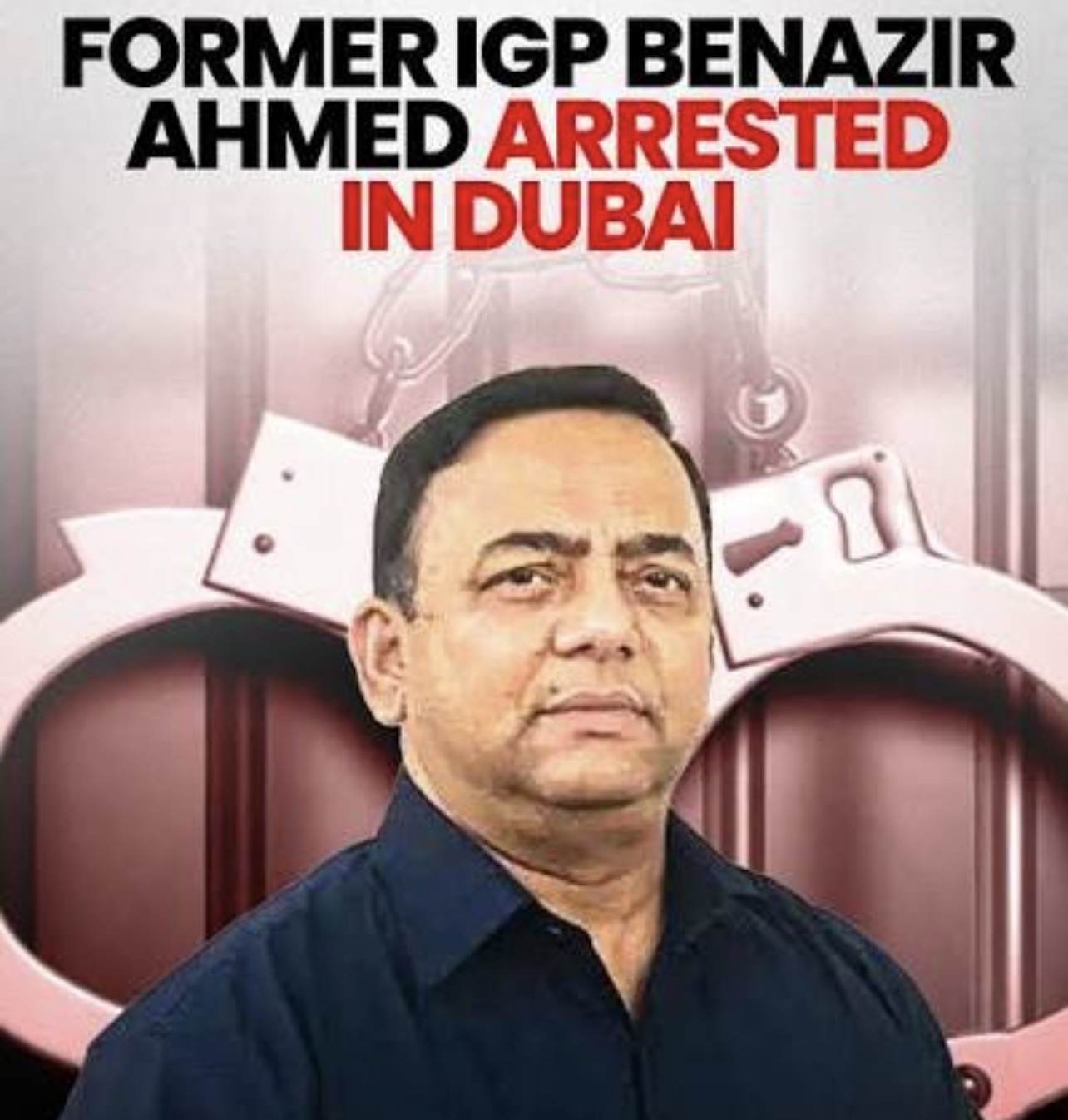
Dhaka, June 14, 2026 — Former Inspector General of Police (IGP) Benazir Ahmed, once regarded as one of the most influential law enforcement officials during the Awami League era, has been arrested in Dubai by United Arab Emirates authorities with the assistance of Interpol, according to Bangladesh’s Home Ministry and Anti-Corruption Commission (ACC).
The dramatic arrest marks a new chapter in a series of corruption and human rights-related allegations that have transformed the former police chief from one of the country’s most powerful security officials into an internationally wanted figure.
Home Minister Salahuddin Ahmed informed Parliament that Dubai Police arrested Benazir Ahmed on June 12 following an Interpol Red Notice. Authorities in the UAE officially communicated the development to Bangladesh, and efforts are underway to bring him back to face legal proceedings.
According to ACC officials, the former IGP was wanted in connection with cases involving allegations of illegal wealth accumulation, money laundering and concealment of assets. Investigators say applications for Interpol notices had been submitted in multiple cases.
Benazir Ahmed joined the Bangladesh Police in 1988 and rose through the ranks to become Dhaka Metropolitan Police Commissioner in 2010, Director General of the Rapid Action Battalion (RAB) in 2015 and ultimately Inspector General of Police in 2020. During his career, he received several police medals and was considered a trusted figure within the administration of former Prime Minister Sheikh Hasina.
Questions surrounding Benazir Ahmed’s wealth emerged publicly in 2024 after a series of investigative reports alleged that he and members of his family had amassed extensive assets that appeared inconsistent with known sources of income. Those reports prompted the Anti-Corruption Commission to launch formal investigations.
Subsequently, courts ordered the freezing and seizure of hundreds of bighas of land, bank accounts, shares and other assets linked to Benazir Ahmed and his family. Authorities also sought to freeze properties reportedly connected to him abroad, including assets in the United States and Malaysia.
ACC officials have alleged that nearly Tk 76 crore in unexplained assets are under investigation. A corruption case filed in December 2024 accused the former police chief of accumulating illicit wealth, concealing information and laundering money.
Media reports indicate that Benazir Ahmed left Bangladesh in May 2024 along with members of his family while investigations into his wealth were intensifying. Questions later emerged regarding how such a high-profile individual was able to leave the country despite growing scrutiny.
Apart from corruption allegations, Benazir Ahmed has also been named in proceedings before Bangladesh’s International Crimes Tribunal concerning allegations related to enforced disappearances and crimes against humanity linked to activities during his tenure in the Rapid Action Battalion. He has denied wrongdoing in the past. Those allegations remain subject to judicial proceedings, and no final verdict has been reached.
In December 2021, the United States imposed sanctions on Benazir Ahmed under the Global Magnitsky Act over allegations concerning human rights abuses associated with RAB. Benazir rejected those accusations and maintained his innocence.
Legal experts say the next phase will involve diplomatic and judicial coordination between Bangladesh and the United Arab Emirates regarding extradition procedures. The Home Minister has expressed optimism that the former police chief will soon be returned to Bangladesh to stand trial.
The arrest of Benazir Ahmed has become one of the most significant anti-corruption developments in Bangladesh in recent years. Supporters view the move as evidence that no individual is above the law, while critics argue that the case also raises broader questions about institutional accountability and how allegations of corruption and abuse of power remained unaddressed during his years at the top of the country’s security apparatus.
As the extradition process unfolds, the former IGP—once one of Bangladesh’s most powerful officials—now faces the prospect of returning home to answer charges that could define his legacy for years to come.